
02What Is AAU Basketball? A Parent's Guide
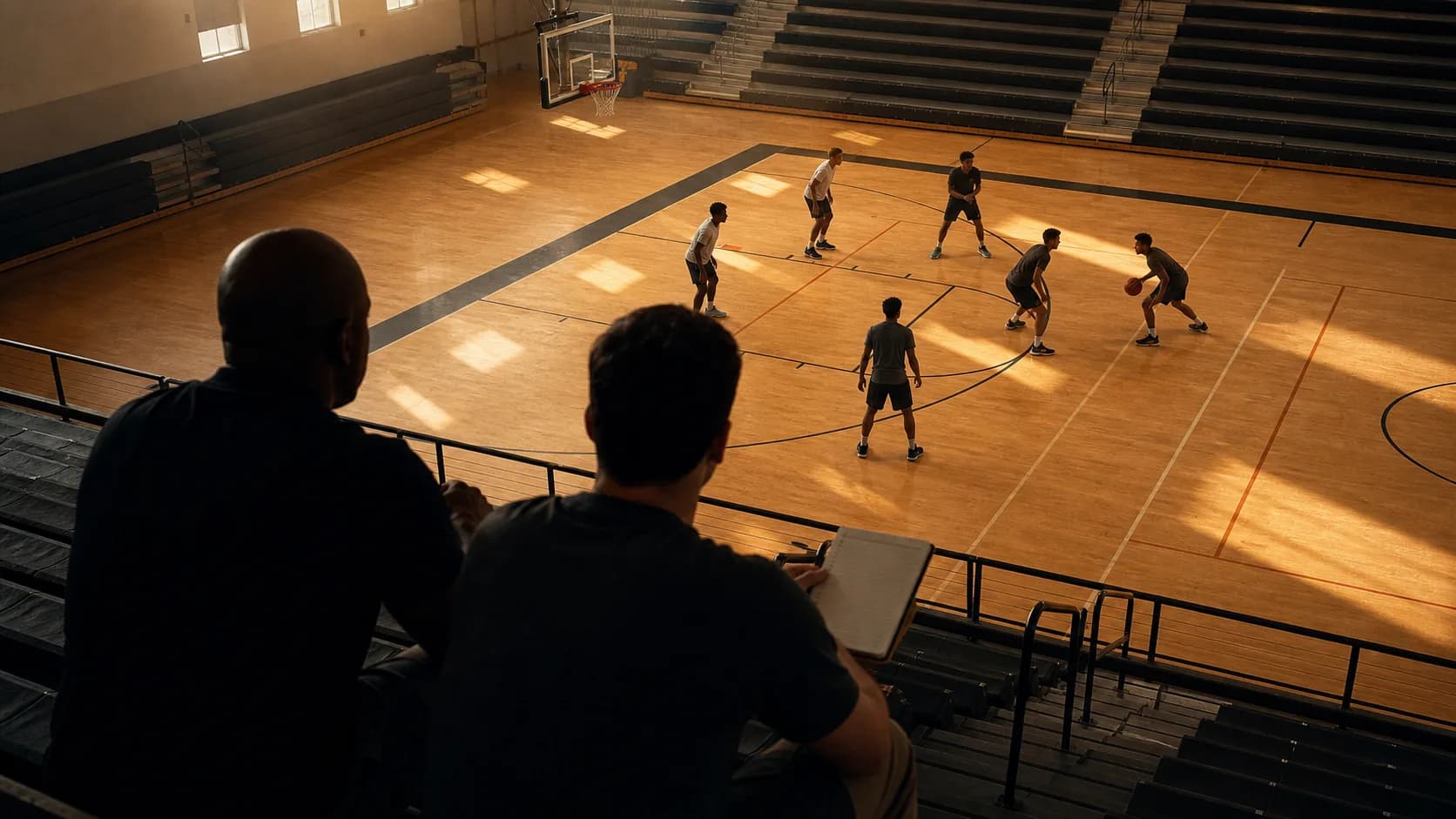
AAU is the travel-team circuit where college coaches actually watch prospects. Here is how it works, what it costs, and where it fits the path.
Read analysisMake evaluation easier
Recruiting timelines, film, live evaluation, communication, and the habits that make a prospect easier to trust.

Start here · Latest brief
Category archive
18 more
02AAU is the travel-team circuit where college coaches actually watch prospects. Here is how it works, what it costs, and where it fits the path.
Read analysis
03College recruiters watch 6,000+ high school players per year and offer scholarships to about 400. Here are the 9 traits that decide which side of that line you're on, and how to build each one before junior year.
Read analysis
04The work that gets you noticed at AAU starts 8-12 weeks before the season tips. Here is the pre-season checklist that produces a circuit-team-level player by April.
Read analysis
05Top programs build informal recruiting lists as early as 8th grade. Here is what college coaches actually look for in 14- and 15-year-old prospects, and how early evaluations turn into junior-year offers.
Read analysis
06Most recruiting reels are highlight tape with no defense, no role play, and no losing clips. Here is the film structure college coaches actually want, and the five clips that move you off the also-ran list.
Read analysis
07The seven mistakes that pull recruits off college coaching boards, most of them are avoidable, and several of them happen off the court entirely.
Read analysis
08College coaches watch your reel for an average of 38 seconds before deciding whether to keep watching. Here's the editing checklist that makes those 38 seconds work for you instead of against you.
Read analysis
09A college coach who's interested in your tape watches it six different ways. Here's the six-pass workflow assistant coaches use, and what your film needs to survive each pass.
Read analysis
10The average college coach watches 4 clips before deciding whether to keep going. Of the ones that survive, the average watcher reaches clip 9 of 12. Here's the attention math, and what it means for your reel.
Read analysis
11Your first email to a college coach is roughly 90 seconds of attention. Here's the email structure, the file structure, and the timing that maximizes the chance of a response.
Read analysis
12Players who weren't on coaches' boards in October sometimes get offers in March. The reason is rarely raw talent, it's a deliberate 6-month reset across film, performance, and outreach.
Read analysis
13Basketball has two NCAA signing periods, not one. Here is the 2026 calendar, the offer-to-signing timeline that real recruits follow, and the work that has to be done by junior year.
Read analysis
14Junior year is when basketball recruiting goes from theoretical to actual. Here is the month-by-month timeline, what to do, when to do it, and the deadlines that decide your senior year recruiting position.
Read analysis
15A month-by-month plan to get recruited as a high school senior. From the May audit before junior summer to the final May signing window, here's what to actually do and when.
Read analysis
16College coaches watch 90-180 seconds of your tape before deciding. Here's the structure that earns the next 90 seconds, and the five things that get the tape closed in the first 30.
Read analysis
17College coaches don't watch AAU and high school the same way. Here's the coaches' viewing protocol, what they watch for at each, why both matter, and what gets you recruited.
Read analysis
18Everything you knew about D1 basketball scholarships changed on July 1, 2025. Here's how the new system actually works, roster limits, partial scholarships, revenue sharing, and what it means for your recruitment.
Read analysis
19Forget what you think you know about recruiting. Here's what college coaches at every level actually evaluate - straight from their perspective.
Read analysis