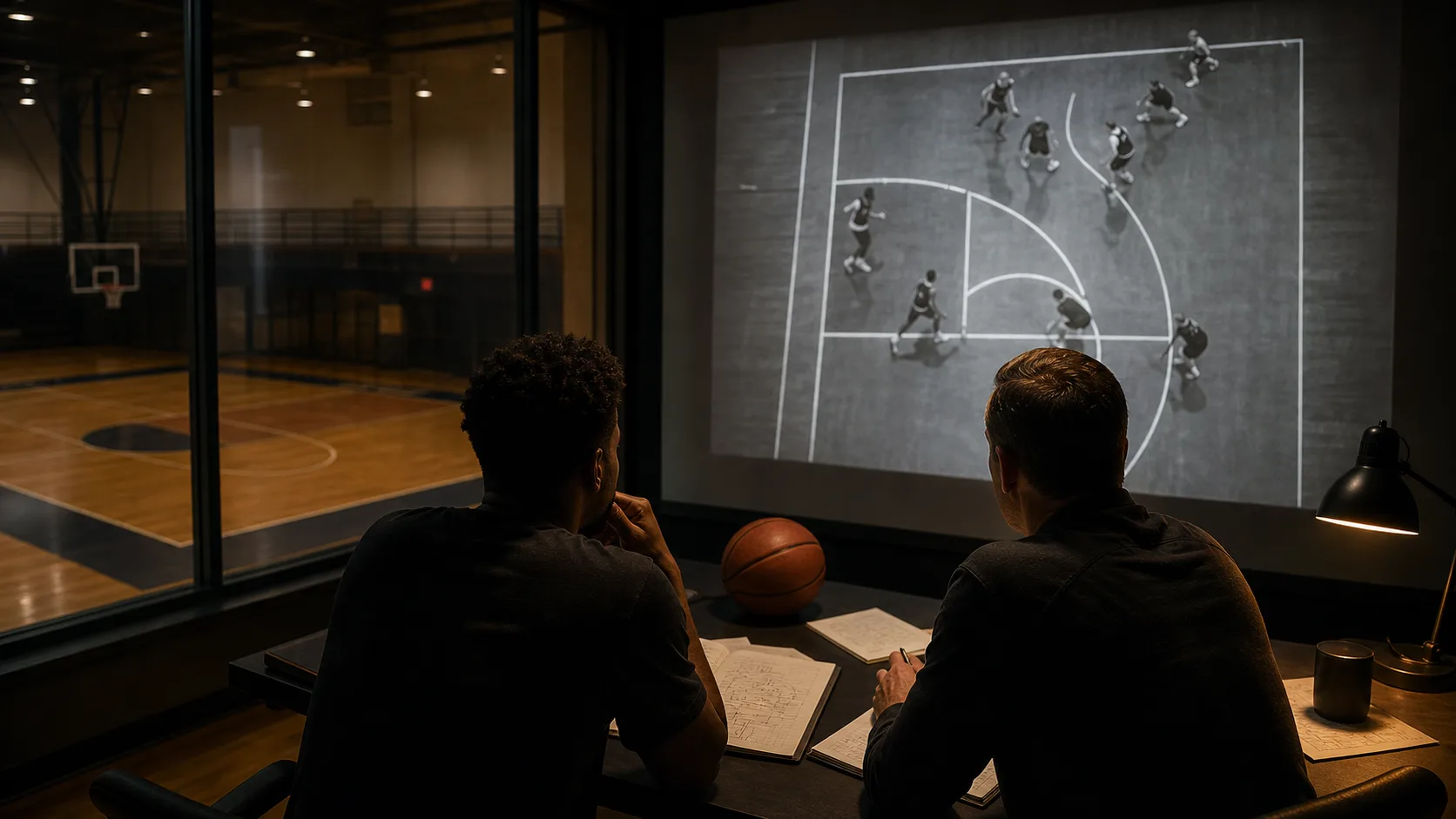
Junior year is the inflection point of basketball recruiting. Sophomore year is theoretical, coaches are tracking, not engaging. Senior year is execution, offers are decided, signings happen. Junior year is when the conversations actually start and the leverage gets built.
This piece walks through the month-by-month timeline for a rising junior who wants to maximize recruiting outcomes. It is the prequel to the senior-year recruiting timeline and a spoke of the Path to the NBA cluster.
June (Pre-Junior Year): The Initial Push
June 15 is the date. Under current NCAA rules, college coaches can initiate contact with rising juniors starting June 15 after sophomore year. The smart prospect is *already* on coaches' radar by that date, so the contact is the continuation of a known relationship rather than a cold introduction.
What to do in June:
- Update your highlight tape. Three minutes maximum. Sophomore-year game film. The what college recruiters read in a highlight tape piece covers the structure.
- Email 15-25 target programs. Brief, professional emails to assistant coaches. Transcript, schedule, film link. Read the aau-vs-high-school piece before sending to know what each viewing context produces.
- Confirm your July AAU schedule. The roster spot, the events, the travel.
July: The Make-or-Break Month
July is the single most important month of junior-year recruiting. Two evaluation periods (typically a week in mid-July and another in late July) are when most D1 coaches do their primary in-person evaluations. A strong July drives more offers than the entire high school season for most prospects.
What to do in July:
- Play your best basketball. Every game has 30+ college coaches in the stands.
- Be visible off the court. Coaches watch warm-ups, bench behavior, and how you treat teammates. The what NBA scouts look for piece covers the same evaluation framework college coaches use.
- Update your contact list nightly. Every coach who introduces themselves goes in the spreadsheet. Follow up within 48 hours.
August: The Quiet Window
The August "quiet period" (under NCAA rules) restricts in-person evaluation but allows phone calls and digital communication. This is the relationship-building month.
What to do in August:
- Follow up with every coach who saw you in July. Brief email or text. Specific reference to a moment they would remember (a defensive stop, a late-clock play).
- Begin scheduling unofficial visits for September-October. These are at your own expense and don't count against NCAA limits, but they establish presence at programs you're serious about.
- Lift weights. August is the cleanest training window of the recruiting calendar.
September - November: The Fall Visit Window
The fall is the unofficial-visit season for juniors. Programs invite recruits to home games to demonstrate the campus, the facility, and the program culture.
What to do during fall:
- Take 3-5 unofficial visits to top-target programs. Day-trip distance ideally, since you're paying.
- Begin high school season. Coaches will track your senior-year output starting in November. The self-scouting blueprint is the right framework.
- Continue weekly outreach. Programs that went quiet after July need a touchpoint by Halloween. A two-sentence update on your training plus a recent game clip restarts the conversation.
December - January: The Scholarship Conversation Begins
Most Division I scholarship offers to rising seniors begin in this window. The conversations have been building since July; December is when they become formal.
What to do:
- Field every offer professionally. Even from programs that aren't top choices. Word travels among college coaches; how you handle a non-target offer affects how target programs treat you.
- Re-evaluate your list. If you've received 4+ offers, your list is now real. Cut programs that haven't engaged. Add programs that have.
- Schedule official visits for spring. Up to 5 official visits per recruit, paid by the program. These start in junior spring through senior summer.
February - March: The Mid-Season Adjustment
What to do:
- Update film. Every 2-3 weeks. Coaches watching your senior-year prep want recent clips.
- Have the family conversation. Where are you actually willing to go? Distance, academic fit, playing-time expectation, fit with system. The decision narrows now.
- Begin academic clearance prep. NCAA Eligibility Center registration if you haven't already. Test prep for ACT/SAT.
April - May: The Lead-Up to Senior July
What to do:
- Lock down your senior-July AAU situation. Roster spot, travel, events. This is your last large-stage evaluation.
- Plan official visits for May/June. Programs want commitments before senior fall when possible.
- Train hard. Senior July is the final evaluation; everyone who has been tracking you watches one more time.
The Five Mistakes That Cost Juniors Offers
1. Skipping the June 15 initial-contact window. Every prospect should have email outreach in by mid-May of sophomore year. Coaches remember who reached out first. 2. Disappearing after July. Most offers come September-November. Players who go quiet after AAU lose offers to players who stay engaged. 3. Treating non-target offers poorly. Word travels. Cool, professional handling of every offer pays off. 4. Saying yes too early. Junior year is for evaluating, not committing. Most commitments before April of senior year are made under inadequate information. Wait. 5. Ignoring the academic side. GPA and test scores can disqualify offers that the basketball performance earned. The academic-clearance work should be running in parallel.
The Tools That Help
HoopBrief currently turns basketball and matchup questions into structured reports using public statistical and play-by-play context. It does not accept film uploads or provide possession-level video tagging.
Junior year is the year the recruiting story gets written. The work compounds from June through May. The Path to the NBA cluster collects every HoopBrief article on the daily work that makes the recruiting story possible, drills, footwork, mental tools, and self-scouting habits. Use it.
More From the Recruiting Hub
Senior-year transition: senior year basketball recruiting timeline (12-month).
Signing-day calendar: basketball signing day 2026 + 12-month timeline.
Tactics: what high school players should do before AAU season, how college coaches evaluate recruits early, what makes a recruit stand out in film, recruiting mistakes that cost players offers.
Hub: Recruiting Hub.