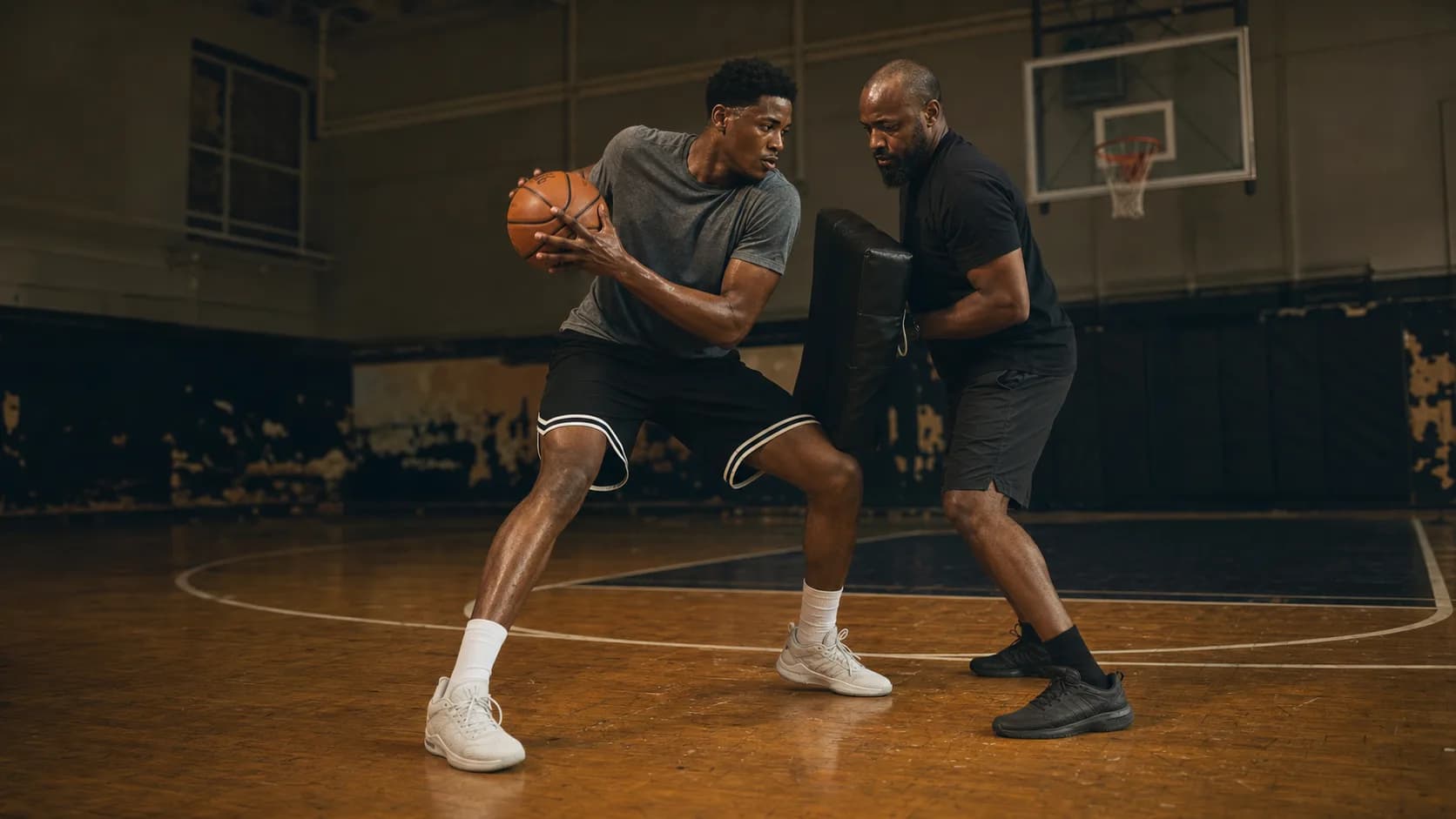
A point guard runs the team from the top of the floor. On offense you bring the ball up, initiate the play, protect the ball, and set up teammates for good shots. On defense you usually guard the other team's lead handler and organize the coverage. The point guard is the coach on the floor, trusted to run both ends. Here is what the role actually involves for someone new to it.
What a point guard is responsible for: - Bring the ball up and protect it against pressure - Initiate the offense and get the team into its spots - Set up teammates for good shots, not just find open ones - Guard the opposing lead handler and organize the defense - Communicate constantly on both ends
If you are new to the position, understand this first: point guard is a leadership job disguised as a skill position. The handle and the passing are tools. The actual role is organizing four other players so the team plays as one. That is why coaches put their most reliable decision-maker there, not always their best scorer.
What Does a Point Guard Actually Do?
A point guard organizes the team on both ends of the floor. On offense you are the starting point of nearly every possession: you bring the ball up, get everyone into position, and begin the action. On defense you are usually at the point of attack, guarding the other team's primary ball handler and directing the coverage behind you.
Think of it as the position with the ball in its hands the most and the most decisions to make. Every other role reacts to the point guard to some degree. That is a lot of responsibility, which is why the job rewards a calm head over raw athleticism. The players who thrive here are the ones who see the whole floor and stay composed, the foundation of strong basketball IQ.
How Do You Initiate the Offense?
You initiate the offense by bringing the ball up under control, getting your teammates into their spots, and starting the first action on time. That usually means calling out the play, reading the defense as it sets, and either starting a pick-and-roll or delivering the entry pass that begins the set. Initiating well means the offense starts organized, not rushed.
The most common starting action you will run is the pick-and-roll, so learning it early is worth the time. A teammate sets a screen on your defender, and you read what the defense does in response. Understanding how to run a pick-and-roll is close to a job requirement at this position, because it is the action most offenses live in. Your first goal is simple: get the team into its offense on time, every possession, before the shot clock pressures anyone.
What Skills Matter Most for a Point Guard?
The three skills that matter most are ball handling, court vision, and decision-making. You need a handle secure enough to bring the ball up against real pressure, vision to see where teammates will be open a step before they are, and judgment to choose the right action at speed. Scoring is a bonus. Organizing and deciding is the job.
Ball handling comes first because you cannot run anything if you cannot keep the ball. Then vision: a point guard sees the floor differently, tracking not just where teammates are but where they are about to be. That anticipation is what separates a passer from a distributor, and it is the heart of the vision elite passers have. Decision-making ties it together. All the handle and vision in the world does not help if you make the wrong choice with the ball, which is why decisions are the skill you will spend the most time developing.
What Are the Point Guard's Defensive Duties?
On defense a point guard is the first line, usually guarding the opposing lead ball handler and organizing the coverage. Your job is to pressure the ball to make the offense start late, direct your teammates, and call out the scheme so nobody gets caught off guard on a screen.
This defensive-organizer role gets overlooked by new players who think point guard is only an offensive job. It is not. When the other team runs a pick-and-roll, you often call out how your team is guarding it, drop, switch, or hedge, so the big behind you knows what to do. That communication is as important as any steal. A quiet point guard on defense is a liability. Reading what the offense is doing so you can direct the response is the same core skill as reading a defense from the other side.
How Do You Start Getting Good at the Position?
You start by mastering the basics of ball control and passing, then adding reads on top of them. Get comfortable bringing the ball up against pressure and making simple, on-time passes before you worry about anything flashy. A point guard who protects the ball and gets the team organized is already valuable at any level.
From there, add one layer at a time: learn to run the pick-and-roll, learn to read a basic coverage, learn to talk on defense. Do not try to do everything at once. The path from the fundamentals to running a team is a progression, and getting better at basketball at this position means building it in order. Once the basics are automatic, the work of becoming a better point guard is about pace and reads, but that comes after the foundation is solid.
The honest mistake new point guards make: they think the job is to score or to make the highlight pass, so they hunt for the flashy play and cough up the ball or take a bad shot. The actual job on most possessions is unglamorous. Get the team into its offense, make the simple right pass, and protect the ball. Do the boring job well and the exciting plays come to you.
The Bottom Line
Playing point guard is a leadership job. You bring the ball up, start the offense, set up teammates, guard the other team's best handler, and talk on both ends. The handle and the passing are tools for the real work, which is organizing four other players into one team. Master the basics first, add reads on top, and you become the player the coach trusts to run everything.
Want to see how a defense plans to guard the offense you are running, so you can direct your team through it? Ask the HoopBrief Matchup Engine. It turns a coverage into a concrete plan you can call out and run.