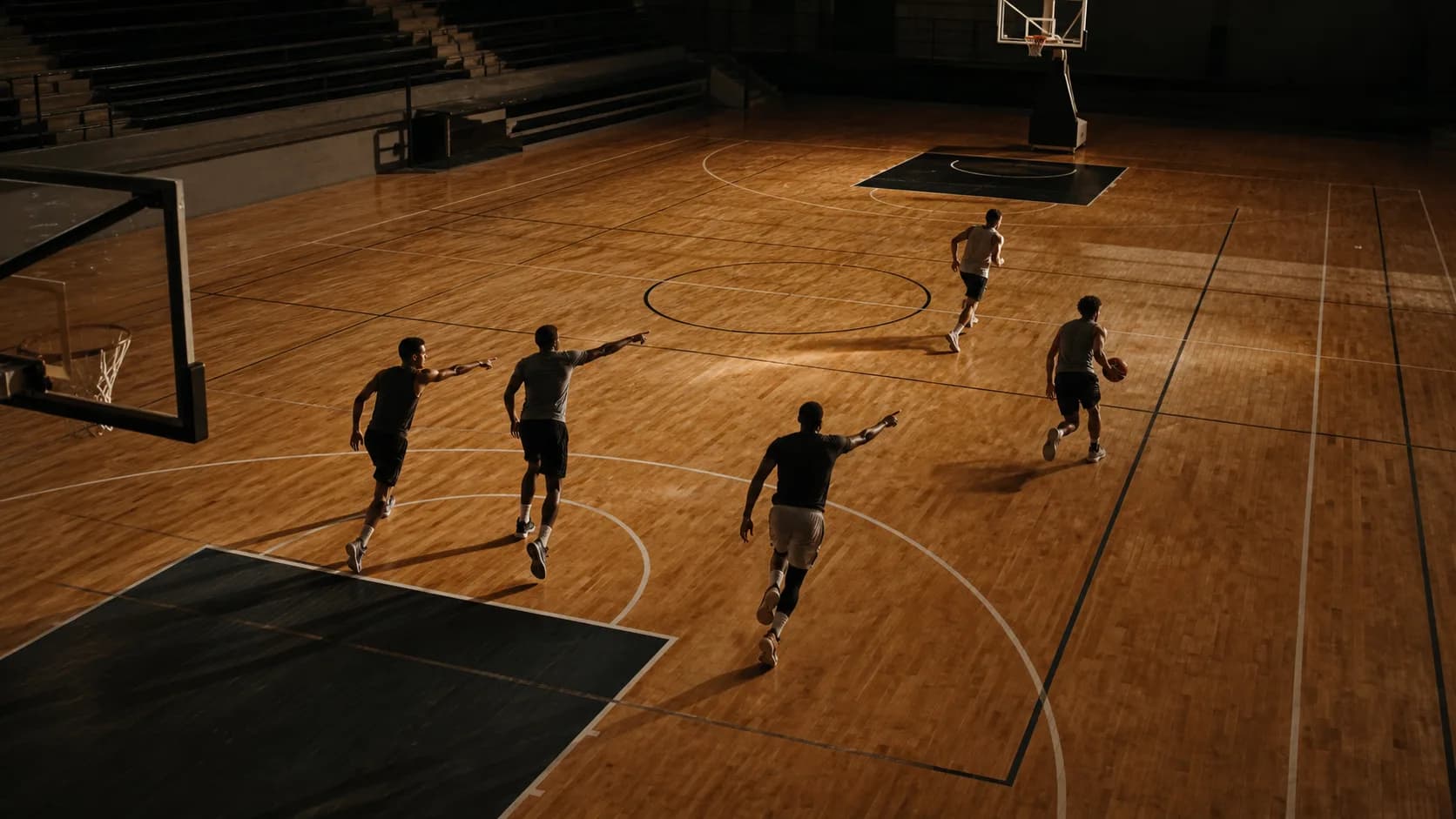
You already run the offense. Getting better as a point guard is not about a flashier handle. It is about sharper decisions, controlling the pace on purpose, reading coverages by name before the screen is set, and running a team so it plays a half-second ahead of the defense. The gap between a good lead guard and a great one is decision quality, not dribbling. Here is how to close it.
What elevates a point guard: - Make the right read faster, not the fancier play - Control pace on purpose: push after stops, slow into your best action - Name the coverage before it happens, so you already have the counter - Pass teammates open, not just to open teammates - Study your own decisions on film every week
Most guards top out because they keep training the same skills that got them the ball in the first place. The next level lives in the parts nobody films: pace, reads, and pass timing. That work is invisible in a highlight reel and obvious to a coach watching one possession.
What Actually Separates a Good Point Guard From a Great One?
Decision quality under pressure separates them, not scoring. A great point guard makes the correct read a half-second before everyone else, and that half-second is the entire game. Two guards can see the same play; the great one chooses the option that keeps the advantage alive while the good one takes the option that feels safe.
This is trainable and it is mostly mental. If you already have the handle to reach the paint, the next jump is in what you do once you get there. The counter you choose against a help defender, the pass you make before the second defender rotates, the shot you pass up because a better one is coming. Sharpening that is the core of improving your basketball IQ, and it is what coaches mean when they trust a guard with the ball in the last two minutes.
How Do You Control the Pace of a Game?
You control pace by choosing your speed on purpose, every possession, instead of playing on autopilot. Push the ball after a defensive stop to attack before the defense is set. Slow it down after a made basket so you can get into your best action against a defense that is already organized. Tempo is a weapon, and most guards never pick it up.
The read is situational. Numbers in transition? Push, before the defense matches up. No advantage? Pull it back, get everyone into their spots, and run your action with 14 seconds left instead of forcing something at 22. A great point guard makes the game feel fast when they want a stop punished and slow when they want a set defense picked apart. That control is what it means to run a team rather than just play in one, and it is a level beyond the core point guard responsibilities.
How Do You Read Coverages By Name?
You read coverages by learning them by name, so you can identify one before the screen is even set. Defenses are not random. On the pick-and-roll they run a small menu, and each option concedes something specific. Name it on sight and you already know the counter.
Learn the four core pick-and-roll coverages. In drop, the big sits back to protect the rim, which gives you the pull-up in the pocket. In switch, they trade assignments, which gives you a mismatch to attack before help arrives. In blitz, two defenders trap you, which means your roller is open in a four-on-three, the same read as beating a backcourt trap. In ICE, they force you away from the screen toward the sideline, so you counter by rejecting the screen. Knowing this menu cold is what makes running a pick-and-roll an advantage instead of a guess. Say the coverage out loud in film study until you can name it in a live game before the play develops.
How Do You Make Your Teammates Better?
You make teammates better by passing them open, not just passing to players who are already open. The difference is the read that comes before the pass. You bend the defense with penetration or a screen, force a help defender to commit, and deliver the ball to the spot your teammate scores from best, in rhythm, before the help recovers.
That requires knowing your team. Where does each teammate actually score? One wants it on the catch behind the line; one wants it on the move going right; one only finishes when he is set. A great point guard delivers the ball to each of them where it turns directly into a good shot, not just anywhere their hands are. This is the applied form of the vision elite passers have: you are not seeing the open man, you are seeing the pass that creates the shot two seconds from now.
How Do You Keep Improving Once You Already Start?
You keep improving by studying your own decisions on film, cold, every week. Skill work maintains your handle and shot. Decision work is what actually moves you to the next level, and the only way to train it is to see your reads honestly and grade them.
Watch your last game the next day and count your possessions with the ball. For each key one, ask: did I make the read the defense gave me, or the one that felt comfortable? Did I control the pace or ride the game's? Write down two decisions you would redo. That honest loop is the engine behind better decision-making, and it compounds fast because almost no guard does it.
The honest mistake I see in talented lead guards: they confuse activity with control. They dribble a lot, make a lot of passes, and feel busy, but the offense is not actually a half-step ahead of the defense on any of it. Busy is not the same as in command. The tell is whether the defense is reacting to you or you to it.
The Bottom Line
Getting better as a point guard is not a handle problem. It is a decision problem. Make the right read faster, control the pace on purpose, name the coverage before it happens, and deliver the pass that creates the shot. Do that and you stop being a guard who plays in the offense and become the one who runs it, the one coaches trust with the ball when the game is tight.
Want to see how a staff would attack the exact defense you face this week, coverage by coverage? Ask the HoopBrief Matchup Engine. It turns a coverage into a concrete counter you can walk into practice and run.