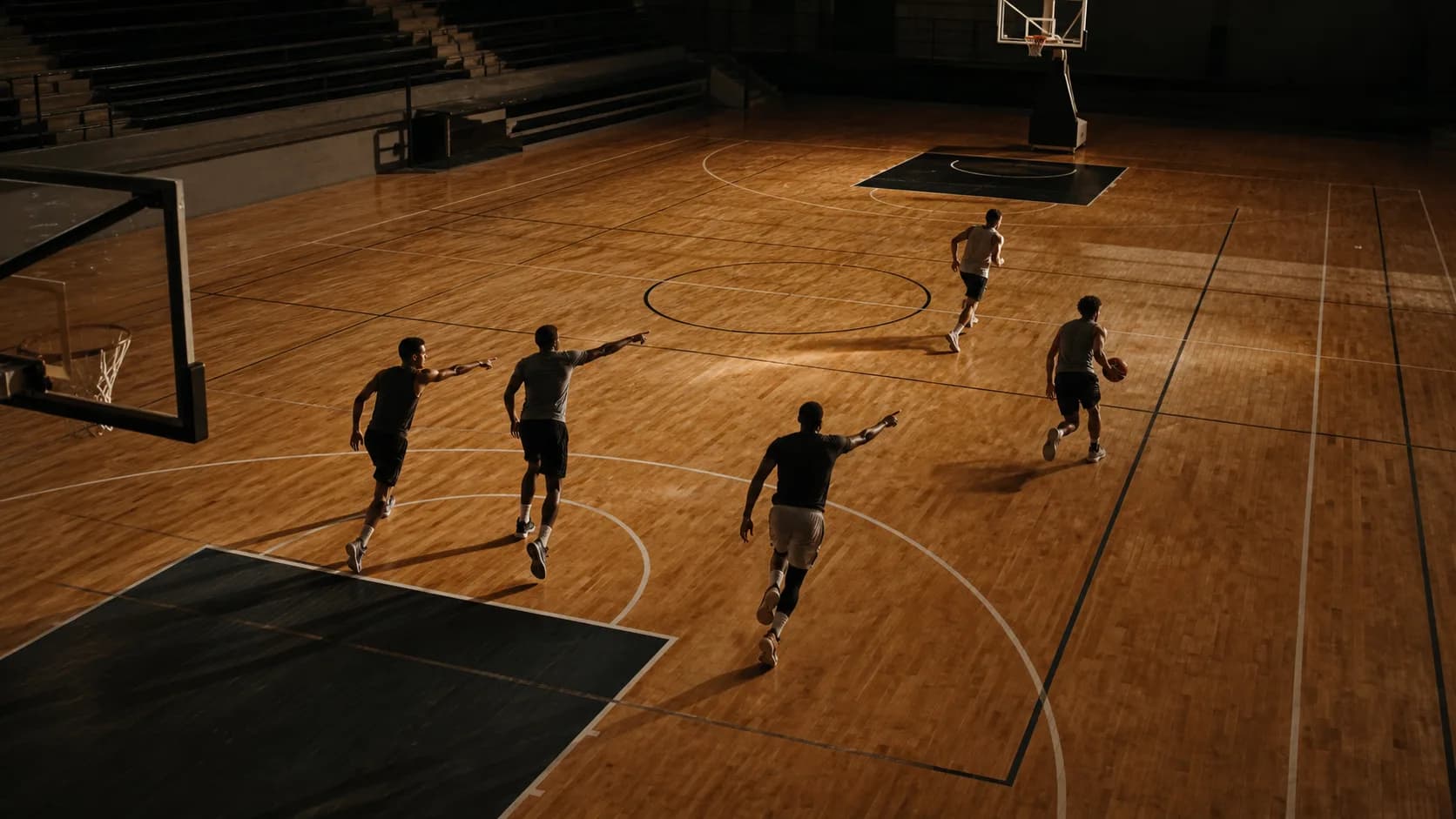
Break a press by refusing to play its game. A full-court press wants to speed you up and trap you against a line. You beat it with spaced alignment, by getting the ball to the middle of the floor, by sprinting to open spots instead of standing, and by throwing the pass ahead of the trap into the numbers advantage it just gave you. Stay calm and the press hands you easy points.
The read that breaks any press: - Space the floor so no defender can guard two of you - Attack the middle third, where there is no line to trap you against - Catch facing the whole floor, never with your back turned - Pass ahead of the trap, into the open man up the court - Have a deep safety valve so you always have an outlet
A press is a gamble. The defense gives up numbers up the floor for the chance to force one rushed mistake. If you do not make the mistake, the gamble loses. Understanding that is the whole battle, and it starts with your feet and your eyes, not your dribble.
How Do You Set Up to Break a Press?
You break a press before the ball is inbounded, with alignment. Spread your four non-inbounders so no single defender can cover two of them, and make sure you always have a receiver in the middle of the floor and a safety valve deep. Clumping is what gets you trapped.
A clean setup: one receiver flashing to the middle short of half court, a second option on the weak side, one player deep past half court as the safety valve, and an inbounder who can throw over the first line. The deep player matters more than people think. When everything up top is covered, the long outlet resets the possession with no pressure. Reading where the open man is before you catch is the same defense-reading skill you use in the half court, just at full speed.
Why Is the Middle of the Floor So Important?
The middle of the floor is where a press dies. A trap needs two things: two defenders and a line to pin you against. The sideline and the baseline are lines. The corners are two lines meeting. The middle third of the court has no line at all, so a receiver who catches there cannot be trapped, only guarded one-on-one.
Get one pass into the middle and the press is usually broken. The two defenders who set up to trap the sideline are now behind the ball, and you are looking at the rest of their team in a scramble. This is why coaches teach guards to flash to the middle as the first read, not the sideline. The sideline feels safe because it is near your bench. It is the most dangerous place on the floor against pressure.
How Do You Beat the Trap Itself?
You beat the trap by passing ahead of it, into the space the trap just vacated. When two defenders leave their assignments to trap you, they have created a four-on-three going the other way. The open man is almost always up the floor. Find him.
Here is the worked read. You catch on the wing and two defenders sprint at you. Do not dribble. Pivot so you can see over their hands, keep the ball high and swing it away from the trap. Now look up the floor first, not backward. The receiver who was covered a second ago is open because his man left to trap you. One accurate pass over the top and you are attacking three defenders with four players. That is a layup if you push it. Throwing backward into the pressure is the decision-making mistake that turns a broken press into a turnover.
The honest mistake I see most, even from good guards: they beat the first trap, exhale, and relax. A well-coached press sets a second trap right past half court for exactly that moment. Break the press, then sprint into your offense before they can reload. The possession is not over until you get a shot up.
What Does the Point Guard Do Against Pressure?
The point guard is the calm. Your job is to get open to receive, catch facing the floor, and make the first correct read fast. If you are the primary ball handler, you should almost never be the one throwing the inbounds pass. You want to be the receiver flashing to the middle.
Once you have it, control the pace. A press wants chaos, so your value is refusing to give it any. Dribble with purpose toward the middle, keep your eyes up, and hit the pass ahead the instant a trap commits. This is the same floor-general job you have in the half court, compressed into four seconds of pressure. The best press-breakers look bored. That is the tell that they have already read it.
How Do You Practice Breaking a Press?
You practice it live, against real pressure, not against cones. Set up five-on-five full court, tell the defense to trap, and rep the reads until they are automatic. Cones do not sprint at your face, so cone work builds nothing that transfers.
Constrain it. Run possessions where the offense loses if they dribble backward, or if the first pass does not hit the middle. Constraints force the correct habit faster than freeform reps. Then watch the film cold and count how many of your turnovers were forced steals versus rushed choices. Almost all of them will be rushed choices, which is good news, because a rushed choice is a habit you can fix. Building that pattern library off the court is the same work as training your basketball IQ and sharpening the court vision that lets you see the open man before the trap fully forms.
The Bottom Line
A press is a bluff. It trades numbers up the floor for the chance to rush you into one mistake. Space the floor, attack the middle, catch facing everything, and throw the pass ahead of the trap, and the bluff loses every time. Do not speed up. Make the defense pay for gambling.
Want to see how a staff would attack the exact press you face this week, coverage by coverage? Ask the HoopBrief Matchup Engine. It turns a pressure look into a concrete read you can walk into practice and run.