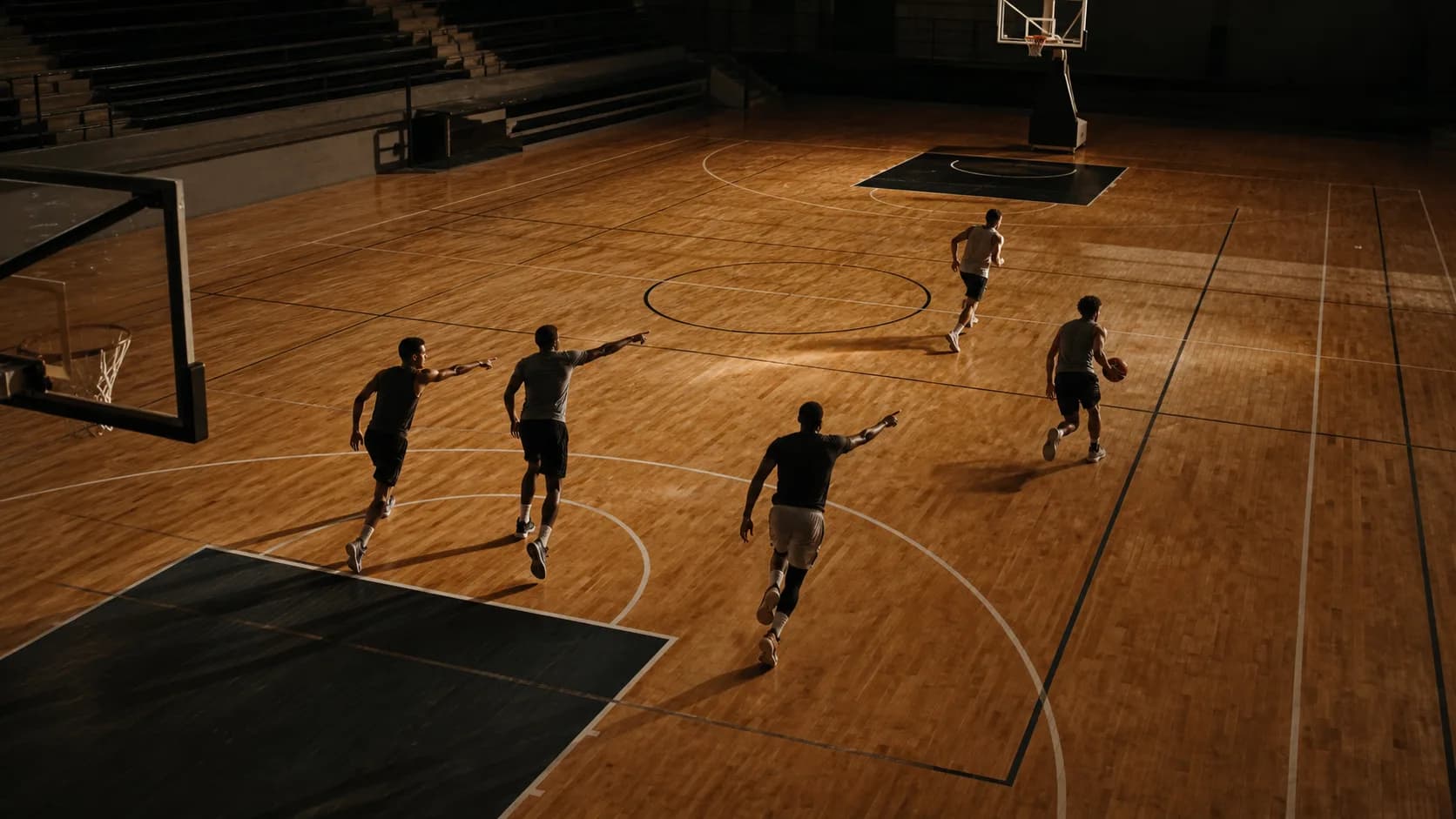
Being more aggressive does not mean forcing shots or driving blindly into traffic. It means putting constant pressure on the defense with decisive attacks that still have a read attached. Attack closeouts, hunt the paint, and decide before you catch, so you pressure the defense without turning the ball over or forcing bad shots. Controlled aggression is a skill, and reckless aggression is a turnover machine. The difference is the read.
How to play aggressive and in control: - Aim your aggression at the paint and at closing-out defenders - Decide your read before the ball arrives, not after - Attack hard, but pull out when the defense takes the drive away - Be decisive: a fast wrong choice beats a slow one, a fast right choice beats both - Build the reads in film and reps so they are automatic
Coaches do not want less aggression. They want aggression with a brain behind it. The player who attacks every closeout and finishes at the rim is not the same as the player who dribbles into three defenders and hopes. Both look aggressive. Only one helps you win, and the gap between them is entirely in the decision.
What Does Controlled Aggression Actually Mean?
Controlled aggression means pressuring the defense on every possession while still taking good shots and making good passes. You are the one dictating the action, forcing defenders to react to you, but each attack carries a read. You drive hard, and when the defense takes the drive away, you pull out and hit the open man instead of forcing through a wall.
Reckless aggression is effort with no read. Controlled aggression is effort aimed at what the defense gives up. The paint is the target because pressure there collapses a defense, which either gets you a layup or bends the defense enough to create an open shot for a teammate. Learning to see what the defense concedes is the same defense-reading skill that turns a scorer into a threat the whole offense flows through.
How Do You Attack a Closeout?
You attack a closeout by reading the closing defender in the moment they run at you, then punishing whatever they give up. A defender sprinting at you has to make choices, and every choice opens something. Your aggression is in attacking on the catch; your control is in choosing the right attack.
Here is the worked read. The pass is coming and your defender is closing out. If they close hard and out of control, their momentum is a gift, so drive past them before they can plant a foot. If they close out short and stay low to protect the drive, they have conceded the shot, so rise up and take it. If they run at you at an angle to force you one way, take the angle they opened and get downhill to the paint. Same catch, three different aggressive answers, each one a read. Getting this right every time is the entire lesson in attacking defenders on a closeout, and it is the single fastest way to score more without forcing anything.
How Do You Stop Hesitating?
You stop hesitating by making your decision before the ball reaches your hands. Hesitation is not a courage problem. It is a timing problem. You freeze because you are deciding late, after the catch, when the window has already started to close. Decide early and the freeze disappears.
The fix is to know your read before the pass arrives. As the ball swings to you, you should already know: is my defender closing out, is the paint open, where is the help. Then you catch on the attack, not on your heels. This is why film study matters for aggression. Rehearsing reads until they are automatic is how you turn a decision you have to think about into one your body already made, which is a core piece of sharper decision-making. Confidence follows preparation. It does not come from someone telling you to be confident.
When Should You Pull Back?
You pull back when the defense takes the attack away, and doing so is part of aggression, not the opposite of it. An aggressive player is not someone who finishes every drive no matter what. It is someone who attacks hard enough to make the defense commit, then reads whether to finish or to kick.
The read is help. If you get downhill and a help defender steps up to wall off the rim, someone is now open, and the aggressive play is the pass, not the forced layup over two bodies. Driving into a crowd and throwing up a prayer is not aggressive, it is a turnover with extra steps. The best attackers put constant pressure on the rim precisely so they can read the help and punish it, exactly the way you beat a backcourt trap by passing ahead. Pulling out to make the right pass keeps the pressure on and keeps the possession alive.
The honest mistake I see: a player told to be more aggressive hears attack every time and starts driving into three defenders on purpose, then wonders why the turnovers pile up. That is not the assignment. The assignment is to pressure the defense and read what it gives back. Aggression without a read just hands the ball to the other team faster.
How Do You Build Aggression That Lasts?
You build lasting aggression by reping the reads until attacking is your default, not a thing you have to psych yourself into. Confidence that comes and goes with your shooting is fragile. Aggression built on knowing the read holds up even on a cold night, because it does not depend on the ball going in.
Rep it with a purpose. In practice, force yourself to attack every closeout and count how many led to a good shot or a good pass versus a forced one. Watch it back and grade the decisions, not the makes. Over time, attacking the paint stops being a choice and becomes what you do, and it stays controlled because the read is baked in. That is the same honest loop that makes you better at basketball and builds the basketball IQ coaches trust in a close game.
The Bottom Line
Aggression is not recklessness, and it is not effort for its own sake. It is decisive pressure on the defense with a read attached to every attack. Aim at the paint, attack closeouts, decide before you catch, and pull out when the defense takes it away. Do that and you become the player coaches beg for: aggressive enough to break a defense, controlled enough to be trusted with the ball.
Want to see how a defense plans to guard you and where your aggression should be aimed? Ask the HoopBrief Matchup Engine. It turns a matchup into a concrete plan for where to attack and when to pull back.