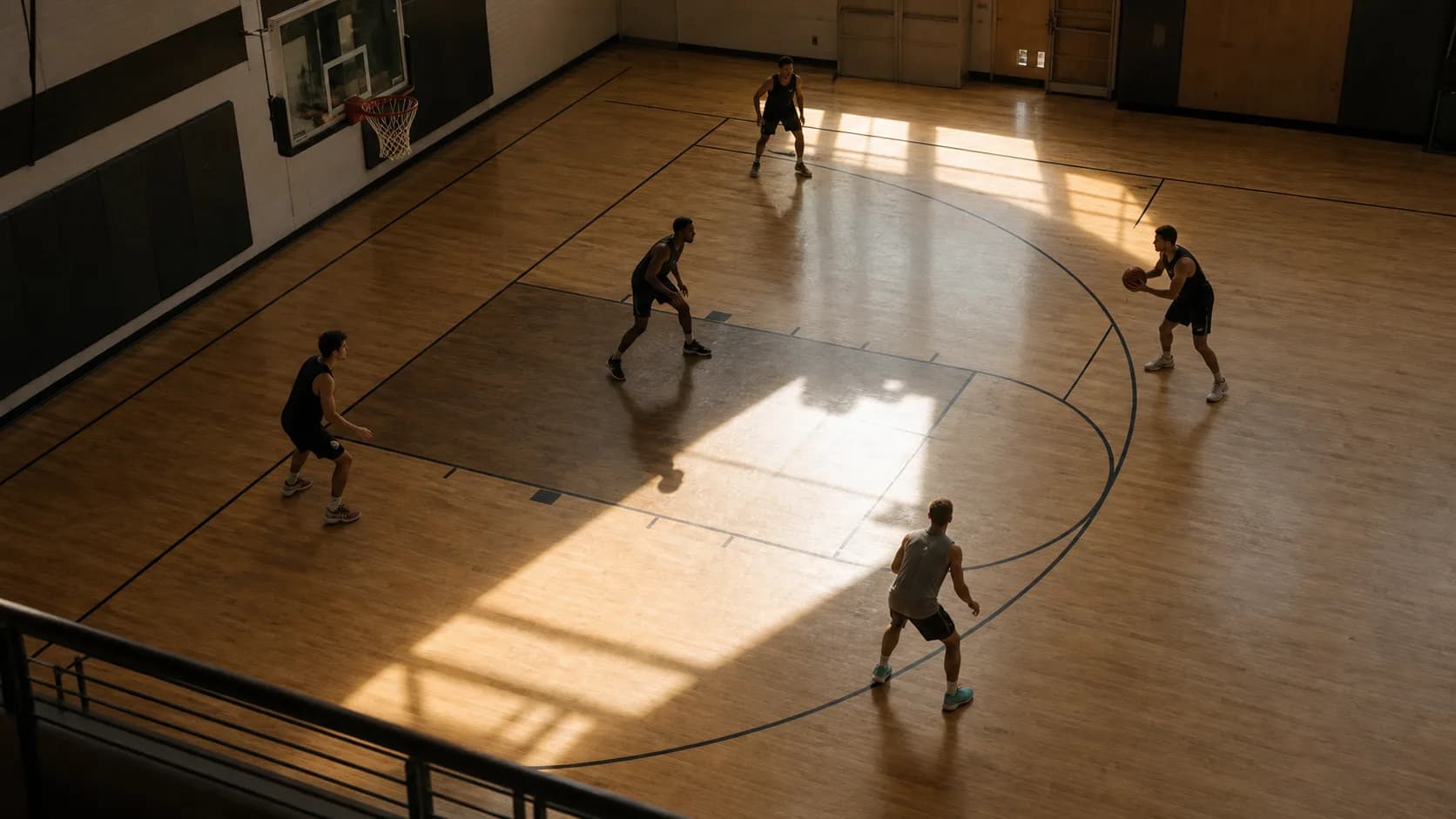
The four reads at a glance:
- Over the top: your man chases high, so use the screen and drive.
- Under: he slides below, so rise into the pocket pull-up.
- Switch: new defender on you, so attack the mismatch fast.
- Blitz or hedge: two on the ball, so hit the short roll.
- Reject: they overplay the screen, so refuse it and drive the other way.
How Do You Read Over Versus Under on a Ball Screen?
Watch your own defender at the moment the screen lands. If he fights over the top of the screen, staying glued to your outside shoulder, he is chasing you off the line and giving you a live drive. If he ducks under the screen and the screener's defender, he is conceding the shot to stay in front of the drive. His path is your read.
Over means drive. He is trailing your shoulder and the screener's defender is in drop, so you turn the corner tight off the screen with your inside shoulder and attack the pocket before the big can rotate. Under means shoot. He went below, so there is a full beat of daylight behind the screen. Rise into the pull-up in that pocket without hesitation, because the window closes as soon as he recovers. The tell is simple: high path means he took your shot away, low path means he took your drive away. You take the other one.
Naming the screener's-defender coverage that pairs with this is the whole point of pick-and-roll coverages explained. Over plus drop is the most common look you will see, and the pocket floater is its answer.
When Should You Reject the Screen Instead of Using It?
Reject the screen when the defense over-commits to it. If your defender jumps early to the screen side, top-foot angled hard to force you into the pick, the whole defense is leaning one way. Refuse the screen and drive the empty side.
Here is the read. As you come off the dribble toward the screen, your man cheats over the screen a half-second early to beat you to it, and the screener's defender slides toward the screen to help. Both defenders have committed to the screen side. Reject it: cross back the other way, away from the screen, into the space they just vacated. A rejected screen turns their aggression into an open lane. This is the same top-foot read the defense uses to ICE you in how to read a defense in basketball, used against them.
The reject is not a first option. It is a punishment for a defender who guesses. Show them the screen enough that they lean, then refuse it.
How Do You Attack a Switch Off a Screen?
Attack the switch before the defense settles, because the mismatch is only open for a beat. When defenders switch, you usually get a slower big on you or a smaller defender on your screener. The switch is not the problem. Waiting is.
Two immediate counters. If the big switches onto you, attack him off the dribble right now, before he sets his feet, while he is still turning to find you. If a guard switches onto your screener, throw the screener the ball on the seal and let him go to work on the little defender before help digs. The full decision of which mismatch to hunt and when lives in how to read a switch: who to attack and when. The mistake is the swing pass that lets the defense reset the switch. Attack in the first two seconds or you have wasted it.
How Do You Beat a Blitz or Hedge on the Screen?
Get the ball out of the trap fast. A blitz sends both defenders at you, and a hedge sends the big out to slow you before recovering. Either way, two defenders are now on the ball, which means their four teammates are guarding your five in the space behind the trap.
The read and the pass: as both defenders close, do not dribble into the trap and do not pick up your dribble under pressure. Split only if there is a clear seam between them. Otherwise, get off the ball early to the screener slipping into the short roll, the open middle vacated by his own defender. Now the roller catches with a four-on-three in front of him and makes the next read, exactly the short-roll decision covered in how to run a pick and roll. Against a hedge, use the screener's momentary help against him: attack downhill the instant he turns to recover, before he reconnects to the roller.
The trap only works if you let it swallow you. Move the ball before it closes and a blitz becomes a four-on-three the other way.
What Is the Common Mistake Reading Screens?
The common mistake is deciding your move before you read the defense. Players lock into shoot or drive as they come off the screen, then run straight into a coverage built to take that exact thing away. The screen is a read, not a script.
This read-first approach is not for a young player who has not repped the moves yet. If you cannot yet make the pocket pull-up and the corner drive on demand, learn those finishes first, then add the reads on top. Reading a coverage you have no counter for just gets you stuck. Build the moves, then build the reads that choose between them. That layering is the whole progression in how to improve your basketball IQ.
The Bottom Line
Reading a screen is about letting the defense move first. Watch the two defenders at contact, name over, under, switch, or blitz, and take the counter that coverage hands you. The screen does not have one right use. It has four, and the defense picks which one for you every time.
To see how a specific team defends ball screens and which counter scores against them, the HoopBrief Matchup Engine reads the coverage and prescribes the play in seconds.