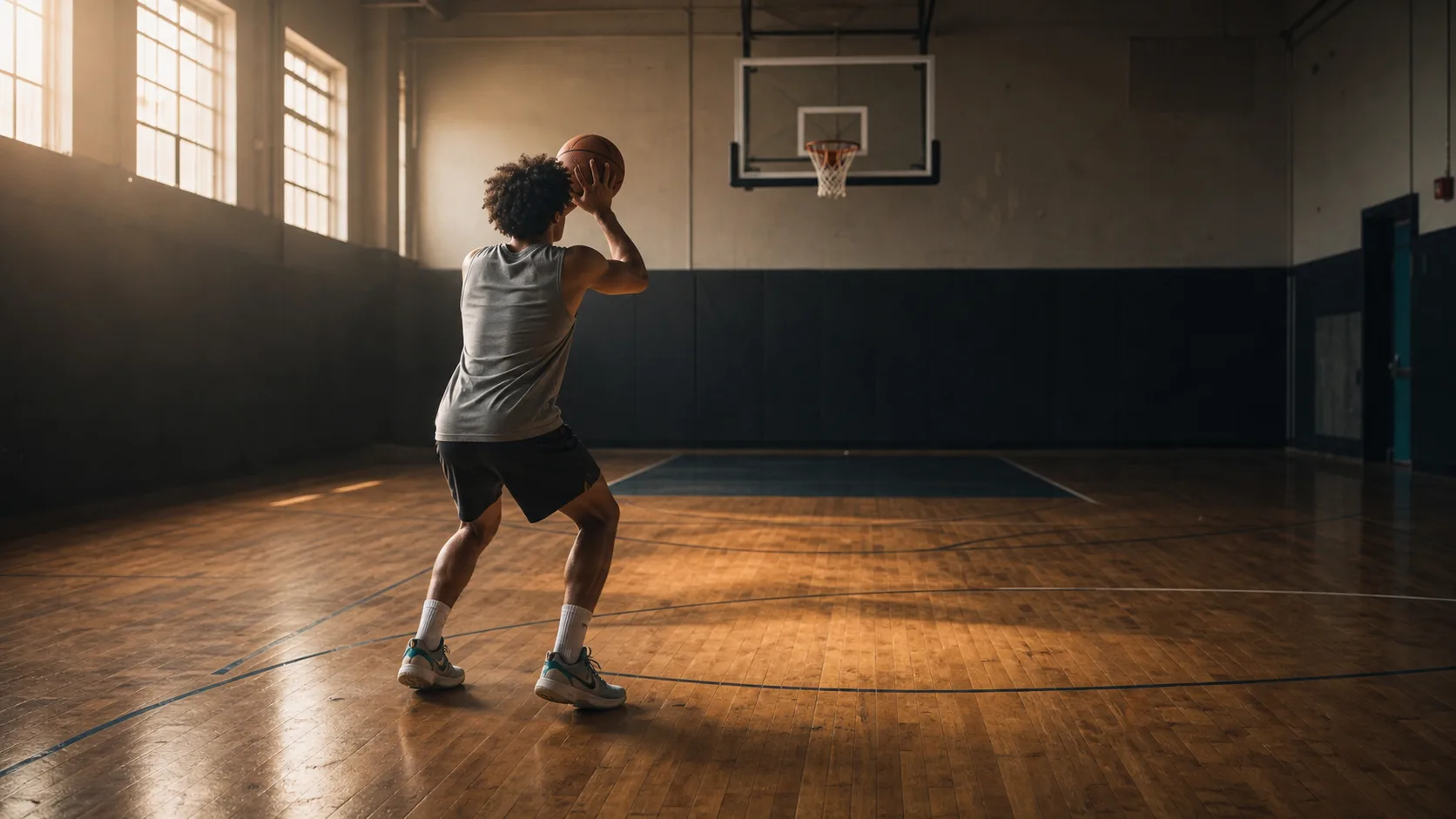
This is the difference between chasing the game and playing ahead of it. Reflex is a ceiling you were mostly born with. Anticipation is a skill you build, and it is where the real speed lives.
How to actually get faster: - Understand that anticipation, not reflex, is what you can train - Learn the cues, the hips and shoulders that telegraph the action - Rep those cues on film until you name them before they happen - Build the same reads live with constrained drills - Trust the read early, because hesitation eats the head start you built
Most players try to get faster by training their body. The players who actually beat you to the spot got there by training their eyes.
Is Reaction Time Even Trainable?
Your raw reaction time, the milliseconds it takes to respond to a beep or a light, is mostly fixed and improves very little with practice. That is the part people waste time on. What is highly trainable is anticipation, and anticipation is what actually decides who gets to the spot first.
Anticipation works by giving you a head start. If you read the cue that tells you a drive is coming, you begin your slide before the first step, and now you are effectively faster without moving any quicker. The whole idea of playing a half-step ahead is the core of how to improve basketball IQ. Speed on the floor is usually IQ wearing a track suit.
What Is the Difference Between Reaction and Anticipation?
Reaction is responding to something you did not see coming. Anticipation is reading a signal that tells you what is coming, so you move before it fully arrives. The scoreboard cannot tell the two apart, but they are trained in completely different ways.
Here is the concept that matters most, called perception-action coupling: elite athletes are not processing faster, they are perceiving the right cue earlier and linking it straight to a movement. They see the ball handler's hips turn and they are already sliding, no conscious decision in between. Building that link is the goal, and it is the same engine behind how to anticipate plays in basketball.
Which Cues Should You Read?
Read the body before the ball, because the body commits first. The hips and shoulders of the player you guard telegraph direction a beat before the dribble goes. A passer's eyes and shoulders point at his target before the ball leaves his hands. On the ball, the pivot foot tells you what is legal and what is coming.
Worked example. You are guarding a driver and you keep getting beaten. Stop watching the ball. Watch his hips: when they drop and turn, the drive is coming, and that hip turn happens a full beat before the crossover. Read the hip, not the ball, and you start your slide early enough to stay in front. Reading these signals is the foundation of how to read a defense in basketball applied to the other side of the ball, and it directly powers how to guard someone in basketball.
What Drills Actually Build It?
Build anticipation with two kinds of reps: film reps and constrained live reps. On film, pause before each action and call what is coming out loud from the cue, then let it play and check yourself. This trains your eyes to find the signal early, off the pressure of live speed.
Live, use constrained drills that force a specific read, like a closeout drill where you must react to the offensive player's shoulders, not a coach's call. Small-sided games with a rule that rewards the early read work better than open scrimmage, because they repeat the cue over and over. This is decision training as much as speed training, which is why it overlaps with how to improve basketball decision-making. Reps on the pattern beat reps on the reflex.
A simple way to structure it: pick one cue for a week, like the driver's hip turn, and make that your only job in every closeout and live rep. Do not try to read everything at once. You are building one clean perception-action link at a time, and stacking a new cue each week compounds faster than trying to see the whole floor from day one.
Who This Is Not For
This is not for the player looking for a reaction-light gadget that makes him twitchy in two weeks. Those tools train a general responsiveness that transfers poorly to the specific reads basketball asks for. The time is better spent reading real cues on film and in live reps.
It also asks for patience, because reading cues early feels slow before it feels fast. You will guess wrong while your eyes learn the signal. Players who quit at that stage stay reactive forever, chasing the play instead of meeting it.
The Bottom Line
You do not get faster by training reflex, you get faster by training anticipation. Read the hips and shoulders, rep the cue on film until you name it before it happens, and build the same read live. Play sooner and you play faster, without moving any quicker.
One way to train the read off the court: ask how a scout would break down a specific player's tells, then watch for those cues on tape. The HoopBrief Matchup Engine turns a matchup into the exact cues to read, and Starter is $9.99/mo.