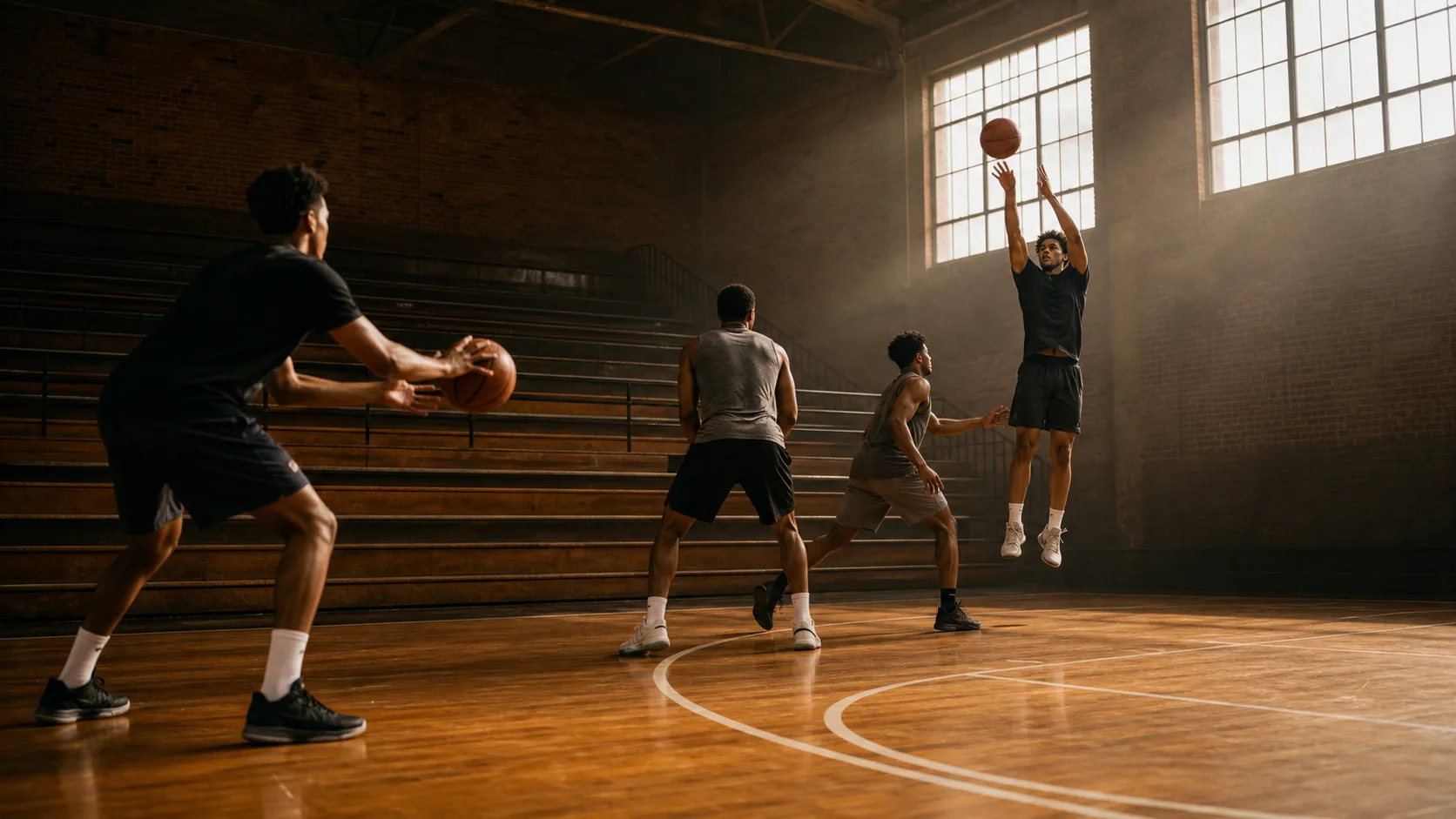
Getting open is a skill you can learn, not a gift for the fast and tall. It comes from moving with purpose off the ball: setting your defender up, cutting hard, and reading what they give you. Use v-cuts to create space on the perimeter, back cuts to punish an overplaying defender, and relocation to stay a threat after you pass. Read the defender's eyes and feet, and space appears.
The four moves that get you open: - V-cut: fake toward the rim, plant, and cut back to the ball - Back cut: when your defender's eyes leave you, cut behind them to the basket - Relocate: after you pass, move to a new open spot instead of watching - Read the defender: their feet and eyes tell you which move to make
The single biggest reason players stay covered is that they stand still. A stationary player is the easiest assignment in basketball. Movement with a purpose behind it is what forces your defender to make a choice, and every choice they make is a chance for you to get open.
Why Are You Getting Covered?
You are getting covered because you are easy to guard, and the most common reason is that you stop moving. When you stand in one spot and wait for the ball, your defender can watch both you and the ball with zero effort. You have given them nothing to react to.
The fix is not running around randomly, which just tires you out. It is moving with intent. Every cut should either get you open or move your defender out of a teammate's way. Even the best scorers off the ball are not faster than everyone, they are just always doing something that forces a decision, which is the whole idea behind scoring without the ball in your hands.
How Do You Use a V-Cut to Get Open?
A v-cut gets you open on the perimeter by tracing the shape of a V. You take your defender toward the basket for a few steps, plant your inside foot hard, and cut sharply back out to the ball. The trip inward relaxes the defender and closes the space; the hard cut out creates the gap you need to catch clean.
The details matter. Sell the first move. Walk or jog in like you have given up on the ball, then explode out. A lazy v-cut fools nobody. Plant low so your change of direction is sharp, not a rounded curve a defender can ride. Done right, you catch the ball with a step of separation and your defender scrambling to recover. That step is all the advantage you need to shoot, drive, or pass.
What Is a Back Cut and When Do You Use It?
A back cut is a cut behind your defender toward the rim, and it is the counter to a defender who overplays you. The read is the defender's head. The instant their eyes leave you to track the ball, or they lean and reach into the passing lane to deny you, cut hard backdoor to the basket.
Here is the worked read. You want the ball on the wing but your defender is right in the passing lane, hand extended, chest into you, eyes locked on the ball. That aggression is a trap you can spring. Take one step out as if you are still fighting for the perimeter catch, then plant and cut straight behind them to the rim. Their momentum and their turned head mean they cannot recover. A good passer hits you in stride for a layup. Punishing an overplay is the same idea as reading help defenders: the defense commits, and you attack the space they left.
How Do You Read the Defender's Eyes and Feet?
You read the defender to know which move to make, because getting open is a reaction, not a script. Two things tell you almost everything: where their eyes are and how their feet are set. Watch those, and the defender chooses your move for you.
If their eyes are on the ball and not on you, they are blind to a back cut, so go backdoor. If they are pressing into you and crowding your space, they are vulnerable to a v-cut, so create separation. If their weight is on their heels, a hard cut past them wins. Learning to read this is the off-ball version of reading a defense, and it is the fastest way to get better at basketball without adding an inch of height or a step of speed.
The honest mistake beginners make: they decide on their move before they look at the defender. They run the same v-cut every time, even against a defender playing off them who would happily let them catch and would love for them to cut back out into traffic. Look first. Move second.
What Do You Do After You Pass the Ball?
You relocate. The most common way good players disappear from a possession is passing the ball and then standing still to watch it. The instant you pass, your defender relaxes, and that is your chance to move to a new open spot without them noticing.
Pass and cut, or pass and relocate to open space. Even a simple move after passing keeps your defender working and keeps you a live threat for the return pass or the offensive rebound. Standing still after a pass tells the whole defense they can ignore you, which shrinks the floor for your teammates. Staying in motion with a plan is a core habit of high basketball IQ and it is the difference between a player the offense flows through and a player it flows around.
The Bottom Line
Getting open is not about being the fastest or the tallest. It is about refusing to stand still and reacting to what the defender gives you. V-cut when they crowd you, back cut when their eyes drift, relocate after every pass, and read their feet and eyes before you move. Do that and you will be open more than players far more athletic than you.
Want to see how a scout would map the exact defender guarding you and where your space will be? Ask the HoopBrief Matchup Engine. It turns the read you make off the ball into a concrete plan you can rep.