Game Prep9 min readUpdated

How to Defend the Dunker Spot and Baseline Cuts

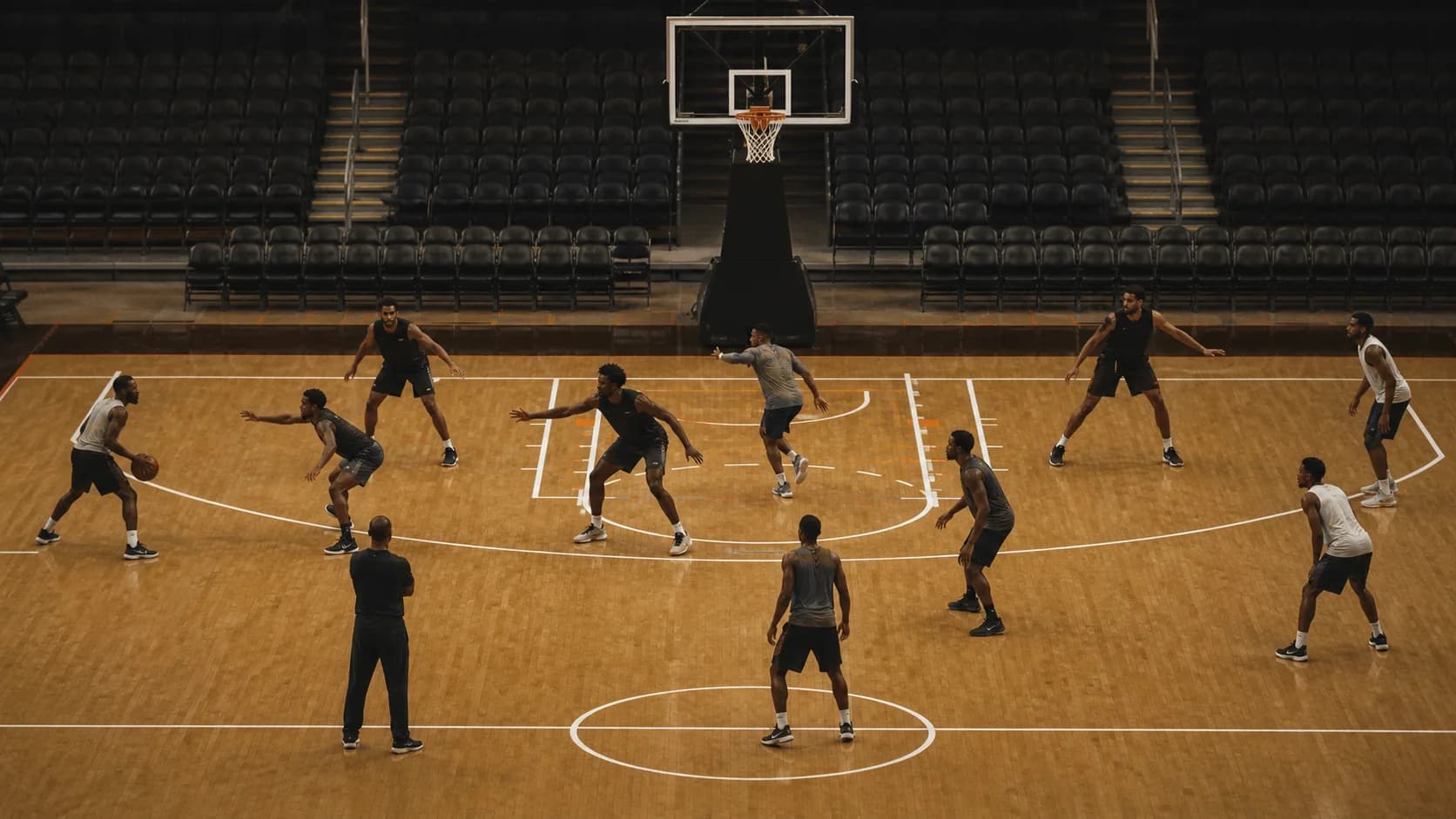
The dunker spot and the baseline are where drives turn into dunks. Here is how to tag the roller, guard the cutter, and take away the backdoor without giving up a three.

HE
HoopBrief EditorialCoaching Intelligence Team
Built on 122K+ charted shots and 65K tracked matchups. Source-backed Scouting-grade detail Free to start

Quick answer

To defend the dunker spot and baseline cuts, keep the low weak-side defender ready to tag the roller and cover the dunker, stay on the high side of every cutter so you are between him and the ball, and deny the backdoor by keeping a hand in the passing lane while your body protects the rim. The whole job is deciding when to help low and when to stay attached, so you take away the layup without giving up the corner three.

The baseline is where drives and pick-and-rolls turn into dunks, and the dunker spot is the launch pad. Offenses hide a lob threat or a rebounder there because it lives in the defense's blind spot. Defending it is a constant trade-off: help too early and you give up an open corner three, help too late and you give up a layup. The same tension shows up on every baseline and backdoor cut. Getting the timing right is one of the clearest markers of defensive IQ, the kind scouts notice. For the bigger picture, pair this with how to read a defense and positioning IQ.

How do you defend the dunker spot? Assign the low weak-side defender to guard the dunker and be ready to help, but keep him close enough to recover to the corner. The dunker spot player is dangerous because he sits right in the help path, so his defender has to do two jobs: bump or tag a roller and driver headed to the rim, then get back out to his own man if the ball kicks to the corner. The rule is to help early and short, meaning step in to take away the layup for one beat, then recover. Sinking too far or staying too long is what gives up the open three that beats you.

The read is about the ball. When the ball drives baseline or a roller is coming, the dunker's defender steps in to protect the rim. When the ball is out top and no drive is live, he stays attached to the dunker so there is no easy dump-off pass. Good low defenders are always adjusting their depth to the ball.

What does it mean to tag the roller? Tagging the roller means the low help defender briefly steps into the roller's path to slow him, then recovers to his own man. On a pick-and-roll, when the big rolls to the rim, the weak-side low defender, often the dunker's man, is the tagger. He bumps the roller off his line so the ball-handler cannot throw an easy pocket pass for a layup, then sprints back to his assignment. The whole thing takes a fraction of a second. A tag is a bump and recover, not a full commitment. Overcommit and the offense simply skips the ball to the shooter you left, which is exactly the trade the offense wants.

This is why the dunker spot is such a stress point. Whoever guards it is usually the single-side tagger, forced to help on the roll alone while staying responsible for a corner shooter. It is a genuine 1-on-2 for a beat, and the timing of the tag is what decides whether you give up a layup or a three or neither. To see how this fits into full coverages, read pick-and-roll coverages explained.

Worked example: side pick-and-roll with a dunker spot filled Ball-handler runs a side pick-and-roll on the right wing. The screener rolls hard to the rim. A shooter is spotted in the left corner, and his defender is the low man in the weak-side dunker area. Here is the read.

As the roller dives, the ball-handler turns the corner looking for the pocket pass. The weak-side low defender, guarding the left-corner shooter, has to tag the roller: he steps in toward the rim to bump the big and take away the layup line, showing enough to make the pocket pass a bad idea. The moment the ball-handler picks up his dribble or passes it back out, that same defender sprints back to the corner shooter before the ball can be swung there. If he tags too hard and stays, the offense reverses the ball to the left corner for an open three. If he never tags, the roller catches and dunks. The correct answer is a sharp, short tag and an immediate recovery, timed to the ball. That decision, made in under a second, is the entire skill.

How do you defend baseline and backdoor cuts? Beat the cutter to the spot and keep your body between him and both the ball and the rim. Here is the quick reference for the three cuts you see most along the baseline.

CutThe dangerHow to defend it
Baseline cut under the rimCutter catches for a layupStay high side, jump to the ball, force the catch outside the paint
Backdoor cutPunishes an overplaying defenderKeep a hand in the lane, body toward the rim, slide with the cutter
Dunker duck-inSeals for a dump-off dunkFront or half-front on the ball side, get low help behind

The habit under all three is the same: see the ball and your man at once by opening your stance, point one hand at each, and never turn your head fully to watch the ball. Cuts beat defenders who ball-watch. On a baseline cut you stay on the high side so you are always in the passing lane. On a backdoor you keep your body between the cutter and the rim and slide, rather than reaching and trailing. Talk early when a screen is coming so a teammate can bump the cutter while you recover.

Reading it live, not guessing Defending the dunker and the baseline is a series of small timing decisions, and the players who win them are reading the ball, not reacting late. Scouts and coaches notice the defender who tags on time, recovers to the shooter, and never gives up the free layup, because that judgment separates good team defenders from athletes who guard one man well. When you prep for a team that loads the dunker spot or runs a lot of baseline action, [ask HoopBrief](/ask) how they attack the baseline and where their dump-offs come from, or build it into your plan with [scout](/scout). Keep training the underlying skill of seeing the whole floor with [positioning IQ](/blog/positioning-iq-where-to-stand-on-defense) and [how to read a defense](/blog/how-to-read-a-defense-in-basketball). Help early, help short, and recover every time.

Try HoopBrief free

Turn this into a scouting report

Ask HoopBrief how this applies to a real player, matchup, or team and get a scouting-style breakdown in seconds. Free to start.

Ask HoopBrief a basketball question

Frequently Asked Questions

What is the dunker spot in basketball?

The dunker spot is the area just outside the paint along the baseline, on either side of the rim, roughly between the block and the short corner. Offenses park a lob threat or an offensive rebounder there because it sits in the defense's blind spot during a drive or pick-and-roll. From the dunker spot a player can catch a dump-off pass and finish at the rim before help arrives. Defending it well is about knowing when to leave it and when to stay attached.

What does it mean to tag the roller?

Tagging the roller means a help defender steps into the roller's path for a moment to slow him down as he cuts to the rim, then recovers to his own man. On a pick-and-roll, the low weak-side defender is usually the tagger. He bumps the roller off his line so the ball-handler cannot make an easy pocket pass for a layup, buying time for the roller's defender to catch up. The key is that a tag is a quick bump and recover, not a full commitment that leaves a shooter wide open.

How do you defend a baseline cut?

Stay ball-side and on the high side of the cutter so you are always between him and the passer, and jump to the ball as the pass is made. Baseline cuts try to get the defender caught trailing behind, so the fix is beating the cutter to the spot and forcing him to catch outside the paint or not at all. Keep one eye on the ball and one on your man, and open up to see both. If you get screened, communicate early so a teammate can bump the cutter while you recover.

How do you stop a backdoor cut?

Deny the passing lane when you are one pass away and never fully turn your head to watch the ball. Backdoor cuts punish defenders who overplay the perimeter without protecting the basket behind them, so the rule is to have a hand in the lane while keeping your body between your man and the rim. Point one hand at the ball and one at your man, and open your stance so you can see both. If the cutter goes backdoor, drop your lead foot and slide with him toward the rim rather than reaching.

Sources

  1. hoopstudent.com
  2. slappinglass.substack.com
  3. hooptactics.net

About the Author

HE

HoopBrief Editorial

Coaching Intelligence Team

The HoopBrief editorial team writes from the same lens system used in subscriber reports: 12 perspectives on every possession, applied to real NBA data across the season.

Get the edge.

HoopBrief gives you the same level of detail NBA coaching staffs use. Micro-behaviors, positioning guidance, and matchup intelligence, applied to every playoff series, every week.

Ask HoopBrief a basketball question

Newsletter

Get the next playoff brief in your inbox.

Coaching-lens coverage of every NBA playoff series, plus the micro-behavior tags from the subscriber reports. Free, weekly.

We'll never share your email. Unsubscribe in one click.