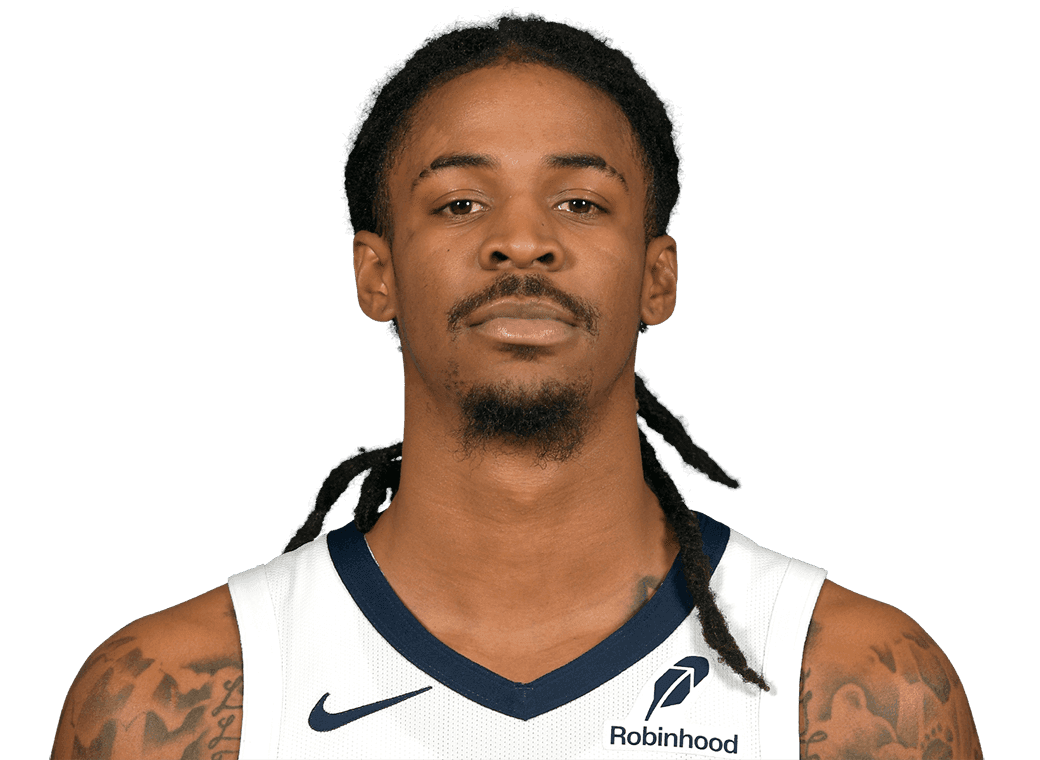
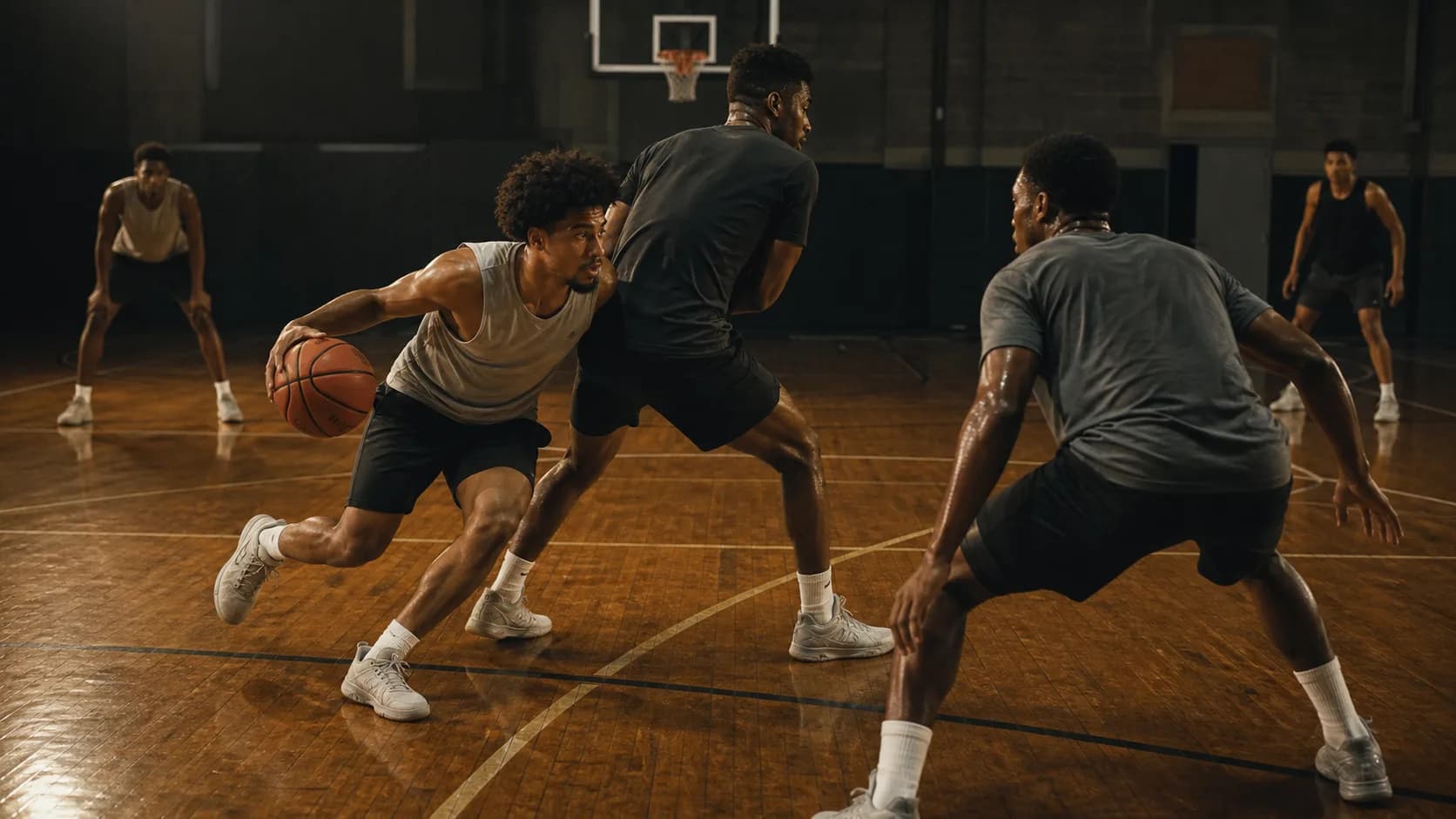
Memphis traded Ja Morant to Portland for Jerami Grant and Kris Murray, and now Morant runs point for a young, long Blazers team that made its first playoff appearance since 2021. The context around him has changed, but the core defensive problem has not. Morant is one of the most dangerous downhill guards in basketball, and every coverage decision starts with the same question: how do you keep him from getting to the rim with a head of steam?
Start with the rim, not the ball Morant's game is built on speed and verticality. When he turns the corner with space, he is either finishing over the top or throwing a lob, and both are near-automatic. So the first principle is simple: two bodies between Morant and the basket at all times.
That usually means a high, active drop. Your screen defender sits at the level of the screen, not below it, so Morant cannot split or snake into open floor. Your on-ball defender fights over the top and reattaches to his hip. The goal is to funnel him into the pocket of the floor where your big is waiting, and force a floater or a pull-up over length rather than a straight-line drive.
- Keep the big high enough to stunt at Morant but deep enough to recover to the roller.
- Force him left when your personnel allows; make him finish over his off hand.
- Never let the on-ball defender die on the screen. A trailing defender turns a contested pull-up into an open rim run.
Mix your coverages so he cannot read you The fastest way to lose to Morant is to show him the same picture every possession. Elite guards feast on predictability. The best defensive staffs rotate through several looks and disguise them until the last moment.
- Drop as the baseline, protecting the rim and living with early-clock pull-ups.
- Hedge or short blitz on big possessions or late clock to get the ball out of his hands before he builds speed.
- Ice or weak the side ball screens to push him toward the baseline and your help.
- Switch when you have the personnel to put a big, rangy defender on him without a mismatch he can attack.
The point is not any single coverage. It is the sequence. If Morant has to solve a new math problem every trip, his decision speed slows and his turnover risk climbs. If you want a custom coverage plan against a specific Portland lineup, you can ask HoopBrief for a full breakdown.
What changes in Portland's system In Memphis, Morant operated inside a heavy-tempo, rim-pressure identity. In Portland he shares the floor with **Deni Avdija**, who broke out as an All-Star level scorer, plus **Shaedon Sharpe**, **Scoot Henderson**, **Toumani Camara**, and center **Donovan Clingan**. Reporting on the Blazers even floats a veteran backcourt look pairing Morant with a second lead guard, which stresses your defense in a different way.
That roster matters for how you guard him. Clingan is a genuine lob and roll threat, so a big who over-helps on Morant gives up easy dunks on the short roll. Camara and Avdija punish closeouts, so rotations off Morant's drive cannot be lazy. And a second ball handler on the floor means you cannot simply throw two on Morant and forget the rest. Loading up on him now leaves live shooters and cutters, and this Blazers group is built to attack exactly that.
So the adjustment is about your help defenders more than your on-ball defender. Your low man has to be honest to Clingan on the roll. Your nail defender has to hold the paint without fully committing. The coverage on Morant is only as good as the four decisions happening behind it.
Attack his margins on the other end Defending Morant is not only about the coverage. It is about turning his risk into your offense. He plays with pace and creativity, which produces spectacular passes and, when the floor is crowded, risky ones. Wall off his driving lanes and force him into tight windows, and the live-ball turnovers come.
- Build a wall on his drives so his kickouts get contested and his lob angles disappear.
- Sprint back in transition. Morant does his most damage in the open floor, so your defense starts with your shot selection.
- Live with the early pull-up three. It is streaky enough that most staffs will concede it rather than send help and open the paint.
Make him a half-court jump shooter, keep the rim walled, and convert his mistakes into transition the other way. That is the blueprint. For a matchup-specific report on any Blazers lineup, the free scouting tool will build one, or you can compare full coverage plans in our reports.