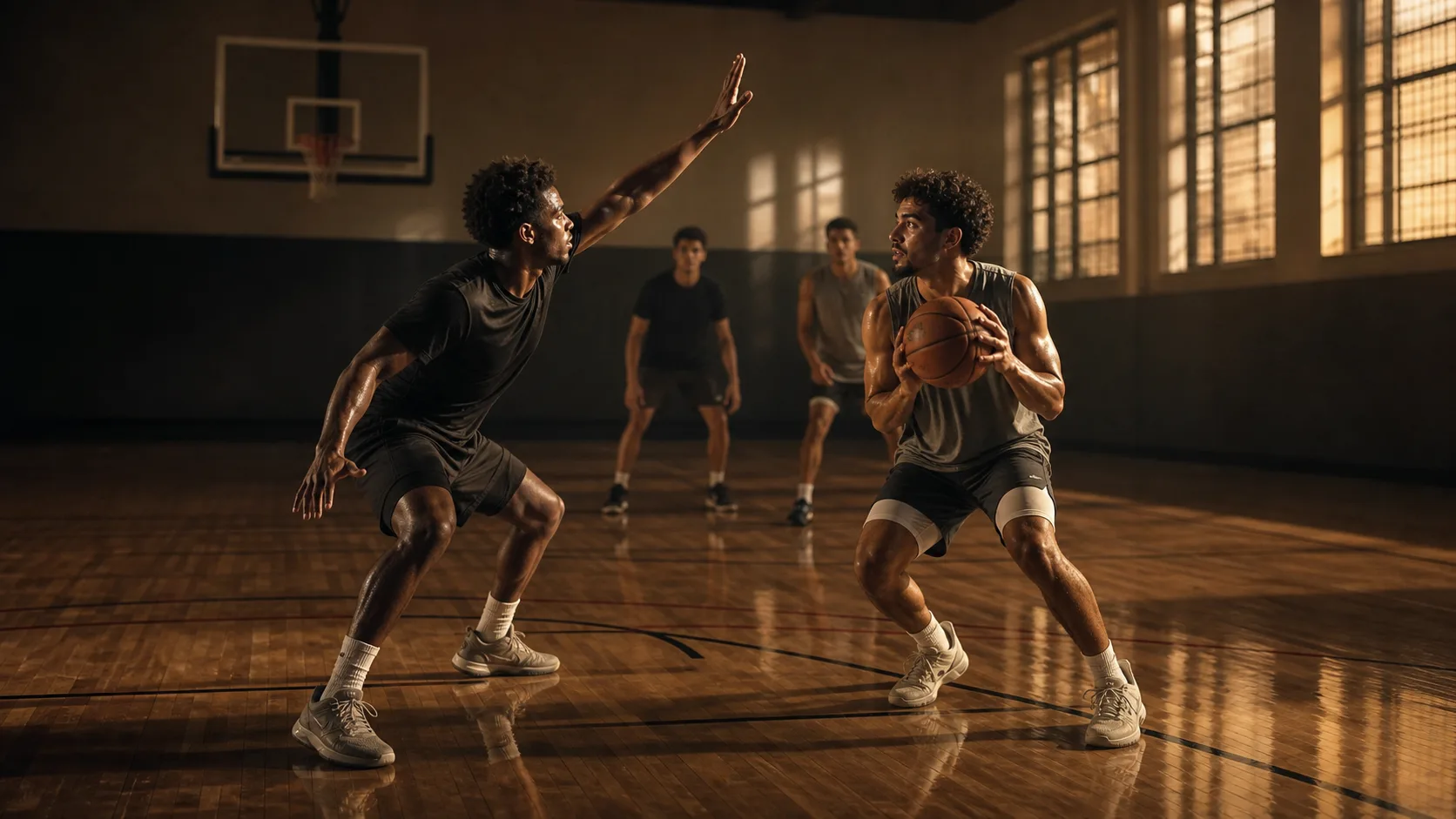
To stop jumping at pump fakes, practice recognizing the shot without surrendering your balance. Start by fixing the closeout that leaves you desperate to recover, then rehearse a grounded contest against an attacker who can genuinely shoot, drive or fake. Repeating “stay down” after every foul does not teach the missing decision.
Discussions around the opening week of the 2026–27 season again highlighted defenders leaving their feet against skilled scorers. The useful lesson for your own game is the decision pattern, not a claim that one NBA highlight proves a universal way to guard every shooter.
Separate a bad approach from a bad reaction
Use three clips or live practice observations. For each one, identify the first avoidable problem.
| What you observe | What to review first |
|---|---|
| You sprint past the catch and jump back toward it | Closeout distance and balance |
| You leave the floor when the ball rises but the shooter stays grounded | Recognition of the fake |
| You stay down, then reach across the shooter's arms | Hand position and recovery |
| You begin too far away to contest a known shooter | Starting position and team assignment |
A balanced defender still needs to respect a credible shot. If you solve every fake by standing several steps away, you may remove a foul while conceding an open jumper. The task is to contest under control, not to stop defending the shot.
Know what the fake is trying to move
The Jr. NBA defines a pump fake as a shooting motion used to make the defender react while the attacker retains the ball. That definition is useful because it directs your attention to the reaction you are giving away.
Notice whether the attacker wants you to jump, straighten your legs, lift your hands out of position or lean onto the front foot. Different reactions create different openings. You do not need to diagnose the scorer's entire skill set; identify the response that repeatedly takes you out of the play.
Film gives you time to compare a real attempt with a fake. Pause before the release and predict the action, then check it. Do not claim there is one visual cue that a skilled shooter can never disguise. Combine the information with the scout, the distance and the situation.
Use a three-choice contest drill
A useful repetition must contain a real choice. Put an attacker at a spot where they can make the shot. The defender closes from a manageable distance. The attacker may shoot, drive or fake into either option.
1. Begin with a controlled closeout and a grounded high hand. 2. Let the attacker choose without announcing the action. 3. Continue the rep after the fake. The defender must contain or recover, not freeze and declare success. 4. Rotate roles and vary the closeout angle. 5. Ask the defender what they recognized before discussing whether the shot went in.
Use your coach's expectations for legal contests and contact. Do not add deliberate collisions to make the exercise feel realistic. The rules and interpretations in your competition matter; an online NBA clip is not an officiating guide for a school game.
Give yourself a recovery rule
If you begin to rise, do not turn a late reaction into an uncontrolled landing toward the shooter. Recover your balance and keep working within legal guarding principles. Ask your coach which late contest is acceptable when the alternative is a likely foul.
On the next rep, move the correction earlier. Did a longer final stride leave you leaning? Did you fail to identify that this opponent prefers a drive? Did the shot clock change the likelihood of a real attempt? Those questions create a practice adjustment. “I need better discipline” alone does not.
For the approach itself, use the closeout footwork guide. For the wider problem, review defending without fouling.
Review attempts, not just whistles
Track every relevant closeout you can reliably observe. Note whether you arrived balanced, left the floor, recovered to the drive and committed a foul. A referee not calling a reach does not make it a sound habit. A contested shot going in does not prove your approach failed.
Use a small tally as feedback, not as a universal readiness score. After several sessions, ask whether the original mistake is becoming less frequent and whether the correction is creating another problem, such as allowing too much shooting space.
Open a free NBA scouting example to see how a shooter's tendencies can frame the question. The value is in asking what the opponent wants your body to do. Apply the answer through your team's coverage and practice reps; a generated report cannot supply the physical judgment for you.