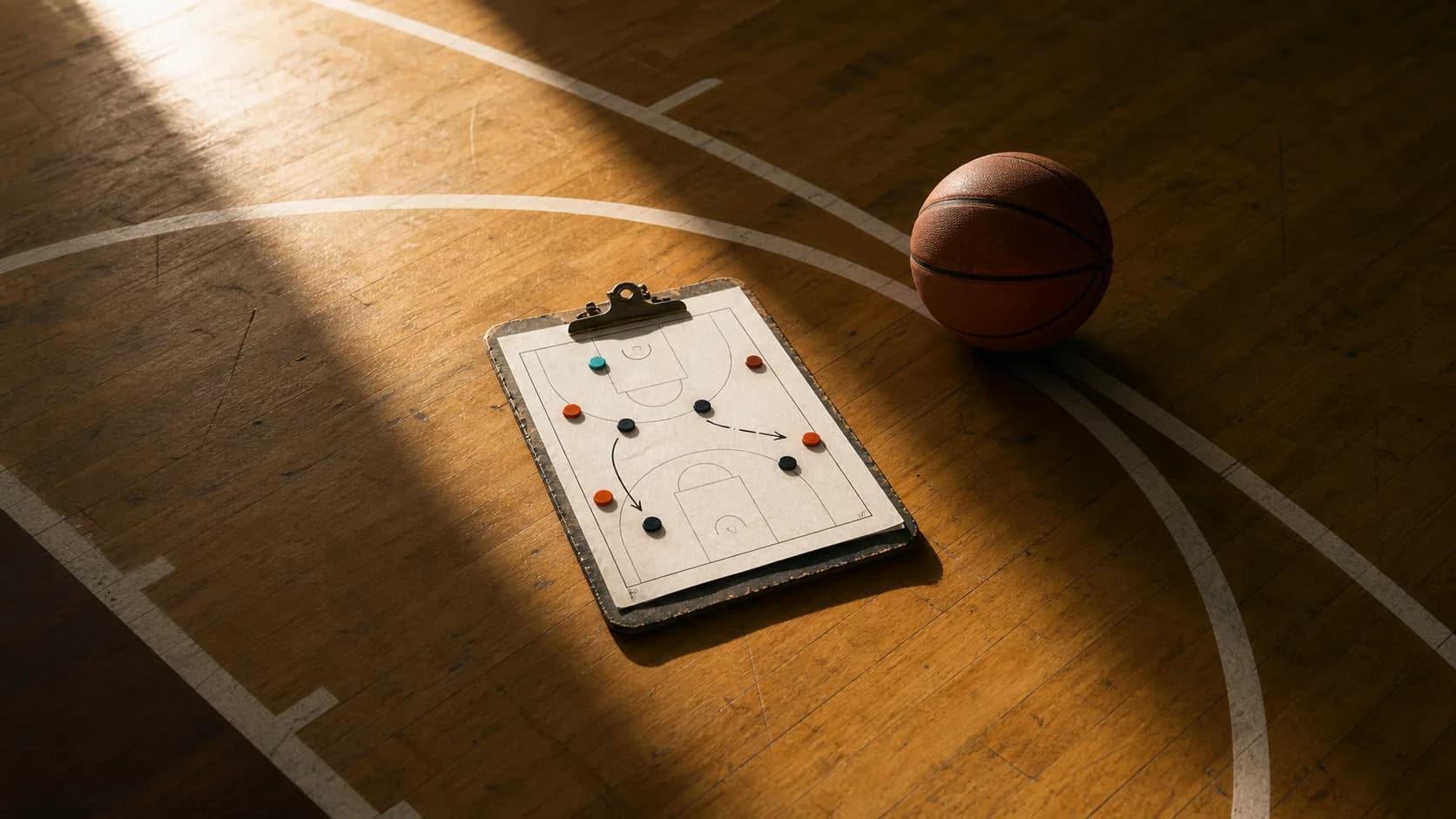
A foul is the worst defensive outcome that doesn't involve giving up a basket. You stopped the action and got nothing for it, except a tally that, by the seventh minute of the third quarter, will pull your best defender off the floor entirely. The discipline of defending without fouling is the discipline of the player who's still on the court at crunch time.
Why Fouling Is the Most-Punished Mistake
Modern free-throw shooting is north of 78% league-wide. Every shooting foul is roughly 1.55 expected points for the offense, higher than the average possession. Add in the foul tally that benches your best player, and the cost compounds.
Compare that to a contested miss: about 0.32 expected points for the offense. The difference between a clean contest and a foul is 1.2 points per possession. Over a season, the team that fouls the least wins games.
Verticality: The Single Most-Important Rule
The verticality principle is the rule that protects rim defenders. If you jump straight up, not forward, not into the body, and contest a shot vertically, you have a right to that space. The ball-handler who jumps into you is the one who gets called for the offensive foul.
Verticality is two things: the jump itself, and the arms. Your arms have to extend straight up, not forward. The moment you reach forward to swat at the ball, you've abandoned verticality. You're now committing the foul.
The rule is simple. The execution requires discipline. Most rim defenders are taught to be aggressive. Verticality is the opposite, controlled, vertical, patient. Trust that the offensive player will shoot a worse shot if you stay vertical than if you swat.
Hand Position on Drives
The hands are where most fouls happen. The instinct is to reach. Reach in. Reach across. Reach down. Every reach is a foul waiting to happen.
The right hand position on a drive is mirror, the hand opposite the ball, ready to intercept a pass, fingers up. The hand on the ball side stays at hip height, palm down, NOT swinging. If you swing the ball-side hand, you're going to get the call against you.
Coaches teach "active hands." That's bad advice for young defenders. Active hands lead to fouls. Quiet hands lead to stops. The hands move only when you have a clean play on the ball, never as a fishing expedition.
The Reach-In Foul
The reach-in is the foul that ends careers, not because it's the worst, but because it's the most-repeated. Reaching is what defenders do when they've already lost the possession. They got beat off the dribble, panicked, and reached as a last resort. The result is always a foul.
The cure: when you've been beat, accept it. Drop a step, slide back, recover. A wide-open 8-footer is a better outcome than a foul. A pull-up middy is a better outcome than a foul. Let the offense have the small win. Don't compound it by fouling.
The biggest mark of a maturing defender is the moment he stops reaching. From that point on, he's playable in the playoffs.
Late Switches: The Discipline of Not Cheating
A late switch is a foul magnet. The big who's switching onto a guard wants to recover, so he reaches as the guard explodes by him. The guard switching onto a big wants to deny position, so he pushes early and gets called for the body foul.
The rule on late switches: be on time or be patient. If you're late, you've already lost the possession, don't compound it by fouling. If you're early, just hold position. Don't push. Don't reach. Just be there.
The teams that switch the most successfully, Boston, OKC, switch with patience. They take the half-second of mismatch, force the offense into a tough shot, and live with the result. The teams that switch poorly try to fight the mismatch with their hands. They foul.
Common Foul-Bait Moves
Every elite scorer has a foul-bait move. You should know it before the game.
- The pump-fake to step-through. The defender bites on the pump, leaves his feet, and the shooter steps through into the body. Solution: stay on the ground until the shot is in motion.
- The arm-bar gather. The driver hooks his off-arm into the defender's body to create separation, then shoots. Defenders get whistled for what feels like contact even when they're vertical. Solution: stay vertical. Don't initiate. The offensive arm-bar is technically illegal but it's never called.
- The reach-back. The driver gets a step, then reaches back to draw a hand-check. The defender reaches in to swipe, and the call goes against him. Solution: don't reach. Just slide and recover.
- The swipe-through on closeouts. The driver pump-fakes, then swipes his hands through the defender's contesting arms. The defender's instinct is to keep the arms up; the call is on him. Solution: pull the arms back and to the side after the contest. Don't leave them in the path of the swipe.
Knowing the move beats reacting to it. That's why scout reports list every star's foul-bait pattern.
The Quiet Edge
Watch a player who never fouls. Notice the stillness. He doesn't reach. He doesn't swat. He doesn't reach across. He's vertical when he contests. He slides when he's beat. He talks when he switches.
That stillness is the highest-level skill in basketball defense. It's not natural, it's drilled out of bad habit, one possession at a time. The player who stops reaching is the player who plays in fourth quarters.
The fewest fouls. The most stops. Same player.
Keep reading: closeout footwork, defensive positioning, and becoming a better defender.