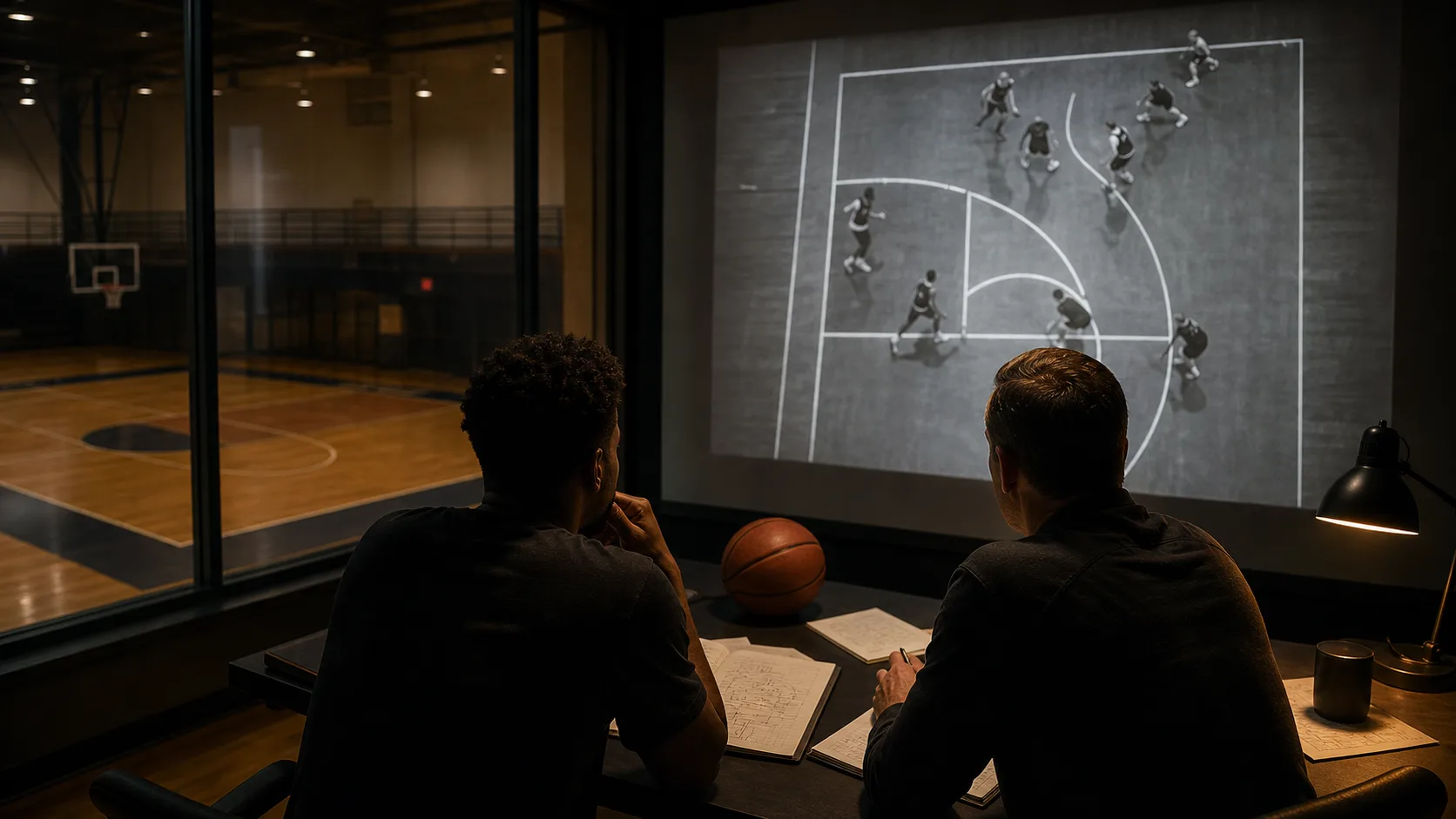
Washington took Dybantsa first overall in the 2026 NBA Draft, and Summer League confirmed the profile scouts had been writing up for two years. He is a jumbo wing with guard skills, the kind of size-plus-handle combination that breaks a defense's normal rules. But Summer League also confirmed the counter. When a young scorer this talented has one clearly unfinished skill, your entire game plan can point him toward it.
Who AJ Dybantsa is as a scoring threat Start with the tools, because they dictate everything. Dybantsa stands around 6-foot-9 with a wingspan near 7 feet, and he moves like a wing, not a big. At BYU he averaged better than 25 points a game as a lead creator, and his best offense is a long-striding drive that eats up space in two dribbles. He gets to the rim with power, finishes through contact, and drew fouls at a high rate in Vegas, going to the line 8 times against Utah.
That means the danger zone is the paint and the free-throw line, not the arc. He is a genuine three-level threat on paper, but right now the third level is aspirational. Treat him like a downhill freight train who would prefer to shoot over you, and you have the priority order right.
Take away the rim, live with the jumper The single most important idea: gap him. Play a step off, invite the shot, and refuse to let him build a head of steam toward the basket. His Summer League line is the entire argument. He shot 39.4 percent from the field and 1 of 11 from three, and several misses were short, a tell that the deep shot is not yet a weapon you have to honor.
Concretely, that looks like:
- Sag off in space and dare him to rise up. A contested pull-up two is a win for the defense until he starts making them.
- Force him left, or force him to his weaker finishing hand with a hard shade, so his best angle to the rim is closed before he starts.
- Meet the drive with a low man early, not late. Length at the rim bothers him more than a second defender arriving after he has already gathered.
This is the same logic you would use against any elite young slasher whose jumper lags his athleticism. If you want the full coverage tree on a wing who already solved the shooting question, compare the plan against how to guard Anthony Edwards and note how much more you have to respect the pull-up.
How to defend the ball screen Dybantsa is going to live in ball screens, because that is where his size lets him see over the defense and pick his attack. The good news for a defense is that his shooting split lets you defend the screen conservatively without much downside.
Drop coverage is your friend here. Sit the big back near the level of the screen, keep Dybantsa in front, and concede the pull-up jumper you are already comfortable giving up. Because he is not yet punishing you from three off the bounce, you do not need to blitz or hard-hedge and expose your back line to his passing. He posted real assist numbers in college, so the moment you send two bodies, he will find the skip pass. Stay home, stay big, and let him settle.
The exception is late clock and the corners. If he has a runway to attack a closeout, that is when his first step becomes a problem, so your closeouts have to be short and choppy, high hands, no runway. Chase him off the line and back into the pull-up, not around a screen into the paint.
Off-ball, transition, and the fouls Two places will still hurt you even with a clean half-court plan. The first is transition. A 6-foot-9 wing who grabs a rebound and goes is nearly impossible to wall off in the open floor, so your defense against Dybantsa actually starts on the offensive glass and with your own shot selection. Get bodies back, build the wall before he crosses half court, and never let him play downhill with numbers.
The second is the foul line. He initiates contact well and hunts and-ones, so your bigs and help defenders have to defend verticality, not reach. Giving him free points at the line is the one way to keep him efficient on a night when the jumper is not falling. Discipline at the rim is the whole ballgame.
The tell that changes everything Every part of this plan is contingent on one variable: the jump shot. The day Dybantsa is knocking down pull-ups and spot-up threes at a respectable clip, the gap-and-sag coverage collapses, and you are back to guarding a jumbo wing with no obvious weakness. That is exactly why Washington shut him down after two games to go work on his shot, and it is why opponents will re-scout him monthly, not once a season.
For now, the read is simple. Build the wall, live with the jumper, defend the rim with verticality, and get back in transition. If you want a coaching-staff-level breakdown tailored to your team's personnel and coverages, ask HoopBrief for a matchup report, or run him through the free scouting tool to see the coverage tree for your roster. Scout the shot chart every few weeks. The moment it shifts, so does the plan.