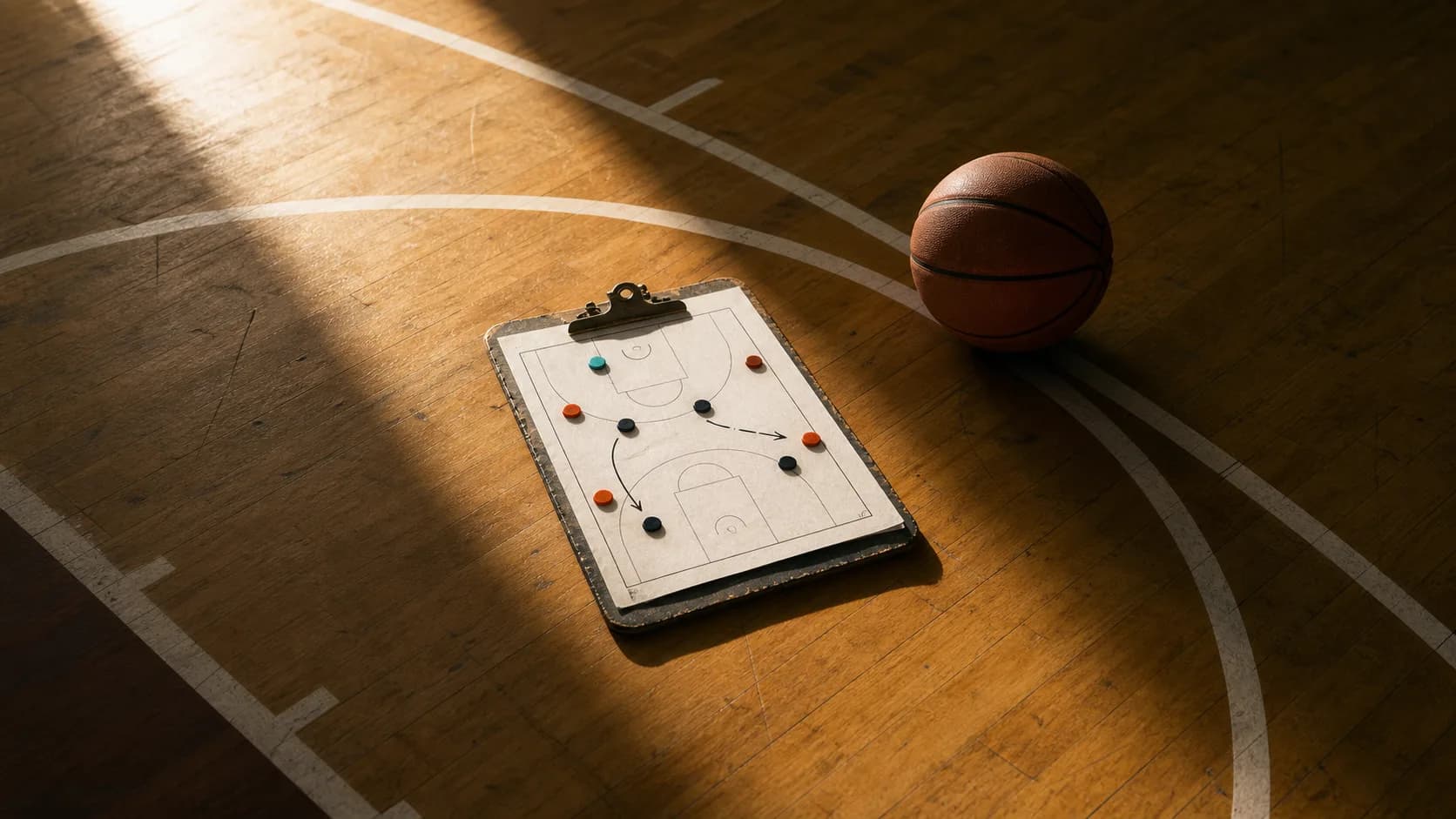
- ball
- defender
- offense
- the read
Switching is the cleanest pick-and-roll defense there is. Two defenders trade assignments at the screen, the action dies, and nobody has to rotate. It is the dominant playoff coverage for teams with five interchangeable defenders. The way you beat it is not to run better actions; it is to go hunting for the one matchup the switch cannot survive.
If you want the defense's view of why teams switch and when, read our pick-and-roll coverages breakdown. This piece is the offense: how to make a switch happen and how to punish it. It pairs with our defense-side read on who to attack after a switch and when.
What is switch hunting?
Switch hunting is deliberately creating the matchup you want by forcing a switch. You are not running the screen to free the ball-handler; you are running it to relocate a defender. A small guard sets a screen for the ball-handler just to pull the opposing center out to the perimeter. A big sets a screen to get a small guard switched onto him so he can post. The screen is the delivery mechanism, and the mismatch is the package.
The concept only works if you know which matchup to hunt before the possession starts. That is a scouting job, not an in-game guess. Knowing what makes a mismatch and which specific defender to target is the difference between hunting and wandering.
The two mismatches worth hunting
There are two switches worth chasing, and they demand opposite attacks.
| Mismatch created | Attack it by | The window closes when |
|---|---|---|
| Slow big on a quick guard | Live dribble at his slower foot, get downhill fast | The low man steps up to wall the drive |
| Small guard on a big | Seal and post immediately on the catch | A dig comes from the nail or the double arrives |
| Weak defender on a shooter | Re-screen or relocate for a clean pull-up | The defense pre-switches the next action |
The guard-on-big mismatch is a race: beat the big before he can sit and use his length. The big-on-guard mismatch is a wrestling match: establish position before the double comes. Same switch, two entirely different clocks.
A worked example
Say the offense wants a switchable center out on an island. The ball-handler brings it up, and a shooting guard comes to set a flat ball screen at the top. The defense switches cleanly, and now the center is on the ball-handler at the top of the key, twenty-five feet out.
This is the hunt working. But here is where most players waste it: they hold the ball and survey. By the time they attack, the center has slid his feet back into a stance and the low man has one foot in the paint ready to help.
The right sequence is immediate. On the switch, the ball-handler attacks the center's slower foot with a single hard crossover and gets into his body before he can retreat. Two dribbles downhill and the read is simple: if the low man steps up to wall the rim, drop the pocket pass or kick to the vacated corner; if the low man stays home, finish over the trailing big. The whole thing happens inside four seconds, before the defense re-rotates. Studying how to exploit a matchup is what tells you which foot is slower and whether that center can even move his feet laterally.
Timing: the four-second window
The mismatch a switch creates is perishable. The instant it appears, a good defense starts loading help toward it, and will send a dig from the nail or a full double within a few seconds. That is why the worst thing you can do is walk it up, call for an iso, and clear out with fifteen seconds left. You are attacking into a set defense with the help already home.
Hunt the switch in the first eight seconds of the shot clock, and attack it on the catch. Early offense catches the defense before it is comfortable and before the help lines are drawn. If the first attack does not score, you still have a full second side to swing the ball and re-hunt, rather than jacking a contested iso as the clock dies.
When the defense fights back
Elite switch defenses have answers, and you need counters to their counters. If they pre-switch before your screen lands, run a second screen right away, because a pre-switch commits them early and a re-screen catches them mid-rotation. If they switch and immediately dig, the mismatch attack becomes a passing read: the dig leaves a shooter, so drive to draw it and kick. If they 'switch up' to keep the guard on the ball, you have already won the physical matchup you wanted, so post or drive the guard.
The through-line is motion. A switch defense is comfortable when it can settle. Keep the ball and the bodies moving, force a second and third switch, and eventually the matchup you want stays put long enough to attack.
Want to know which defender on a specific team is the switch to hunt? Ask HoopBrief for a matchup breakdown that names the slowest foot and the softest post defender in any NBA rotation.