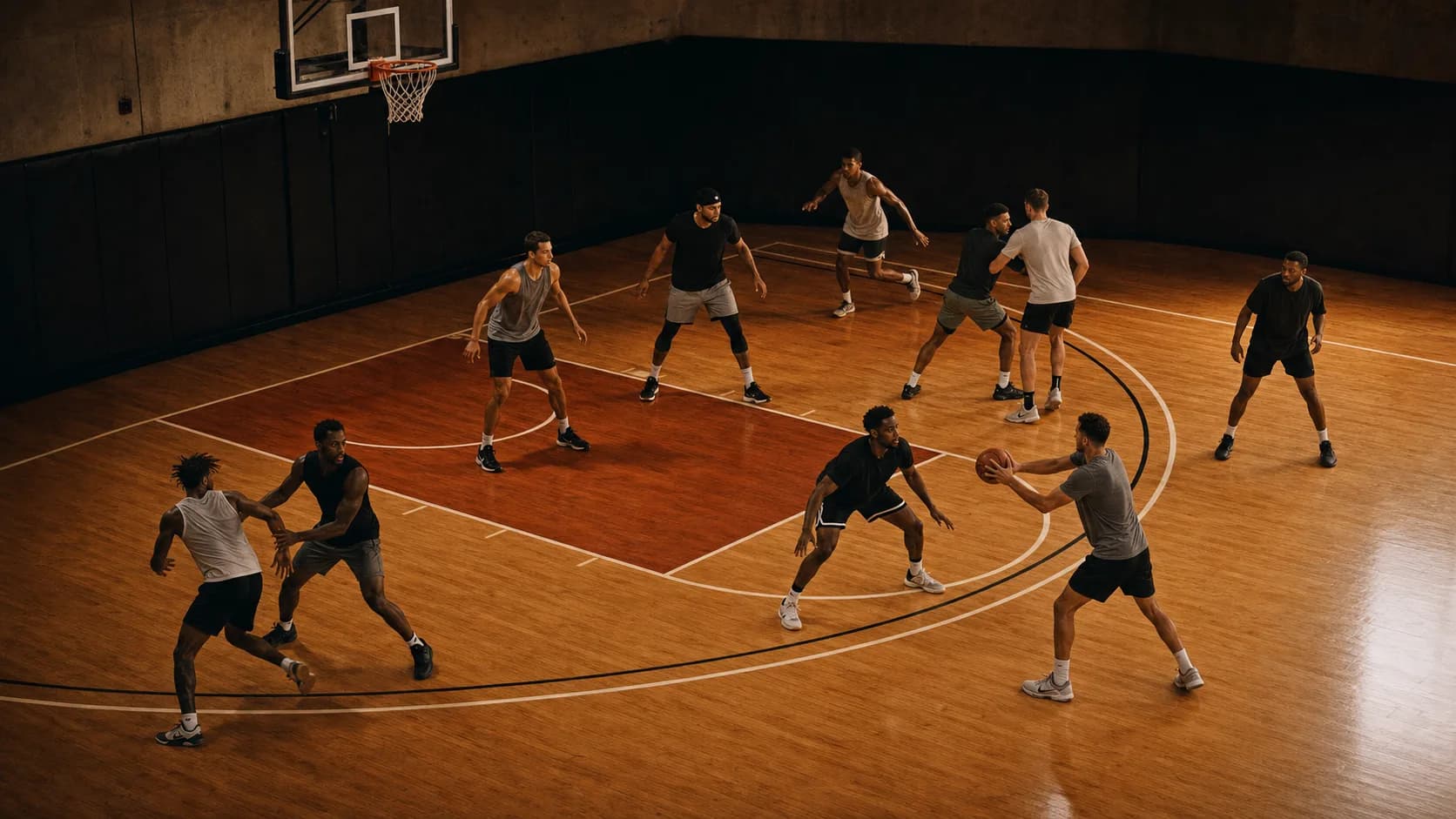
Three years ago, the Knicks were a 47-win playoff team with no clear championship path. In 2026 they won the title. The transformation wasn't built through one big move, it was built through one signing, four trades, and one coaching choice, executed over 24 months with deliberate sequencing.
This is the case study of how the Knicks did it, and what other front offices can copy.
The Brunson Pillar (2024)
The foundation. Jalen Brunson was signed to a team-friendly contract structure that left meaningful cap flexibility through the 2024-2026 window. The market-rate maximum deal would have constrained the rest of the build; the team-friendly structure made the path mathematically possible.
This is the contract decision other front offices most often skip. Star players in their prime tend to demand maximum-rate deals because they can, and most stars get them. The Knicks' deal traded short-term salary for long-term roster construction power, and the trade produced a championship.
The contract decision was paired with a usage decision: Brunson would be the primary handler, the primary scorer, the late-game decision-maker. Not the highest-paid player; the most-important player. The role clarity (see Gregg Popovich's system thinking) was set from day one and never wavered.
The Four Trades (2024-2026)
The supporting cast was built through four trades, each targeting a specific tactical need.
Trade 1: The Switchable Wing The first move targeted a wing defender who could switch onto guards (positions 1-2) and bigs (positions 4-5). The premium for this archetype in the modern NBA is real, Mikal Bridges, OG Anunoby, and Herbert Jones type players command first-round draft capital because they let the defensive scheme function.
Trade 2: The Secondary Creator The second move targeted a wing who could create their own shot when Brunson was off the floor or scouted away. The role: 15-18 minutes per game of secondary creation, not first-option scoring. The Knicks paid for fit, not volume, and the production line they bought was high-PPP, low-usage.
Trade 3: The Center Replacement The third move replaced a traditional non-shooting center with a more mobile big who could switch onto guards in pick-and-roll. The trade widened the team's defensive scheme by 2-3 lineup combinations and added 4-6 minutes per game of viable small-ball.
Trade 4: The Reserve Guard The fourth move targeted a backup guard who could handle the offense for 8-12 minutes per game without producing a turnover spike. The reserve guard role is one of the most-undervalued in the modern NBA, the difference between a 5-turnover bench unit and a 1-turnover bench unit is roughly 4 points of net rating per 36.
Want to study how NBA front offices build championship rosters with NBA-staff lineup tagging? HoopBrief subscriber reports include lineup net ratings across the league, available in your dashboard.
The Coaching Choice (2024-2026)
The hire that mattered most. The Knicks chose a coach whose tactical preferences fit the roster they had, switchable defense, pick-and-roll-centric offense, role clarity, rather than forcing the roster into a famous-name coach's pre-existing system.
The coaching tree this fits into is documented in our Popovich coaching tree piece. The Knicks' head coach is not directly from the Spurs lineage, but the defensive philosophy is conceptually similar: switch everything except specific matchups that produce predictable mismatches.
The coaching decision was paired with three coordinator hires: a defensive coordinator who specialized in switchable schemes, an offensive coordinator whose previous teams had run high-volume pick-and-roll, and a development coordinator whose previous role had produced multiple role-player success stories.
The four-person staff was complementary by design. None of the four was a star coordinator with championship credentials going in; all four had records of producing system clarity. The Knicks bought system fit, not credentials.
The Sequencing Lesson
The four trades and the coaching hire didn't happen simultaneously. They were sequenced over 24 months:
- Month 1 (post-Brunson signing): sign the anchor star.
- Months 3-9: trade for the switchable wing and the secondary creator.
- Months 10-14: hire the head coach and coordinators.
- Months 15-22: trade for the center replacement and reserve guard.
- Months 23-24: integration, scrimmages, system installation.
- Month 25: preseason.
- Months 25-32: regular season + playoff run.
The sequencing matters because each move was made with the full information of the previous moves. The center trade was made *after* the head coach was hired, the coach's preferred system informed which center archetype to target. The reserve guard was added *after* the secondary creator slotted in, the rotation math determined the guard's exact minute pattern.
Most front offices try to build a roster top-down: identify the championship roster, then execute trades in parallel. The Knicks built sequentially: each move informed the next.
Want to study NBA roster-construction patterns across teams with NBA-staff lineup analytics? Start a HoopBrief plan and the 12-lens framework includes lineup-by-lineup PPP and net rating data across the league.
What Other Front Offices Can Copy
Three principles transfer to any market size:
- Sign your anchor to a team-friendly deal. Cap flexibility is a championship variable. Don't trade it away for status.
- Trade for fit, not volume. A 12-PPG wing who fits your defensive scheme is worth more than a 20-PPG wing who doesn't.
- Hire system fit over name brand. Coaches whose systems fit your roster outperform famous-name coaches whose systems require you to rebuild.
None of these are easy. All three require front office discipline and willingness to ignore short-term media pressure. The Knicks had both, executed sequentially over 24 months, and won the title.
Where to Go Next
Foundation reading: Gregg Popovich's system thinking, the Popovich coaching tree 2026.
Player archetype: Play Like Jalen Brunson, the player development case study for the type of star the Knicks built around.
Tactical context: how NBA coaches prepare for playoffs, what coaches look for in matchup prep.
Hub: Playoff Prep Hub.