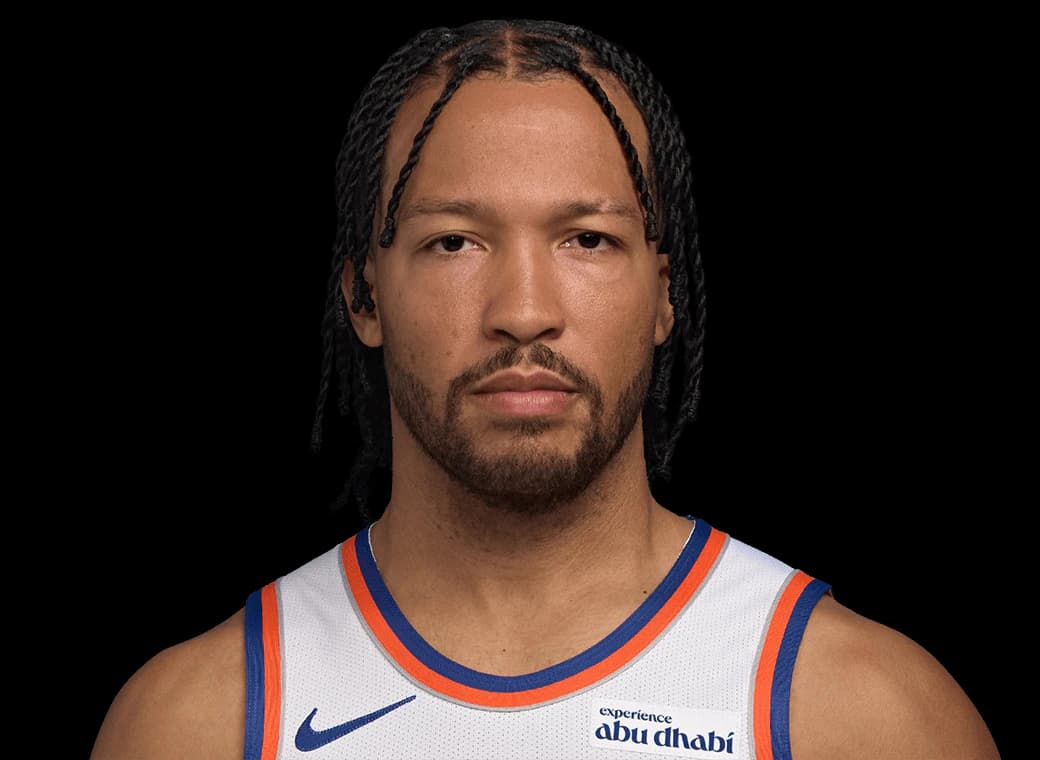
Jalen Brunson is the most copyable star in the NBA. He isn't 6'8". He isn't a 40-inch vertical. He's 6'1", and he scores 28 points a night by changing speed, controlling pivots, and getting to spots no defender wants to defend. If you're 12–18 and serious about basketball, his game is the one to steal, because almost every skill he uses scales down to your level.
This guide breaks the Brunson skill stack into six pieces, in the order you should learn them. Each section ends with a drill you can do in under 30 minutes, alone, with one ball and one cone.
The Brunson Profile in Two Numbers
- 6'1", 6'4" wingspan. Below NBA guard average on both.
- 0.78 seconds. That's the average time between Brunson's last dribble and his shot release, one of the fastest in the league. Pace, not athleticism, is his separator.
If you don't have elite height or vertical, the Brunson archetype is your map. Most NBA guards who make it without those gifts share the same toolkit: footwork, pace, and decision speed. We've broken down the broader version of this path in our how to make it to the NBA guide, Brunson is the case study.
Skill 1: Pace Control (the master skill)
Pace is not maximum speed. Pace is the change between speeds. Brunson's entire game runs on a slow-fast-slow rhythm. He attacks a closeout at 70% speed, then explodes through the second defender at 100%, then decelerates into a stop on the third defender's foot.
What young guards get wrong: they treat speed as a constant. Either they're 100% all the time (which means defenders can settle their feet) or they're 70% all the time (which means defenders can recover). Brunson is unguardable because his speed is a variable, and defenders can't predict it.
Drill, 3-cone change-of-pace. Set three cones in a line, 8 feet apart. Dribble at 70% to the first cone, 100% to the second, decelerate to a stop at the third. 10 reps right hand, 10 reps left hand, 10 reps alternating. Do it daily for two weeks before moving on.
Skill 2: The Inside Pivot
The single most-watched Brunson move is the inside pivot off a live dribble. He attacks, picks up the ball, lands on two feet, and pivots toward the defender instead of away. This freezes the defender for a half-second, long enough for Brunson to step through into a finish, a shot fake, or a kick.
Most young guards pivot away from contact. Brunson pivots into it, because the defender can't body him without committing a foul, and can't back off without giving up the shot. It's a leverage trick.
Drill, Chair pivot. Place a chair in the lane. Drive at it, two-foot stop, inside pivot toward the chair (as if pivoting into the defender). Step-through finish off the inside foot. 20 reps each side. Use the chair to simulate the defender's body so your footwork is honest.
HoopBrief currently turns basketball and matchup questions into structured reports using public statistical and play-by-play context. It does not accept film uploads or provide possession-level video tagging.
Skill 3: Two-Foot Stops in the Lane
Brunson lives at the two-foot stop. When he gets into the lane, he doesn't try to layup through three defenders. He stops on two feet, surveys, and decides: floater, kickout, or step-through. Two feet means he can pivot either way, one foot means he's committed.
This is also the safest finish move at your level, because two-foot stops draw fouls. Officials reward the player who stops; they don't reward the player who flies.
Drill, Mikan two-foot stop variation. Standard Mikan drill, but you must come to a complete two-foot stop before every shot. 30 reps right side, 30 reps left side. Adds 30 seconds to the drill and reshapes your habit.
Skill 4: The Floater and Short Pull-up
Brunson doesn't beat NBA centers at the rim, he beats them at 8 feet. The floater and the 10-foot pull-up are his bread and butter, and they're available to any guard who'll put in the reps.
The key shot mechanics:
- Floater: released at the top of the jump, off two feet, with the wrist flick coming forward (not up). Goal is high arc, soft kiss off the glass.
- 10-foot pull-up: off two feet whenever possible, off one only when fully balanced. Released at the peak, not on the way up.
Drill, Spot floater rotation. Five spots in the lane (left baseline, left elbow, middle, right elbow, right baseline). 10 floaters at each spot. Track make rate. Goal: 60% or higher inside two weeks.
Skill 5: Snake Dribble Through a High Pick-and-Roll
When Brunson runs a high pick-and-roll and the defense goes under, he rejects the screen, then comes back through the original side using a hesitation dribble. The visual: he "snakes" through the lane left-right-left. This forces the on-ball defender to reset twice and almost always opens a mid-range pull-up between the elbow and the foul line.
You don't need NBA spacing to learn this. You need a chair (the screen), a cone (the original on-ball position), and the willingness to do 50 reps a session.
Drill, Chair snake. Chair at the right elbow. Cone at the top of the key. Attack the chair as if rejecting the screen left, then snake back right with a between-the-legs crossover, finish with a mid-range pull-up. 20 reps each side. The cross has to be tight to your body, wide crosses don't fool the on-ball defender.
Skill 6: Shoulder-Leverage Finishing
The hardest skill in the Brunson stack is contact finishing. He gets fouled on roughly 35% of his rim attempts because he leads with his inside shoulder into the defender's chest, a legal technique that forces the defender to either give ground (free layup) or hold the ground (foul).
This is the skill kids develop last because it requires getting comfortable with contact. Start with a Pop-It pad or a mat on a chair, and work up.
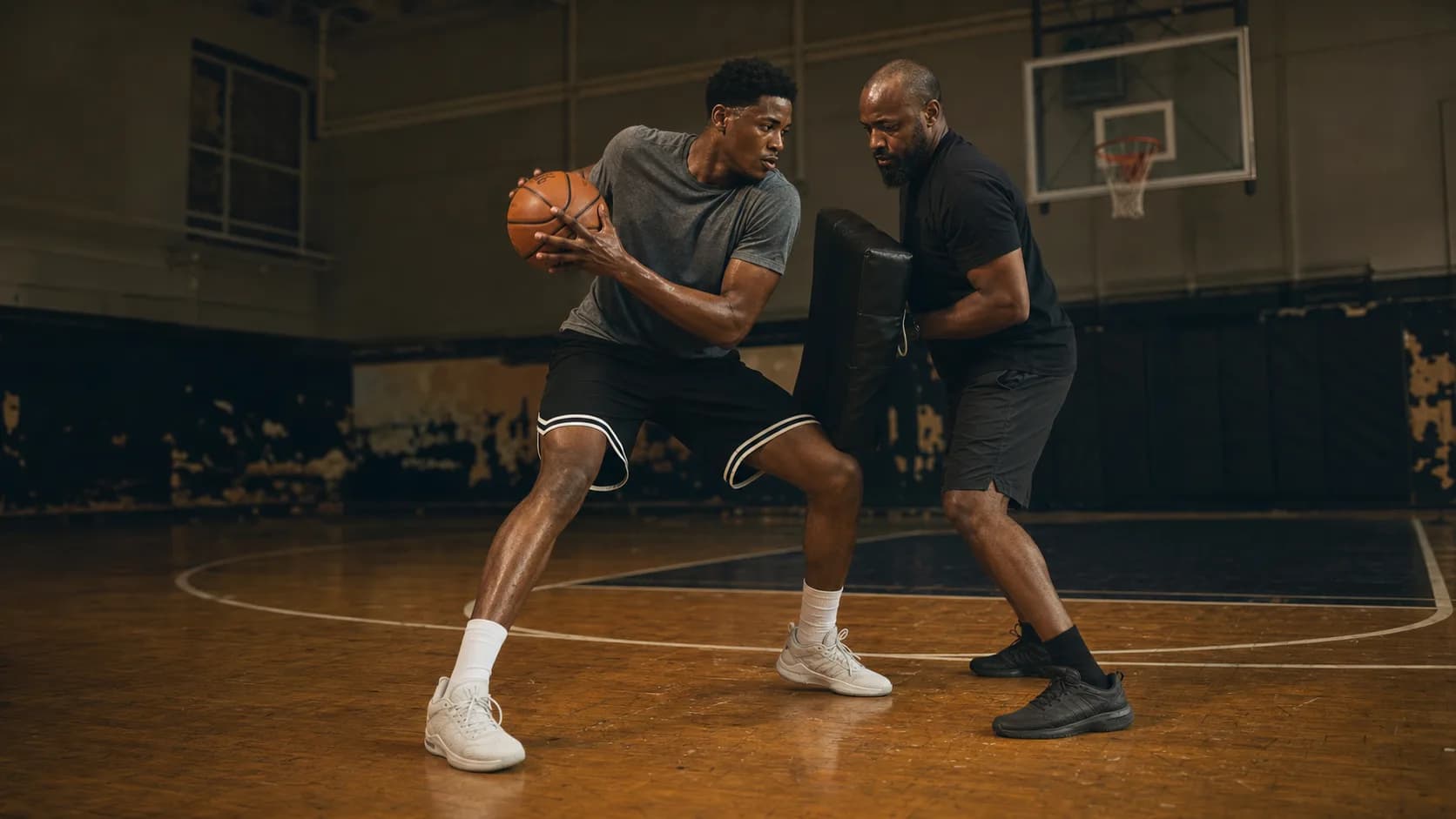
Drill, Contact step-through. Coach (or training partner) stands in the lane holding a pad. You attack, two-foot stop, inside pivot, step through into the pad. The pad takes the contact; you finish at the rim. 15 reps each side. Build to one rep where you take real contact for every 5 pad reps.
The Sequence Matters
These skills are listed in the order Brunson developed them, and the order you should. Pace control is the foundation; without it, the pivots and stops don't read right. The shoulder-leverage finishes are last because they require the first five to be in place.
A 16-year-old guard who masters these six skills in this order will be the hardest player to defend in their league. A 16-year-old guard who skips ahead to the snake-dribble pull-up before mastering pace will look like every other kid trying to imitate a star.
How HoopBrief Helps You Study Brunson the Right Way
Watching Brunson highlights isn't studying Brunson. You need to watch the possessions where he gets stopped, where the defense scouts him, where his pace doesn't work. That's how an NBA advance scout would build a Brunson scouting report, and it's the kind of detail HoopBrief's 12-lens framework is built for.
HoopBrief currently turns basketball and matchup questions into structured reports using public statistical and play-by-play context. It does not accept film uploads or provide possession-level video tagging.
Where to Go Next
If the Brunson archetype fits you (sub-6'4", craft-over-explosion), the natural follow-ups are How to Play Like Shai Gilgeous-Alexander for pull-up mastery and How to Play Like Luka Dončić for pick-and-roll patience.
If you're a taller player, start with How to Play Like Victor Wembanyama and How to Play Like Anthony Edwards instead.
Pillar reading: how to make it to the NBA and what NBA scouts actually look for in middle school and high school players.