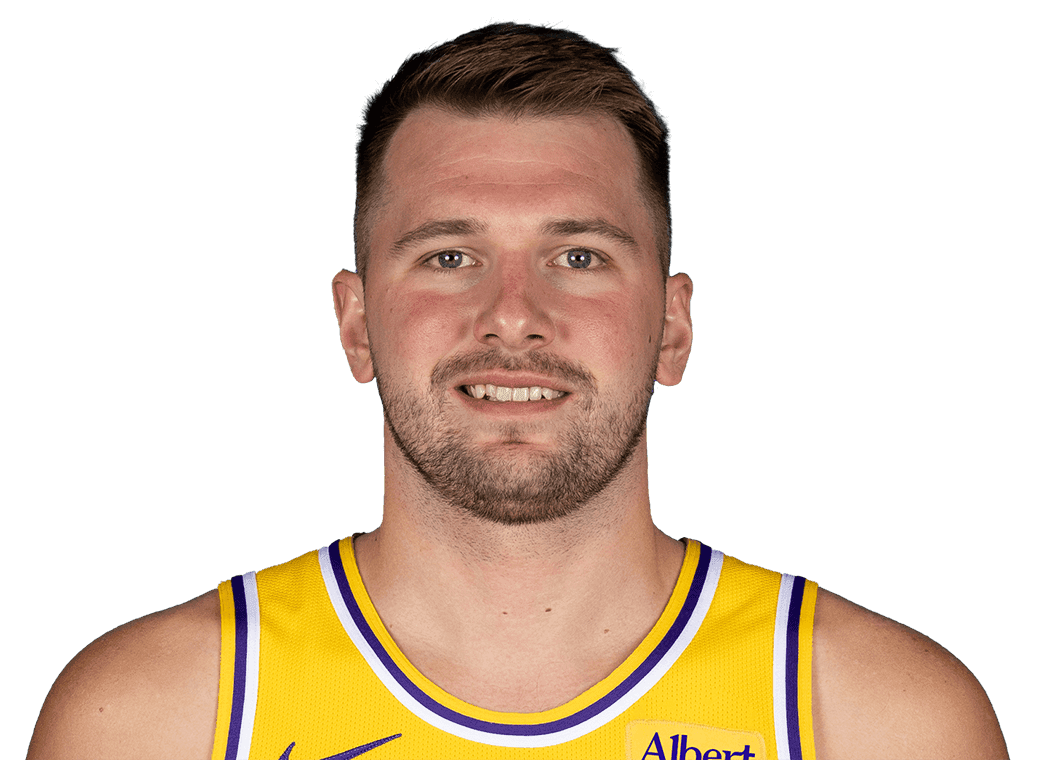
Luka Dončić scores 30 points a night without being fast. He doesn't have an explosive first step. He's not vertical. He doesn't have an elite catch-and-shoot motion. What he has is patience, the rarest skill in basketball, combined with footwork and craft that scales perfectly to any level. If you're a teenage guard who doesn't have NBA athleticism (and most don't), the Luka case study is the most copyable one you'll find.
This guide breaks Luka's game into seven copyable skills. Each is teachable. Each compounds.
The Luka Profile in Three Numbers
- 6'7", 6'10" wingspan, 235 lbs. Bigger than most NBA point guards. Combination size + skill is rare.
- Average pace. Not in the top 25 NBA guards in average dribble speed. Pace control is the differentiator, not max speed.
- 38% three-point rate on stepbacks. Top-3 in NBA for stepback efficiency at high volume.
The Luka archetype is the patient, big guard. If you're 6'2"+ projecting to 6'5"+ as an adult, and you don't have NBA-level burst, this is your case study. If you're smaller or faster, Play Like Brunson or Play Like Anthony Edwards may fit better.
Skill 1: Patience Inside a Possession
This is the master skill. Luka does not attack on the first dribble. He does not attack on the second dribble. He attacks on the third or fourth dribble, when the defender has already committed to one read and can't change.
What this looks like:
- He gets the ball in the pick-and-roll.
- He dribbles once, slowly.
- The defender shows their coverage (drop, hedge, switch, blitz).
- He dribbles a second time, slowly, gathering information.
- He dribbles a third time, and now he attacks the gap the coverage produced.
Most young guards attack on the first dribble. They've decided what they're doing before the defense has shown what it's doing. Luka is the opposite, he lets the defense reveal itself, then attacks the specific gap that revelation produced.
How to train it: do pick-and-roll reps with one rule, you cannot shoot until your training partner (the on-ball defender) has committed to one of two coverages. Two weeks of this rewires the impulse to attack immediately.
Skill 2: The Step-Back
Luka's signature shot is the step-back three. The mechanical breakdown:
- Hard drive (or drive fake) into the defender's body. Gets the defender into recovery mode.
- Quick decelerate with the lead foot planted.
- Short step backward off the front foot, 12 to 18 inches, not a long jump.
- Load the shot during the step-back (hands rise into shot pocket during the step).
- Release at the peak of the small jump.
The detail most young guards miss: the step-back is short. A long step-back loses balance and slows the release. A short step-back preserves balance, creates just enough separation, and lets the shot go faster.
Drill, Side-screen step-back. Chair at the right wing as the screen. Attack the chair as if rejecting the screen. Two hard dribbles into a step-back three. 20 reps right side, 20 left side. The step-back has to be short, set up a cone 18 inches behind your starting spot and make sure your step lands at the cone, not past it.
Want to study Luka's step-back footwork tagged on film? HoopBrief subscribers get every Luka possession across the 12 lenses, including footwork patterns. See the subscriber reports.
Skill 3: Pick-and-Roll Reads (All Four Coverages)
Luka can attack every pick-and-roll coverage at NBA level. Most guards have one or two strong coverages and one or two weak ones. Luka is symmetric across all four.
The four coverages and the Luka counter for each:
- Drop coverage: the mid-range pull-up or step-back three.
- Hedge: the snake dribble through the lane, then a kick-out or attack.
- Switch: iso against the bigger defender, mid-range pull-up.
- Blitz: pass to the short-roll big or to the open weak-side shooter.
The training: practice all four counters until each one is automatic. Most guards skip the blitz counter because they don't get blitzed often at the youth level, but at the college and pro level, blitz is the coverage you'll see in late-game situations. Master it now.
Our pick-and-roll counter library walks through each counter in detail.
Skill 4: Playing Through Contact
Luka uses his size. He plays through contact at the rim, in the mid-range, and on the perimeter. The technique: use the off arm to bar the defender (legal hand-fight) and lead with the shoulder on drives.
For a young player who's bigger than the average guard at their level, this is a leverage skill. You can win contact battles other guards can't even enter. The key is using the contact deliberately, most young big guards try to play around contact instead of through it.
Drill, Contact dribble. Set up a pad in the lane. Drive at the pad with three hard dribbles, finishing through the pad. 15 reps each hand. The pad simulates the defender's body; you learn to dribble through contact without losing the handle.
Skill 5: Slow-Pace Footwork on Drives
Luka's footwork on drives is meticulous and slow. He uses inside pivots, hesitation steps, and shoulder feints to set up the defender's commit. The slowness is the weapon, most defenders are conditioned to respond to fast moves, so slow moves catch them off-guard.
The training principle: practice your moves slowly first. Then medium speed. Then full speed. Most young guards practice everything at full speed, which means they only develop a full-speed game. The Luka game requires three-speed footwork, slow to set up, medium to commit, fast to attack.
Drill, Three-speed crossover. Set a cone. Cross over the cone at 30% speed for 10 reps. Then 70% for 10 reps. Then 100% for 10 reps. Then mix all three speeds across 15 reps. Builds the speed-control habit.
Skill 6: Reading the Help Defender
Luka rarely takes a contested shot. The reason: he reads the help defender before he commits to the shot or the pass. He knows where the help is coming from before the help arrives.
The training method is film-based. Watch a Luka possession. Pause at the moment he picks up his dribble. Identify the help defender. Watch the result. Track your accuracy.
This is the same constraint-based film study we covered in our film study guide. Two weeks of pause-and-predict reps and your live help-reading speed jumps.
Skill 7: Off-Ball Pace Manipulation
This is the most underrated Luka skill. When he doesn't have the ball, he doesn't stand. He relocates slowly, deliberately, dragging his defender away from useful help positions. By the time the ball comes back to him, his defender is 4-6 feet out of position.
Off-ball pace manipulation is invisible in highlights. It's a possession-by-possession thing that compounds across a game. Master it and you become an offensive amplifier even on the possessions you don't touch the ball.
Drill, Slow relocation. In a scrimmage, every possession you don't touch the ball, deliberately walk (don't sprint) to a new position. Track how many times your defender is out of position when the ball comes back to you. Goal: 80%+ of possessions.
HoopBrief currently turns basketball and matchup questions into structured reports using public statistical and play-by-play context. It does not accept film uploads or provide possession-level video tagging.
The Luka Habit Stack Compared to Other Guard Stacks
- Luka: Patience, step-back, contact-play, slow-pace footwork. Bigger guard who manipulates pace.
- Brunson: Pace control, pivot footwork, contact finishing, mid-range craft. Smaller guard who out-thinks defenders.
- Curry: Off-ball movement, shot prep, range, quick release. Off-ball shooter who weaponizes movement.
- Edwards: First-step burst, two-dribble pull-up, vertical, rim finish. Explosive scorer who attacks downhill.
- SGA: Pull-up mastery, mid-range patience, pace, free throw line. Mid-range maestro who walks the defender to where he wants them.
A young guard should pick the one closest to the body and skill set they'll have at 22, not the body they have at 14. Picking the wrong archetype is the most common reason young guards stall.
Where to Go Next
Companion archetypes: Play Like Jalen Brunson, Play Like Anthony Edwards, Play Like Steph Curry, Play Like Shai Gilgeous-Alexander.
Tactical reading: pick-and-roll coverages explained, DHO and handoff reads.
Foundation reading: how to make it to the NBA, what NBA scouts look for in middle/high school players, the 12-lens framework.