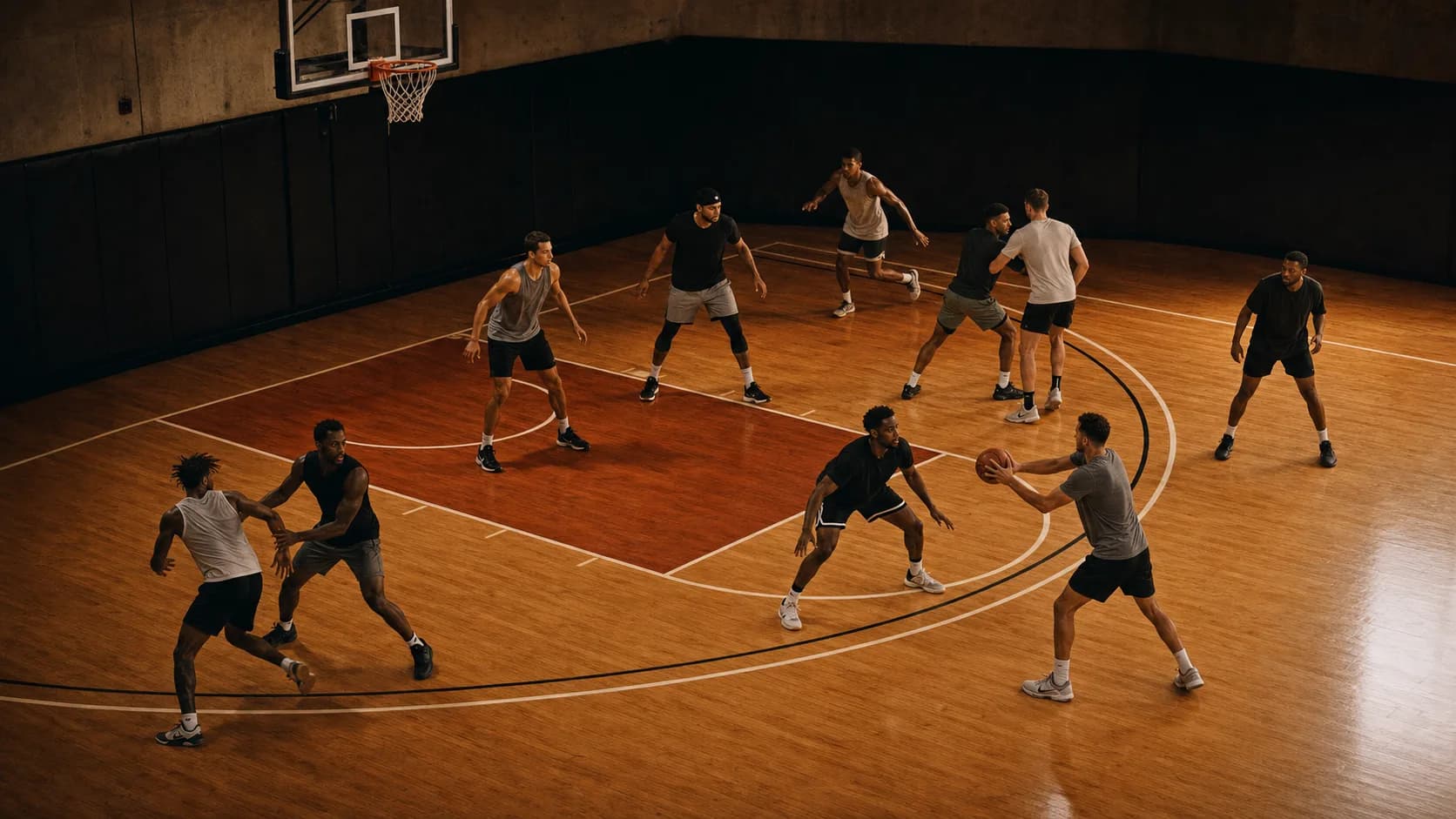
Every NBA game is decided by a handful of possessions. And those possessions are often decided by tiny details that most people - including many coaches - never notice.
What Are Micro-Behaviors?
Micro-behaviors are small, repeatable habits that players exhibit under specific conditions. They're not strengths or weaknesses in the traditional sense. They're patterns - things a player does consistently in certain situations, often without realizing it.
Defensive Micro-Behaviors
Here are real examples of defensive micro-behaviors that show up across the league:
Hip opening. Some defenders open their hips too early when they see a high screen coming. This gives the ball handler a clear read on which direction to attack before the screen is even set.
Second-screen death. Many defenders navigate the first screen well but completely break down on the re-screen. Their effort drops, their positioning gets lazy, and they end up trailing by two steps.
Overhelping from the weak corner. Certain defenders are so eager to help on penetration that they leave the weak corner wide open. This is exploitable - and the best teams know exactly which defenders do this.
Reach tendency after shoulder loss. When a defender gets beaten on the first step, some have a habit of reaching from behind instead of recovering properly. This leads to fouls - and smart offensive players know how to bait it.
Offensive Micro-Behaviors
Offensive players have their own micro-behaviors:
Settling after contested pull-ups. Some players become more pull-up heavy after their first two drives get cut off. Instead of being more aggressive, they settle - and their shot selection deteriorates.
Disengaging after missed whistles. Certain players lose focus and effort after they believe they should have gotten a foul call. Their body language changes, their off-ball movement drops, and they become easier to defend for the next two or three possessions.
Why This Matters
These details are invisible in traditional scouting. They don't show up in stats, and they're hard to spot unless you're specifically looking for them. But in a playoff series, where you play the same team four to seven times, micro-behaviors become massive.
A coaching staff that identifies and exploits these tendencies has a real edge. That's why we built the Micro-Behaviors Engine in HoopBrief - to catalog, surface, and make these tiny details actionable.
The 12 Micro-Behavior Categories HoopBrief Tracks
The 12-lens framework categorizes micro-behaviors into 12 specific tags. The most-used five in playoff scouting reports:
1. Hip-opening on screen anticipation. Some defenders open hips early when they see a high screen coming. Telegraphs the coverage. 2. Second-screen death. Effort drops on the re-screen even when the first screen was navigated well. 3. Overhelping from weak corner. Help defenders who leave the weak-side corner shooter open more often than they should. 4. Reach after first-step loss. Defenders who reach from behind after getting beaten on the first step. Foul magnets. 5. Pull-up settling after contested drives. Scorers who become more pull-up-heavy after the defense cuts off two consecutive drives. Shot selection deteriorates.
Where Micro-Behaviors Show Up in Scouting Reports
The scouting report build framework reserves a "Quiet Edges" section specifically for micro-behaviors. The Conference Finals micro-behaviors piece walks through a real example: 12 micro-behaviors tagged from one playoff series.
Keep reading: 12 Conference Finals micro-behaviors, contact manipulation, and 12-lens framework.