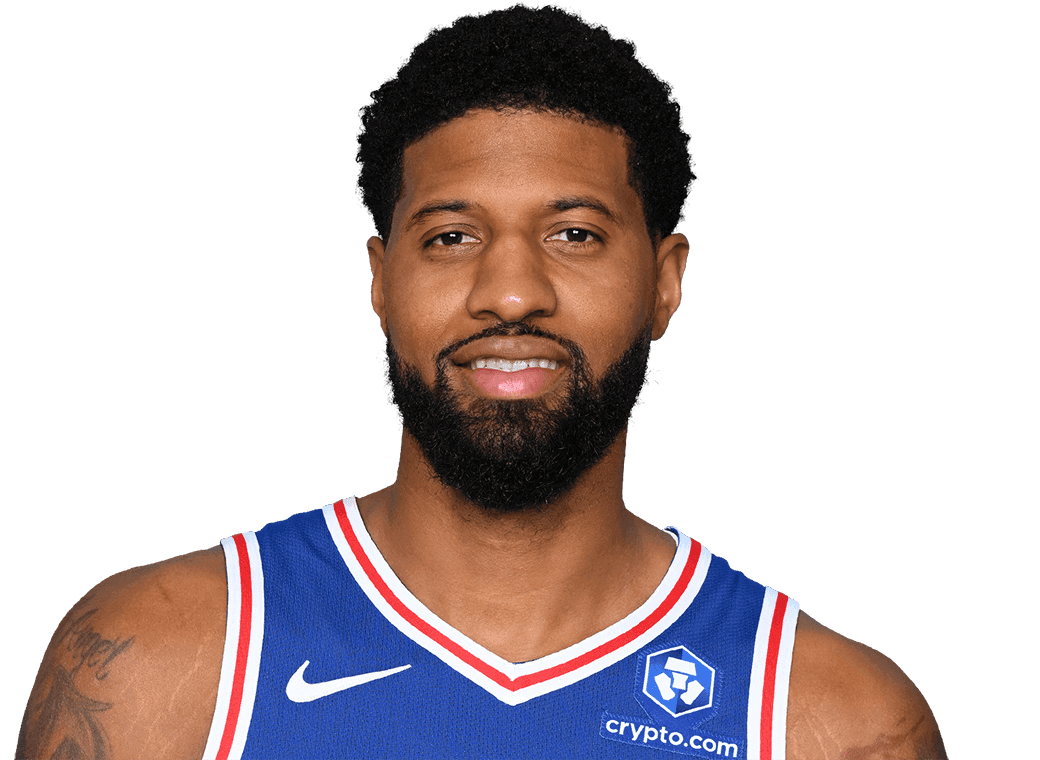
This was the trade that reshaped the East. Philadelphia wanted a second star to build a title push around Joel Embiid, and Boston wanted cap relief under the apron plus a cleaner fit next to Tatum. Both sides got what they were after. For opponents, the scouting job is to understand how Boston's offense reorganizes when its second option changes from a downhill freight train into a movement shooter.
What changes for the Celtics with Paul George? The Celtics become more of a spacing-and-relocation offense and less of a two-headed downhill attack. Jaylen Brown generated a lot of straight-line rim pressure and isolation scoring. Paul George replaces that with elite catch-and-shoot volume, secondary playmaking, and off-ball movement. That pushes the ball more firmly into Tatum's hands as the primary engine, with George functioning as a connector who relocates for threes, attacks closeouts, and takes the occasional secondary pick and roll.
The net effect is a cleaner offensive hierarchy. There is no longer a question of whose team it is. Tatum initiates, White and Pritchard provide shooting and guard creation, and George is the versatile piece who makes the spacing work. It is a more predictable structure, which is both a strength and, for a scout, an opening.
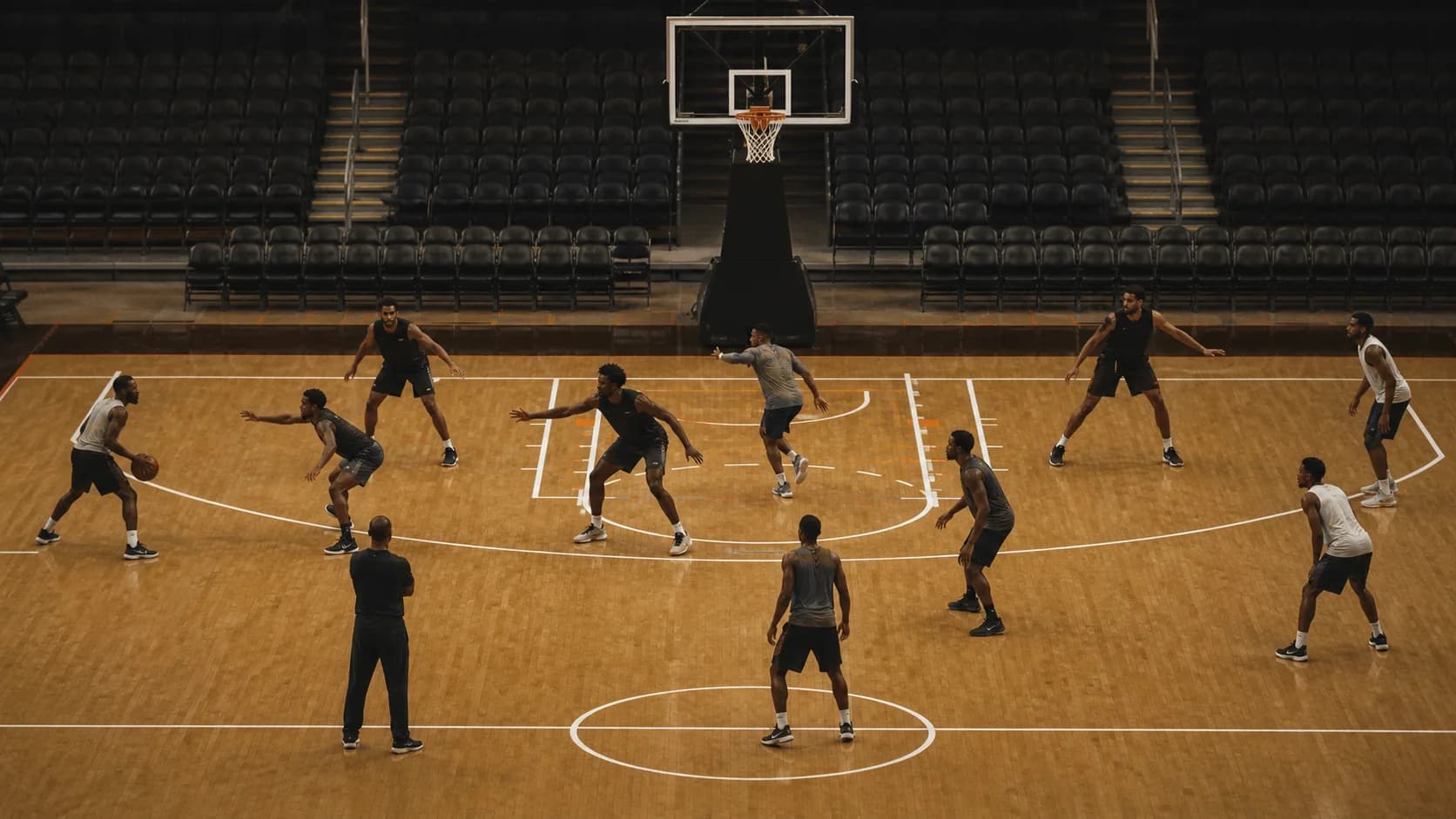
The defensive read: chase the shooters, wall off Tatum Defend Boston by treating it as a Tatum-plus-shooters problem. Put a strong, physical primary defender on Tatum and keep your help disciplined, because he is a willing passer who punishes overreactions. Then take the three-point line away from the supporting cast. George, White, and Pritchard do the bulk of their damage as catch-and-shoot and movement scorers, so top-locking them off pindowns and running them off the arc into contested twos is the highest-value coverage you have.
Here is the worked example. Boston runs a pindown for Paul George on the weak side while Tatum holds the ball at the top and White spaces the corner. If you go under the pindown, George catches and shoots a three, which is his best shot. If you switch it, Boston has hunted a smaller defender onto Tatum for the next action. The correct read is to top-lock George, forcing him below the screen and away from the catch, while your big shows at the level so no switch is created. That keeps George off the line and keeps a like-sized defender on Tatum. The details of that decision are in how to guard a shooter coming off screens.
Personnel and coverage map Use this shorthand for the Celtics starters and how to defend each:
| Player | Primary threat | Base coverage |
|---|---|---|
| Jayson Tatum | Three-level scoring, playmaking | Physical primary, disciplined help, no gambling |
| Paul George | Catch-and-shoot, movement, secondary iso | Top-lock off screens, contest the three |
| Derrick White | Off-ball shooting, cutting, secondary creation | Stay attached, chase off the line |
| Payton Pritchard | Deep pull-up, relocation threes | Never leave him, high on ball screens |
| Boston big | Screening, short roll, rim protection | Show and recover, tag the tagger |
The George note that matters most for scouting: he is a smart, switchable defender who will help Boston stay elite on that end, but he is older and less explosive than Brown. Attack him in transition and in repeat pick and roll where his legs can be tested over a game, the way you would probe any veteran wing. The logic of picking the right target is in how to read a switch and who to attack.
Are the Celtics still a contender, and how to plan for them Boston remains a clear title contender for 2026-27. With Jayson Tatum back to full strength after his Achilles recovery, plus Derrick White, Payton Pritchard, and the addition of Paul George, the Celtics keep the shooting, defense, and postseason experience that make them dangerous. Oddsmakers still list them among the top handful of championship threats. The real questions are George's age and durability and whether the offense generates enough downhill pressure without Brown.
For an opponent, that last point is the whole plan. Boston will beat you with skill, spacing, and organization, not with raw athletic force. So take away the clean threes, make their veterans create off the dribble late in the clock, and get back in transition where a movement team is least able to hurt you. To turn that into a possession-by-possession plan against Boston's actual lineups, ask HoopBrief for a matchup report, and use how to exploit a matchup in basketball to find where their new hierarchy leaves a seam.