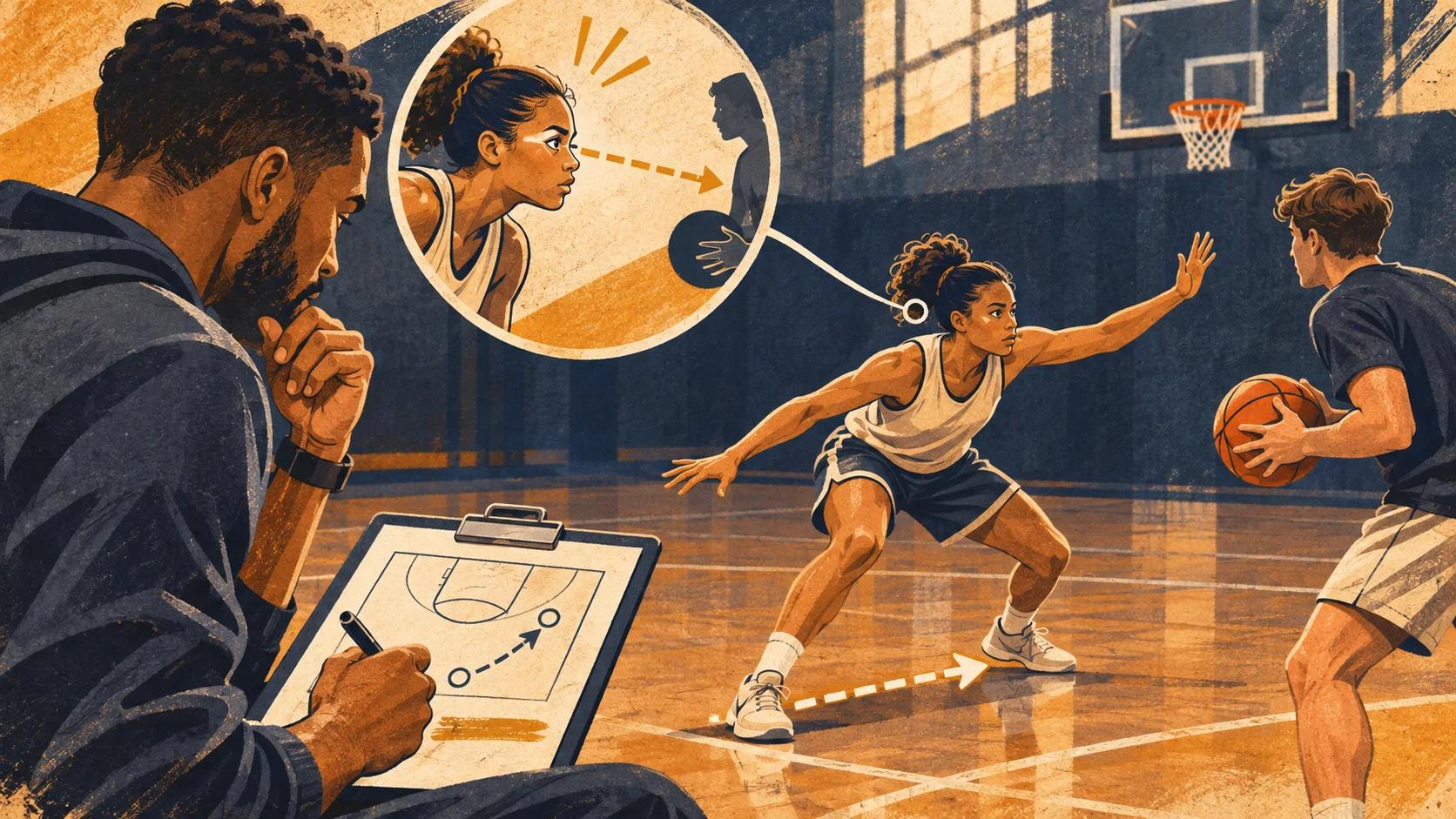
A useful NBA study example gives a trainer a cue to examine. It does not automatically prescribe a drill for the athlete in front of them. Translate the example through the athlete's role, team system and current execution before choosing a practice constraint.
A constraint changes the conditions of a repetition so the athlete has to recognize a particular problem. For example, a helper can choose whether to step toward the lane. The ball handler must read that choice rather than perform a predetermined move.
Define the athlete's actual task
Ask what the athlete is expected to do in games. A corner spacer attacking a closeout has a different starting picture from a primary guard initiating a ball screen. The same NBA highlight may contain useful information for both, but the practice setup should differ.
Record the team's instructions and the athlete's available skills. If the athlete cannot deliver the pass a drill requires, decide whether the session is teaching the pass or the decision. Combining both at full speed can make the feedback difficult to interpret.
Keep the goal observable: identify the helper before the first dribble, arrive balanced at the catch, or communicate the screen early. “Become more confident” may describe a desired feeling, but it does not define a repetition you can assess.
Extract one cue from the example
Pause before the NBA player acts. Describe the defender's position, the passing window and the available space. Name the information the player could use. Avoid explaining the choice only after seeing the result.
Then remove the parts that do not transfer. Professional spacing, length, shooting range and finishing ability may create an option your athlete does not have. Preserve the recognition problem while adjusting the distance, pace and allowable actions.
Use a planning sheet:
| Step | Write down | Hypothetical example |
|---|---|---|
| Game task | Athlete's responsibility | Wing attacks a recovering defender |
| Cue | Information to recognize | Helper stays attached or steps into lane |
| Constraint | What changes between reps | Helper chooses one of those two actions |
| Allowed responses | Coach-approved choices | Balanced shot, controlled drive or pass |
| Feedback | What you will observe | Recognition, timing and delivery separately |
The example is a teaching proposal, not a universal drill prescription. Review it with the athlete's coach when it affects team assignments.
Begin with a guided repetition
Show the two possible defensive responses at a manageable pace. Ask the athlete to identify the cue aloud. Then let the defender choose without announcing it.
If the athlete guesses before the defender moves, simplify the setup or change the timing. If the athlete reads correctly but loses balance, work on the catch or stop. A good session separates the source of the error instead of giving the same correction after every miss.
Add one layer at a time. A second rotating defender can make the decision more realistic once the first read is established. Adding every possible rotation immediately may test confusion rather than teach recognition.
Keep outcome and process notes separate
Record whether the athlete saw the cue, chose an appropriate action and executed it. A made shot does not prove all three. A missed shot does not disprove them.
Use unfamiliar repetitions to check transfer. If the athlete succeeds only when the defender repeats the same movement, the drill may be rehearsing a sequence rather than a decision. Change the starting angle while preserving the cue you want the athlete to read.
Do not promise a fixed improvement percentage from a short session. Use the observations to choose the next task and revisit the skill in game-relevant contexts.
Prepare the session with HoopBrief
Run a supported player pairing through the free NBA scout. Select one tendency as a study question, then verify it against available film. HoopBrief does not analyze your athlete's private footage simply because an NBA player is used as an analogy.
A focused Ask prompt is: “I train a wing who attacks closeouts in our team's spacing. Help me turn the cue of a helper stepping into the lane into a guided repetition. Separate recognition, decision and execution. Ask for missing context rather than guessing.”
Review the methodology and check the proposed basketball logic. Use current plan details to decide whether recurring reports and follow-up questions fit your preparation workload. The value is a clearer session you can assess, not an NBA comparison that flatters the athlete.
Leave with one next action
End the session by asking the athlete to explain the cue and the response in their own words. Record one task to revisit. Keep the NBA example as a reference rather than a standard the athlete must immediately match.
Should every drill be a live decision? No. Skill execution can require isolated practice. Be clear about whether the repetition trains execution, recognition or their combination.
Can I use the same constraint for every athlete? Adapt it to the role, team instructions and skill level. A shared concept can need different starting conditions.