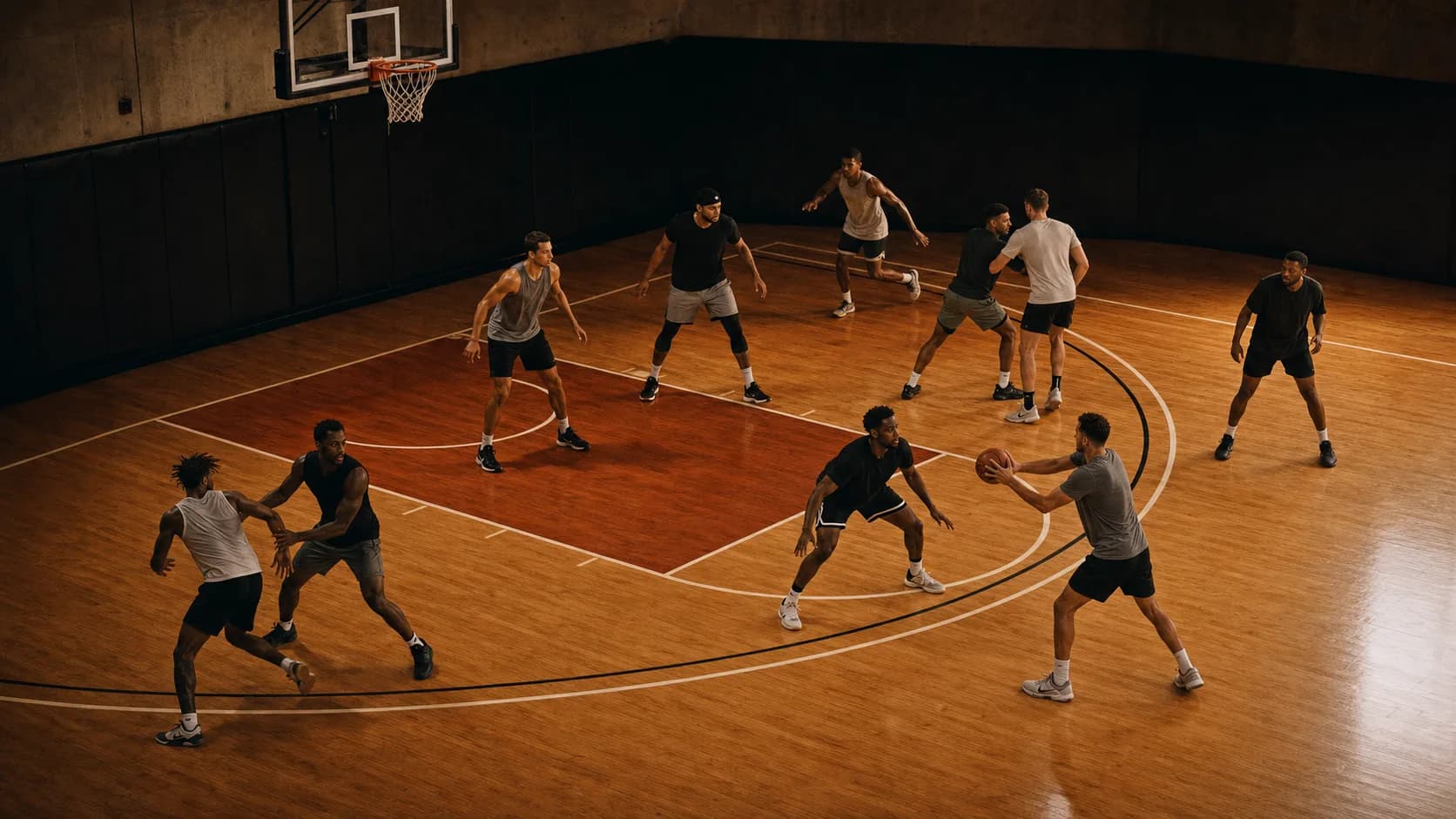
Summer League is a scouting trap if you read it wrong. Rotations are short, spacing is thin, and defensive effort comes and goes possession to possession. So the honest way to rank this rookie class is to weight how each player created and prevented advantages, not who piled up points against a switching zone that no NBA staff would ever run. Here is how the standouts graded on film, and what each one still has to prove. Want a full report on any of these players? Ask HoopBrief or pull a scouting profile with the free scouting tool.
1. AJ Dybantsa (Wizards) and Cameron Boozer (Grizzlies) led the class Dybantsa, the No.1 pick, showed the trait you cannot teach: he got wherever he wanted. He accessed the paint freely, drew fouls at a high clip, and mixed in the kind of instinctive passing reads that project to real on-ball value next to Trae Young. The nitpick is shot selection, too many low-value midrange pull-ups when the rim was there. That is a diet problem, not a talent problem.
Boozer may have had the more complete week. At a listed 6-8 and 253 pounds he moved his feet defensively, jumped passing lanes for steals, and finished inside at high efficiency even with an inconsistent jumper. A big who rebounds, defends in space, and posts a true shooting number above 60 percent is exactly the low-variance profile that holds up when the games start counting.
2. Peterson, Wilson and the shooting swings Darryn Peterson, the No.2 pick in Utah, brought the most vertical pop of any guard in Vegas and lived at the free throw line, a good sign for a rim-pressuring creator. The film flagged ball security: turnovers piled up when defenders pressured his handle, and that is the swing skill between good starter and lead guard.
Caleb Wilson, No.4 to the Bulls, wrote the loudest single-game headline with a 35-point debut, among the biggest Las Vegas debuts since 2004. More important than the number was the shape of it. Wilson was not a volume shooter in college, and he poured in threes on real attempts while adding rim protection. The correction on his report is decision-making and touch: his assist-to-turnover math was ugly and his free throw stroke wobbled. Shooters who cannot get to the line efficiently are easier to game-plan, so that is the next box to check.
3. Yaxel Lendeborg was the most NBA-ready name Draft slot is not the same as readiness. Lendeborg, taken 11th by Golden State, looked like a player who could help a rotation in October right now. He punished transition, finished through contact with grown-man strength, passed on time, and defended multiple spots without gambling. He capped it by helping the Warriors win the Summer League championship over Memphis. For a team that values connective, low-mistake basketball, he fits the system on day one, which is worth as much as raw upside for a contender.
Keaton Wagler, the No.5 pick for the Clippers, had a quieter Vegas. He profiles as a big lead creator at 6-5 with real passing feel, but his two-point efficiency dipped and his early shot creation was uneven. The tools are starter-caliber; the reads and the finishing package need reps.
4. The late-pick risers scouts actually noticed Two names jumped off the stat sheet for the right and wrong reasons. Cleveland's Meleek Thomas led all of Las Vegas in scoring at 28.3 points per game despite falling to 34th overall, the kind of shot-making sample that earns a longer look even if the usage was inflated. Milwaukee's Brayden Burries scored efficiently with an elite assist-to-turnover ratio, the profile of a plug-and-play guard who does not hurt you.
Here is the scouting caveat, and it is the whole point of ranking process over production. Thomas got his buckets against loose, switch-everything Summer League defense with the ball in his hands nearly every trip. That volume evaporates in a real rotation. Burries' efficiency and ball security, by contrast, are traits that tend to survive the jump to structured NBA offense. When you build a report, you separate what the setting gave a player from what the player would do anywhere.
How to read these rankings the way a staff would The mistake fans make is treating Summer League points as a leaderboard. The mistake scouts avoid is ranking the setting instead of the skill. Every player above got graded on repeatable behaviors: advantage creation, finishing under contact, defensive discipline, and decision speed. Those translate. Hot shooting nights against nobody's game plan do not.
If you want that lens on your favorite rookie, that is exactly what HoopBrief reports are built for, coaching-staff-level breakdowns of micro-behaviors and matchup tendencies rather than box scores. Start with the free scouting tool, or head to the blog for more film-room breakdowns as the class heads toward opening night.