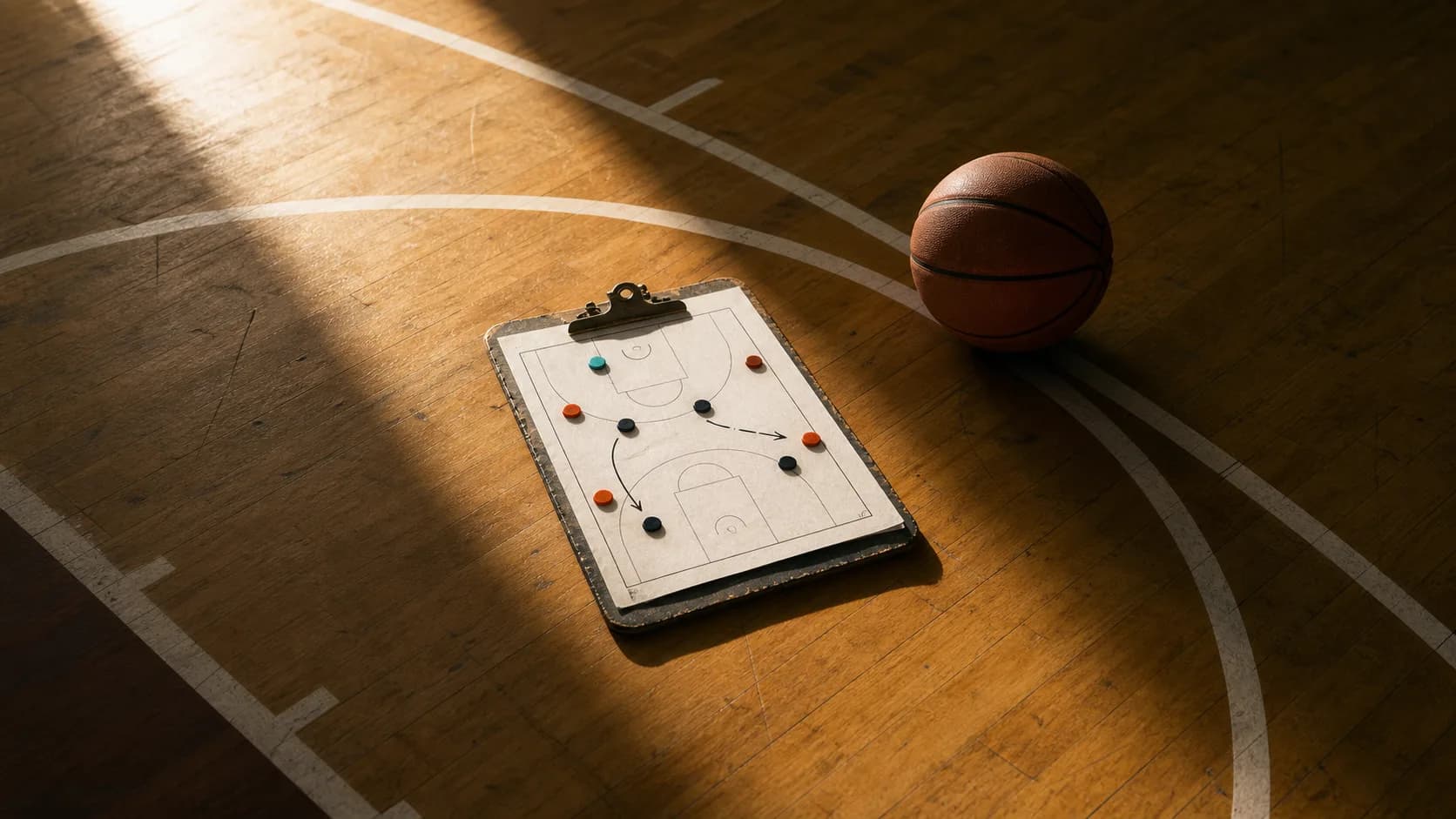
The core idea: most point-guard scouts stop at handedness and scoring average, and those two facts almost never decide the matchup. What decides it is behavioral, how the guard reads a ball screen, how he changes pace to get to his spots, what he does under ball pressure, and where he goes with the game on the line. Chart those and you have a coverage plan. Chart his points per game and you have trivia.
A point guard is the hardest position to scout well because so much of what he does is invisible in the box score. He initiates, he manipulates, he reads. This piece breaks down the tendencies that actually move the matchup, in the order you should chart them.
Start With Pick-and-Roll Behavior
A lead guard runs the offense through ball screens. So the single most valuable thing you can chart is how he reacts to each coverage.
- Against drop: does he pull up in the pocket, snake back to the middle, or feed the roller? A guard who lives on the pocket pull-up forces you to change coverage. A guard who never shoots it lets you keep dropping.
- Against switch: does he immediately hunt the mismatch and iso the big, or does he keep the ball moving? A switch-hunter tells you to avoid switching, or to switch with personnel who can hold up.
- Against blitz or trap: does he split it, pass out early, or pick up his dribble? A guard who splits the trap punishes aggressive coverage. A guard who panics rewards it.
- Against ICE: does he refuse the screen and re-attack, or does he settle for the sideline pull-up?
Chart his first read against each coverage over three or four games. The pattern that repeats is the plan. Everything else on the scout is secondary to this.
Read His Pace, Not His Speed
Speed is athletic. Pace is a skill, and it is where good guards separate. The best lead guards change speeds to freeze defenders, a slow build into a burst, a hesitation that gets you leaning, a deceleration into a pull-up.
Watch for the guard who lulls you. He walks it up, probes, then snaps into a downhill attack the moment your feet settle. Against that guard, the coaching point is to stay in a stance and never relax on the catch. A guard who only plays at one speed is far easier to guard, you can time him.
Find the Weak Hand For Real
Every scout writes "forces right." Most are guessing. Prove it on film. Watch drives where he gets cut off from his strong side and count what happens next. Does he actually finish with the off hand, or does he pick up the dribble, spin back, or kick out?
The real tell is off-hand finishes at the rim and off-hand pull-ups. If those barely exist, you have a genuinely one-directional guard, funnel him to the weak hand and load the strong-side help early. If he finishes both ways, "forces right" is a myth and you need a different plan.
Chart the Pressure Response
Pick up a guard 94 feet in a few possessions of film and watch. Does he give it up early to a wing and cut through? Does he speed up and get sloppy? Does he calmly split the pressure and get you scrambling?
A guard who wants the ball out of his hands under pressure is a candidate to press or hard-hedge. A guard who is comfortable against pressure, and there are many, tells you to save your energy and defend him in the half court instead of wasting fouls up top.
Late-Clock and Late-Game Habits
Filter for the guard's possessions in the last six seconds of the shot clock and the last two minutes of close games. Under pressure, players shrink to their most trusted move. The guard who has ten counters at the start of the clock often has exactly one at the end of it, a step-back to his strong hand, a specific screen he always calls.
That single go-to move is the highest-value item on the whole scout. If you know what he does when the game is tight, you can take it away when it matters most.
Turning Tendencies Into a Plan
Charted tendencies are only useful when they become instructions. Convert each one into a defensive rule:
1. Coverage call: what you run in his ball screens, based on his read chart. 2. Direction: which hand you funnel him to, based on the weak-hand check. 3. Pressure level: whether you press, based on his pressure response. 4. Late-game answer: the one move you take away when the game is close.
Four clear rules a defender can remember beat a two-page tendency dump nobody reads. The job of the scout is not to list everything the guard does, it is to tell your defender the two or three things to actually do about it.
The Fast Way To Get There
Charting all of this by hand across four games is real film-room time, often two to three hours per opponent guard. That is the time cost most coaches quietly absorb every week.
An AI scouting engine compresses it. Ask HoopBrief how a specific guard reads pick-and-roll coverage, or where he goes late in the clock, and it returns the tendency read and the coverage plan in minutes, built on the same lens system a good advance scout would use by hand. You still make the calls, you just skip the tagging.
The point guard is the hardest matchup to scout and the most valuable to get right. Get his ball-screen reads, his pace, his weak hand, and his late-game move, and you have taken away most of what he does.