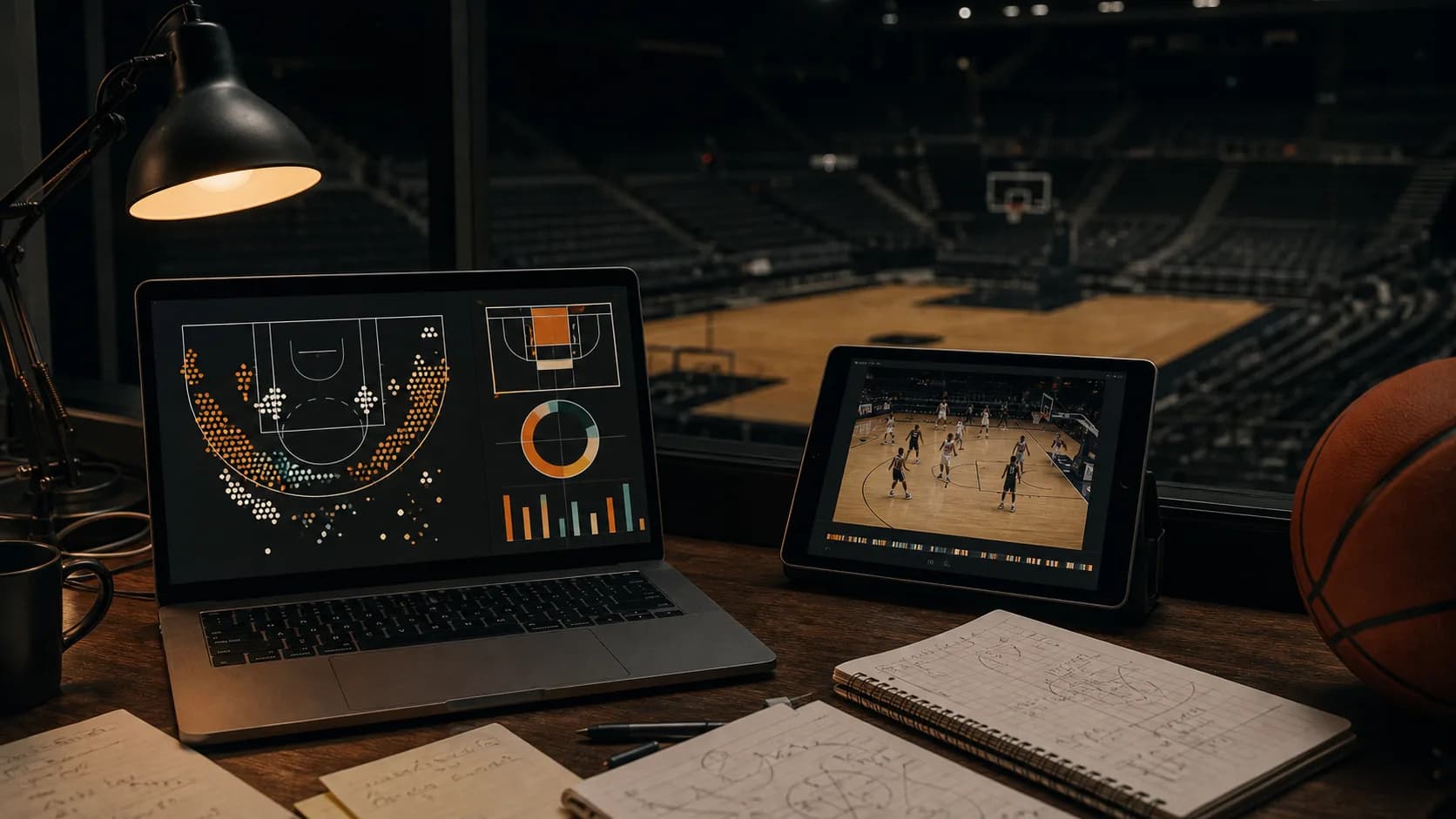
With seven seconds left and the ball out of bounds on the sideline, every possession is worth an entire game. The best SLOBs aren't trick plays. They're simple actions that force the defense into a bad choice.
Principle 1: Make Them Defend Two Things
A good SLOB creates two threats the defense can't cover simultaneously. A rub screen to free a shooter. A back-screen for a rim runner. A decoy cut that pulls help.
If the defense covers option one, option two is open. If they cover both, you forced a broken rotation.
Principle 2: Know the Clock
Under 3 seconds: you need a catch-and-shoot. The action has to be direct, a stagger, a rub, a slip.
3 to 6 seconds: you can afford one rip screen and a second action. A screen to free the inbounder, then a DHO or pitch.
6 to 10 seconds: you have time to run a set. Start with a decoy, then flow into the real action.
Principle 3: The Inbounder Matters
The inbounder is often your second or third option, not just a passer. If the defense doesn't guard him, you get a dribble handoff with a head of steam.
A Play That Works at Every Level
"Zipper Rub", Under 4 seconds, need a shot.
- Shooter starts in the strong-side corner.
- Big flashes to the high slot to receive.
- Second big sets a rub screen at the elbow.
- Shooter cuts off the rub, comes up to the three-point arc at the top.
- Inbounder hits the big at the slot; big delivers to the shooter coming over the screen.
The defense has to choose: switch the rub (gives up a clean catch to the shooter), fight through (the shooter gets a half-step), or help from the weak corner (the weak-side wing is open).
What Doesn't Work
- Running the same SLOB all season. Scouts see it.
- Relying on a single shooter everyone knows gets the ball.
- Actions that require three perfect passes in two seconds.
The Under-Five Rule
With under five seconds, one screen max. Every extra action is a turnover risk. Keep it simple. Execute clean. Trust the read.
A great SLOB isn't about surprise, it's about forcing the defense to cover two things in one second.
How SLOB Plays Differ From ATO Sets
SLOB (side out-of-bounds) and ATO (after timeout) plays look similar on paper but require different structural thinking:
- SLOB: Starts with a specific spot on the floor. The geometry is fixed, sideline restriction means certain actions are unavailable.
- ATO: Starts from any half-court position. The geometry is flexible.
The ATO playbook piece covers 8 specific Conference Finals ATO sets. The SLOB equivalent is the focus of this piece.
The Three Most-Run SLOB Concepts in the 2026 NBA
1. Quick screen into corner three. The inbounder gets a quick screen at the elbow, sprints to the strong-side corner, catches a deep entry pass, and shoots before the defense recovers. League-wide PPP on this set: ~1.18. 2. Stagger into wing. Two screens for the inbounder who curls to the wing. The geometry forces the defense to over-help or get burned. PPP: ~1.12. 3. Misdirection set. Two off-ball cuts in opposite directions to confuse the defense; the inbounder reads which gap opens. PPP: ~1.08, lower but harder to scout.
The Conference Finals adjustments by Game 3 piece covers how staffs rotate their SLOB packages across a series to stay unpredictable.
Keep reading: the ATO playbook, building a scouting report, and Conference Finals adjustments by Game 3.