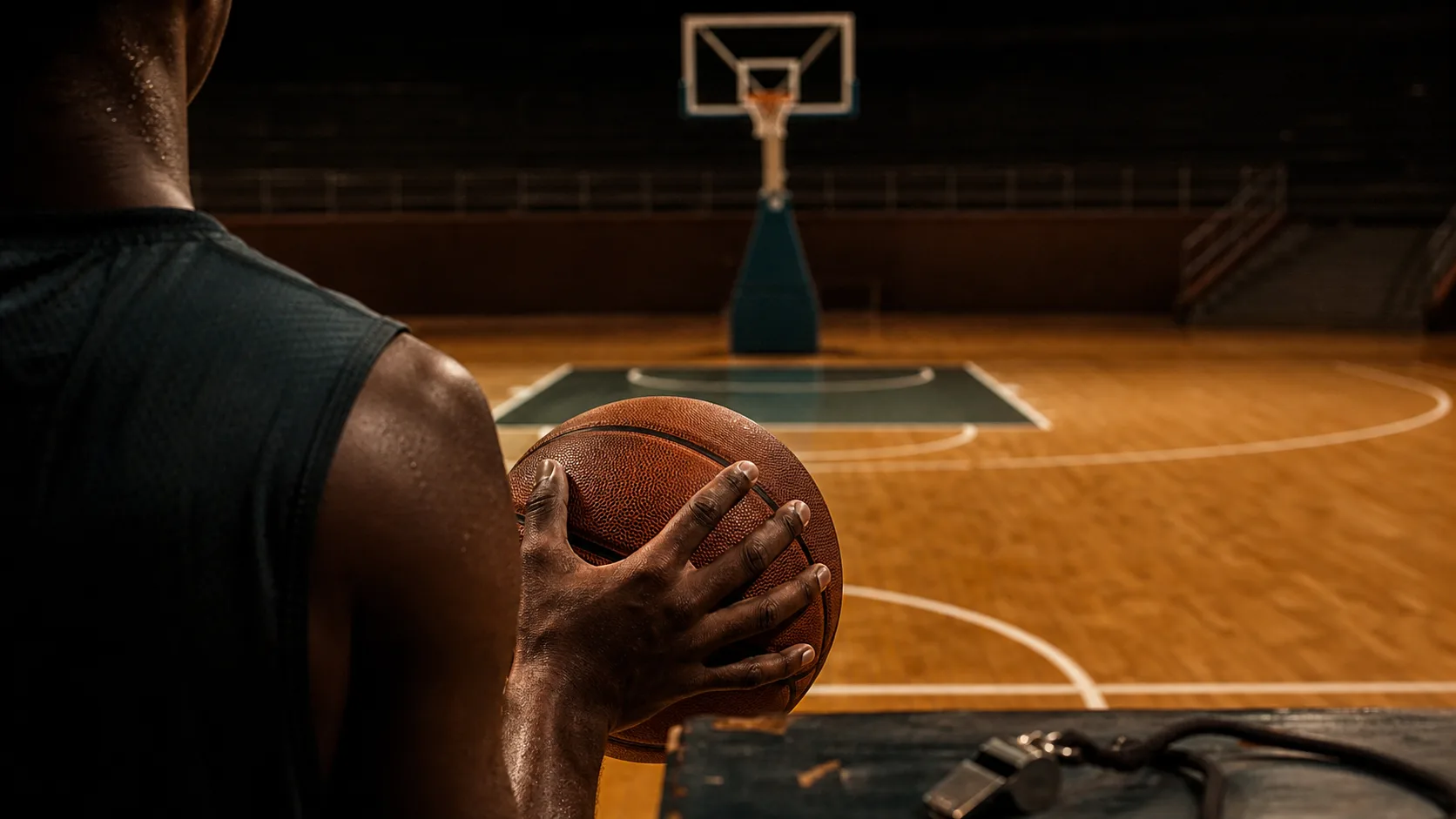
There's a category of basketball knowledge that lives between stats and film. It's not in any database. It's not in any highlight package. It's the stuff that experienced coaches know from years of watching - the quiet edges.
What Is a Quiet Edge?
A quiet edge is a subtle, situational truth about a player that most people don't notice. It's not a strength or a weakness in the traditional sense. It's a pattern - something that happens reliably under specific conditions.
Examples
- After missing his first two pull-up jumpers, he becomes more drive-heavy. His shot selection changes. He starts attacking downhill instead of settling.
- If you hit him with one hard re-screen early in the game, he gets more conservative navigating screens for the rest of the half.
- He disengages after missed whistle calls. His body language changes, his off-ball movement drops, and he becomes easier to defend for two or three possessions.
- He's more bothered by crowd than by pure length. A shorter, physical defender who gets into his space gives him more trouble than a tall, passive one.
- When he thinks he has a mismatch, he stops moving off ball. He becomes stationary, waiting for the ball, and the rest of the offense stalls.
Why They Matter
In a seven-game playoff series, quiet edges compound. If you know that a player settles after contested pull-ups, you can design your defense to take away his first two shots aggressively - knowing that his third and fourth shots will be lower quality.
If you know that a defender gets conservative after hard screens, you can attack him with physical screening early and get cleaner looks the rest of the game.
These details don't win games by themselves. But they tilt possessions - and in the playoffs, tilted possessions are the difference between winning and going home.
How to Develop This Eye
Building a feel for quiet edges takes time and deliberate practice. Watch film of the same player across multiple games. Look for patterns in their behavior, not just their results. Pay attention to how they respond to adversity, physicality, and pressure.
Over time, you'll start noticing things that don't show up in any scouting report. That's your edge - and it's exactly what we built HoopBrief to surface.
How HoopBrief Tags Quiet Edges
The micro-behaviors framework is the structural cousin of quiet edges. Both are about the details that don't show in stats. The difference: micro-behaviors are repeatable patterns; quiet edges are situational tells.
Five categories of quiet edges HoopBrief tracks in subscriber reports:
1. Late-clock patterns. Does a player always drive right when there's 4 seconds left? 2. After-foul-call behavior. Does effort drop for the next 2 possessions after a missed whistle? 3. Substitution-pattern tells. Does a player's intensity change when his usual sub is in the game? 4. Body-language under pressure. What does the player's stance look like at 3 fouls vs 5 fouls? 5. Pre-shot tells. What body language predicts a player is about to take a contested shot?
The 12-Lens Integration
Quiet edges live in the 12-lens framework under the Micro-Behaviors and Advance Scout lenses. The Conference Finals micro-behaviors piece walks through a real-world application: 12 specific quiet edges tagged from a playoff series.
Keep reading: 12 Conference Finals micro-behaviors, the micro-behaviors framework, and self-scouting blind spots.