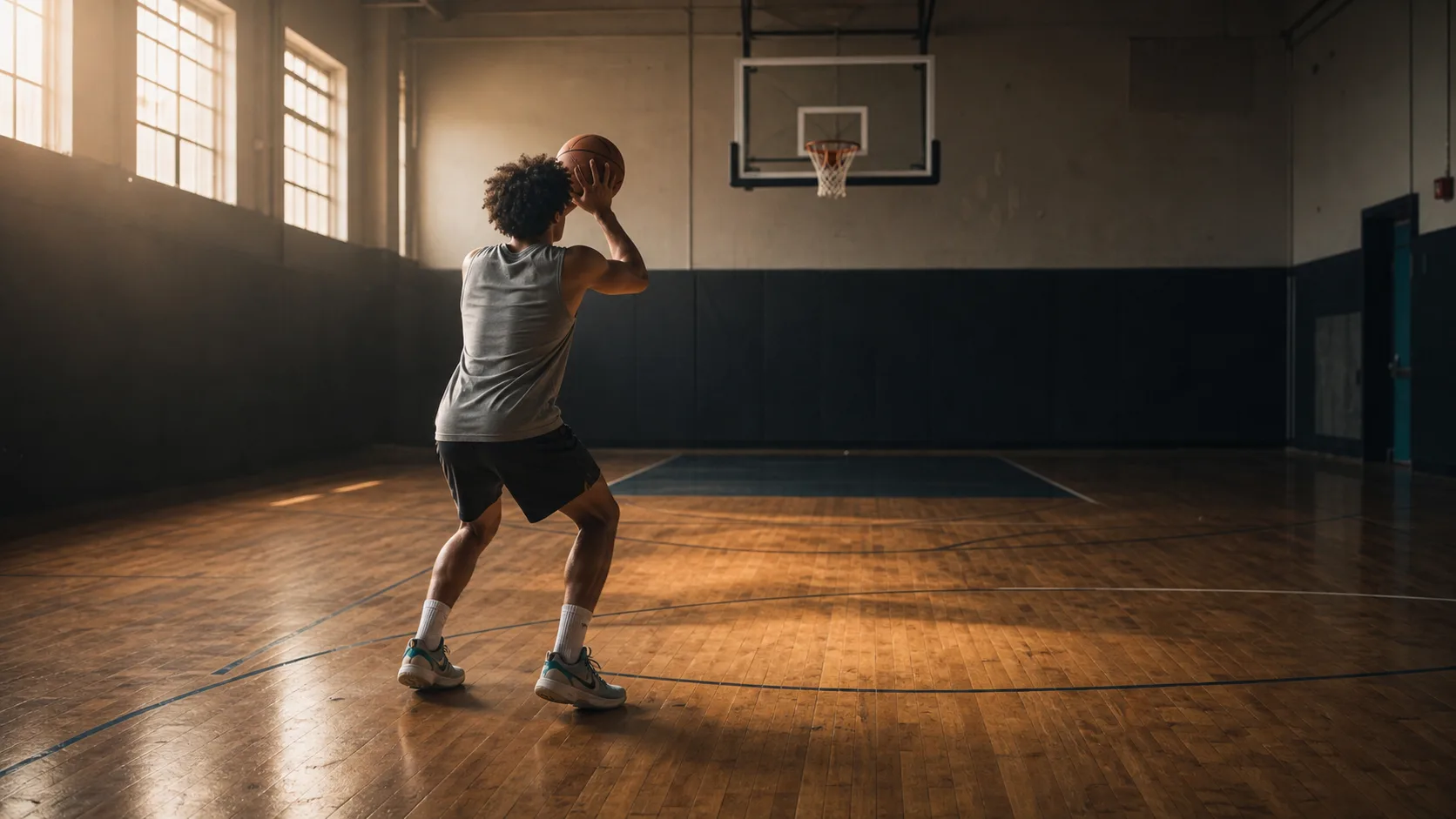
The difference between good basketball players and great ones isn't always physical. It's often about preparation. The best players in the world study the game like it's their job - because it is.
But you don't need an NBA coaching staff to start building these habits. Here's how.
Step 1: Watch Film With Purpose
Most young players watch basketball for entertainment. They watch dunks, crossovers, and buzzer-beaters. That's fun, but it won't make you better.
Studying film means watching with a question in mind. Before you press play, decide what you're looking for: - How does this defender guard the pick-and-roll? - Where does this player like to catch the ball? - What does this team do when they need a bucket late in the shot clock?
One focused question per viewing. Don't try to see everything at once.
Step 2: Study Your Own Game
This is the hardest part, but it's the most valuable. Record your own games and watch them honestly. Look for: - Where do you catch the ball? Is it your best spot? - What do you do when your first move is taken away? - How do you defend screens? Do you navigate them or go under every time? - Where is your positioning on defense when you're two passes away?
Be honest with yourself. The film doesn't lie.
Step 3: Build a Scouting Habit
Before every game, spend 15 minutes thinking about your likely matchup. What do they like to do? What's their go-to move? Where do they struggle? You don't need a full scouting report - just three things to know.
This habit alone will separate you from 90% of players at any level below the NBA.
Step 4: Learn Basketball Language
Elite players and coaches speak in a specific language. Terms like "top foot," "nail help," "slot catch," "ghost screen," and "ice coverage" aren't just jargon - they describe specific concepts that change how you play.
Learn these terms. Understand what they mean on the court. When your coach says "ice the pick-and-roll," you should know exactly what that means for your feet, your hands, and your positioning.
Step 5: Think About Positioning
Most young players think about what to do with the ball. Elite players think about where to stand without it. On offense, your positioning before you get the ball determines what you can do with it. On defense, your positioning when you're two passes away determines whether you can help when the ball gets to your man.
Start paying attention to spacing, floor balance, and where you are relative to the ball, the basket, and your teammates. This is what separates players who "look right" from players who just have talent.
The Weekly Study Schedule
The five steps above are the inputs. The weekly schedule is how they compound. Here is the structured cadence elite high school and college players use:
- Monday: 30 minutes of self-scout on Saturday's game film.
- Tuesday: 30 minutes of opponent prep for the upcoming Friday game.
- Wednesday: 30 minutes of skill-specific NBA film. Pick one move you're working on; watch 30 NBA possessions of the best players running it.
- Thursday: 15 minutes of pre-game scouting brief. Three things to know about your matchup.
- Saturday: Game.
- Sunday: Rest.
Total: 105 minutes per week. Less than two episodes of a TV show. Sustained across a season, this routine produces basketball-IQ gains visible by week 6. The complete film study guide walks through the same routine in coach-level detail.
What Pros Actually Study
NBA players don't watch random possessions. They study three things specifically:
1. Their own decision-making. Every NBA player gets a weekly self-scout from the team's video staff, a tagged reel of their decision moments rated for correctness. The self-scouting framework is the amateur version. 2. Their upcoming matchup. The man they'll defend gets the most film time. Tendencies, weak hand, favorite spots, body language under pressure, all tagged. 3. The opposing system. Five possessions of each opponent's primary actions. Pick-and-roll triggers, late-clock specials, ATO sets, drilled into pattern recognition.
The 12-lens system covers the analytical framework NBA staffs use to organize this work. Young players who adopt even three of the twelve lenses see basketball IQ accelerate compared to peers who only watch reactively.
Common Mistakes Young Players Make in Film Study
- Watching highlights. Highlights show outcomes, not patterns. Skip them entirely for the first 6 months of serious film study.
- No notes. Watching without writing produces almost no retention. Even 3 sentences after a session triples retention versus passive viewing.
- Too much, too fast. A 4-hour film session at age 16 is not productive. Four 30-minute sessions across a week is.
- Skipping the boring parts. Decision-making lives in the boring possessions. Star-watch viewing misses 80% of what makes the star a star.
- Watching alone always. A coach narrating the read is worth 3-5x more than your own viewing. Find at least one weekly film session with a coach.
The Bottom Line
Studying basketball isn't about watching more games. It's about watching differently. It's about asking questions, being honest with yourself, and building habits that compound over time.
The players who do this, at every level, are the ones who get recruited, who earn scholarships, and who eventually play professionally. It's not magic. It's preparation. And the entry cost is 105 minutes per week.
Keep reading: the complete film study guide, building basketball IQ, and self-scouting for young players.