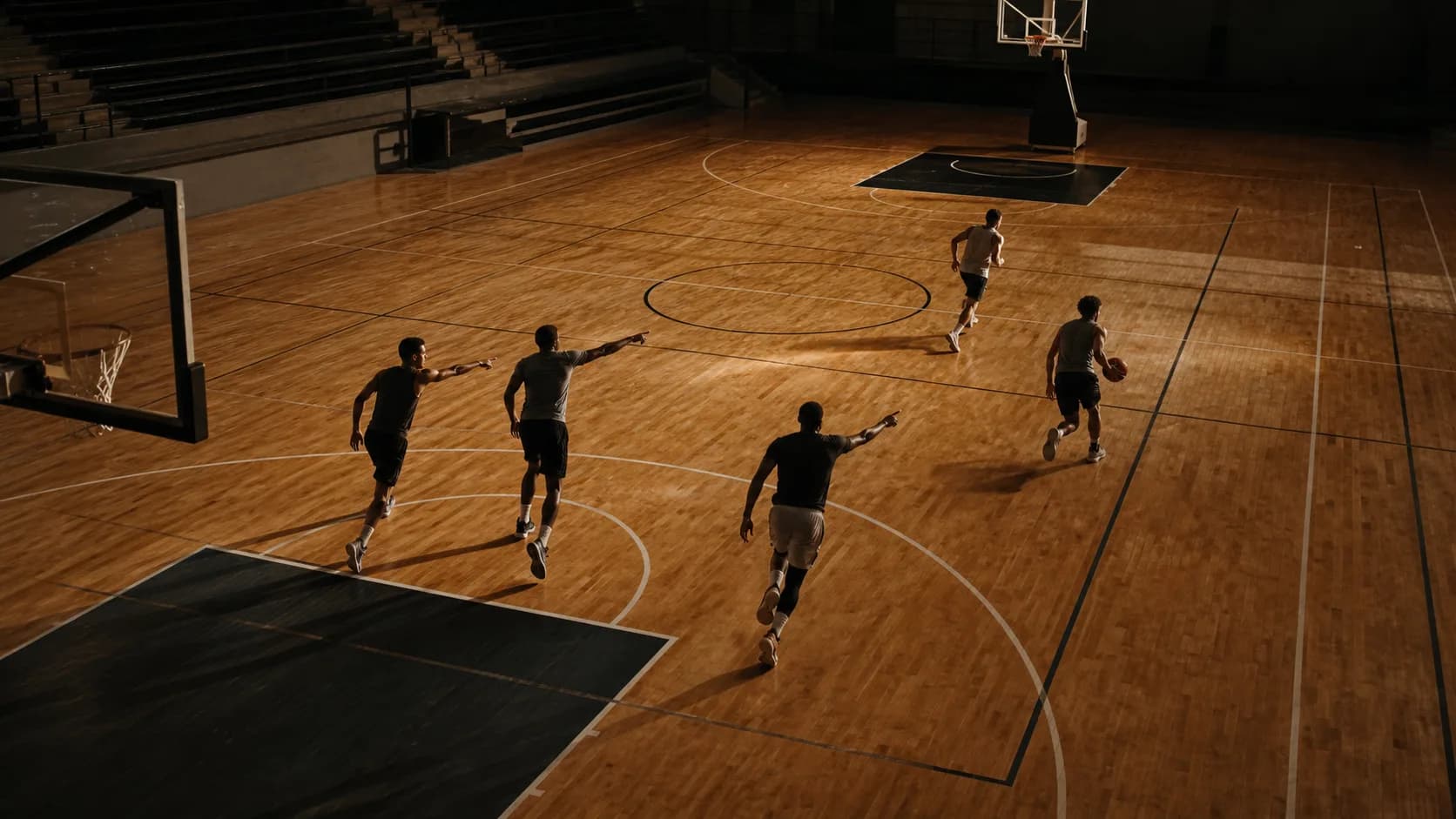
Every player eventually runs into defenders with longer arms and more size. The ones who keep scoring at the rim aren't the ones with the highest vertical, they're the ones with the best reads and the cleanest footwork.
The Core Problem
Length changes two things: the shot window shrinks and the contest comes from higher above the rim. A 6'2 guard trying to finish over a 6'10 wing can't just go straight up and attack the front of the rim. The physics don't work.
Reading the Defender Before the Shot
Before you pick up your dribble, your eyes should already know three things: 1. Which shoulder is the defender leading with? That's the side you can't finish cleanly. 2. Where is the help? A second defender tagging from the nail changes everything. 3. How far back is the rim protector sitting? The deeper they sit, the more you can float or scoop.
The Three Finishes That Neutralize Length
1. The far-side reverse. Attack strong-side, finish on the far side of the rim. The rim becomes an obstacle for the shot-blocker. Works best off two feet.
2. The inside hand. Most players finish with the strong hand no matter the angle. Against length, use the hand away from the shot-blocker. If they help from the right, finish left. Always.
3. The scoop / floater. Take the ball off the dribble before the rim protector can meet you at the rim. High release, soft touch, under control. This is the single most under-trained shot in youth basketball relative to how useful it is.
Manipulating the Contest
Don't just try to shoot over length, move the defender off their spot. A shoulder fake, a body bump, a half-step change of pace all force the contest to happen in a different window. You don't need to jump higher. You need the defender to jump at the wrong time.
Contact, Not Collision
Finishing through length requires contact, but not collision. Contact means you create space, absorb, and finish. Collision means you lose the ball. The difference is initiating with your shoulder and hip, not with your arms and the ball.
Training This
- Mikan drills with a spider contester (someone with a stick or raised hand on the opposite side of the rim).
- Finishing off one foot from both angles, both hands. Most players can do three of the four combinations. Train the one you can't.
- Live 1-on-1 starting from the nail, with a second defender allowed to tag.
Length is real. Length is not unsolvable.
The Three Footwork Techniques That Beat Length
Long defenders force decisions earlier than short defenders. Three footwork techniques that produce finishes against longer help:
1. Jump stop into euro-step. A jump stop reads the help; the euro-step finishes around it. The footwork fundamentals piece covers the jump stop mechanics. 2. One-foot floater. A one-foot launch shifts the release point up and over the contesting hand. League-wide PPP on the one-foot floater: ~1.08 when used selectively. 3. Hop-step pull-up. The hop-step gathers into a balanced two-foot landing, after which the pull-up rises before the help can contest.
The Read That Decides the Finish
Before the gather, the offensive player has to read two things: where is the rim protector, and where is the closest help defender? The combination decides the finish type. A rim protector in good position with no help nearby means go around with a euro-step. A rim protector backing off but help arriving means the floater is the right read. A rim protector caught flat-footed means power-up.
The reading help defenders piece covers the broader skill of reading the second defender before the contact happens.
Keep reading: footwork fundamentals, reading a closeout, and drawing fouls legitimately.