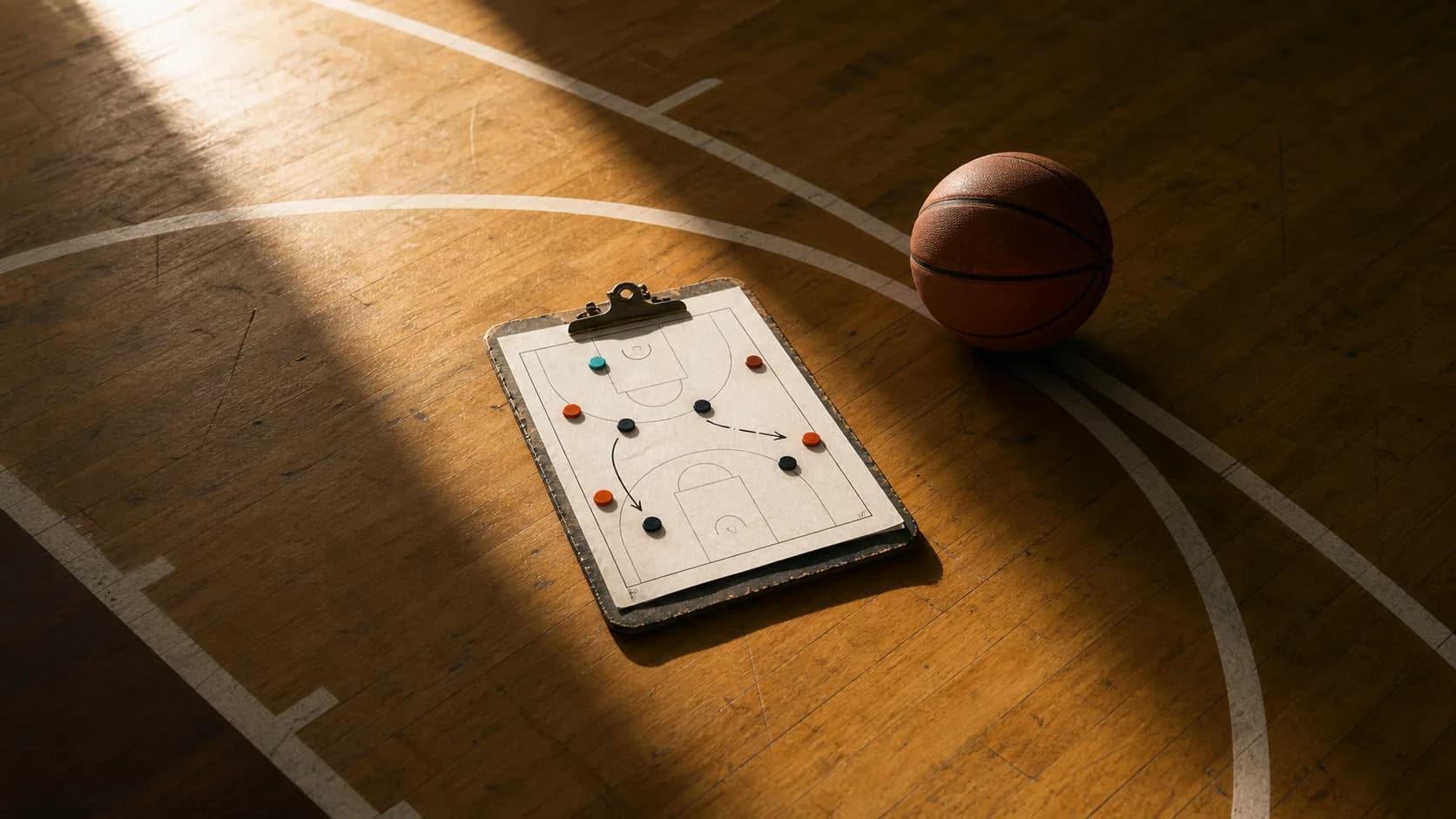
The short answer: Drawing a foul legitimately means putting the defender in a position where any defensive contact is illegal, by attacking their inside hand, gather-stepping into their body before the gather, and timing your motion to make their reach a foul. It's geometry, not theater. Players who do it well shoot 8-10 free throws a game; flop callers get technicals.
The NBA's flop-warning rules tightened again in 2025. Embellishment now draws an immediate technical foul (and a fine on the second offense in a season). The bar for "selling" a call has been raised. But the legitimate craft of foul-drawing, putting defenders in foul positions, has actually become more valuable, because the players who can draw real contact aren't competing against the floppers anymore.
The Geometry of the Legitimate Foul
A foul happens when a defender displaces an offensive player or impedes their motion illegally. The legitimate foul-draw is about creating the geometry where the defender's only option is a foul.
Three geometries do the work:
The inside-hand attack. Drive at the defender's inside hand (the hand on your strong-side hip). They can either move the hand and let you score, or keep it there and foul. Most defenders keep it there.
The gather-step into the body. The legal gather-step lets you take two steps after picking up the ball. Use the second step to arrive at the defender's chest, not into them, but exactly where they're standing. Their only options: get out of the way (no, they can't, you're already there), or initiate contact. The contact is on them.
The chest-to-chest jump. When rising for a contested layup, your shoulders square to the defender's chest. If they have any forward lean, the contact is theirs. If they're vertical, your shot is contested but legal, no foul, but no flop either.
Each geometry creates the foul without exaggerating contact. The defender does the fouling; you just put them where they had no choice.
The Rhythm Tools
Legitimate foul-drawing is rhythm. Predictable speed lets defenders adjust. Variable speed forces them to react late.
The hesitation gather. You're sprinting downhill. The defender is back-pedaling. You hesitate at the foul line, half a beat. The defender, expecting continued speed, lurches forward. Now their momentum is into you. Initiate the gather, and the defender is already fouling.
The hop. A two-foot hop into your gather lets you arrive in a defender's space without traveling. Their reach during your hop is a foul. James Harden made this his signature for a decade.
The pump-on-the-rise. As you rise to shoot, pump the ball at the contest hand. The defender swipes through. Their swipe is a foul because you were in your shooting motion. Trae Young's signature.
These tools work because they exploit the defender's reaction speed, not their integrity. They are 100% legal moves done with practiced timing.
Where Contact Should Happen
The body-part the contact lands on tells the referee what kind of foul it was, and whether it'll be called.
Forearm to ribs: ALWAYS a foul. Defender's forearm can't be there. Initiate the contact through your gather step, not by leaning.
Hand-check on the hip: in 2026's officiating climate, this gets called more than 80% of the time at the NBA level. Drive at the defender's hip, lower your shoulder slightly, and any hand-check is a whistle.
Body bump on the rise: the rise is a protected position. Defenders contesting must go straight up. A body that's leaning into the rise is a shooting foul.
Anything above the shoulders: automatic. A hand to the face during the shot is reviewed and almost always called.
Knowing where to engineer the contact is the difference between "earned trip to the line" and "called for offensive."
The Flop Line
A flop is contact that wasn't there, exaggerated to look like it was. A legitimate foul-draw is contact that was there, presented clearly.
The line gets crossed in three ways: - Phantom contact. No defender hand on you, but you snap your head as if there was. Whistle goes the other way. - Reverse-direction sells. You move backwards faster than the contact would have caused. Refs see it. - Vocal selling. Loud "AH!" on minimal contact. Refs are explicitly trained on this in 2026.
If your reaction is bigger than the contact warranted, it's a flop. Stay within the actual physics.
The Drill
A defender plays you straight-up D for 30 seconds. You can attack however you want, but every move has to engineer a legitimate foul-draw, no flopping, no fakes that aren't real shots. Coach calls "foul!" or "no foul!" for each contact. Score: +1 for legitimate draws, -2 for flops, 0 for no-contact moves.
Run for two minutes. The drill teaches geometry over theater. Most young players score negative the first session. By the fifth, they're +5 or higher.
Frequently Asked
Is foul-drawing dirty? No. Foul-drawing within the rules is a learned skill. Embellishing contact is dirty. They're different things.
Why does foul-drawing get called "Harden basketball" pejoratively? Because Harden took it to the limit of legitimate craft, and many of his moves were actually borderline. The principles still apply, just stay clearly on the legitimate side.
Can you draw fouls in college and high school? Yes, but referees there are less consistent. Build the skill anyway, it transfers.
The Quiet Edge
The defenders who never foul are the ones who refuse to reach. Foul-drawing only works against defenders who reach. Watch your opponent's first three possessions: are they hand-checking? Reaching? Swiping? If yes, you have a free path to 8 free throws. If no, they're a real defender. Score on them with shots, not whistles.
The whistle is part of the craft. Earn it. Don't fake it.
Keep reading: contact manipulation, defending without fouling, and finishing at the rim.
More From the Player Development Hub
The archetypal foul-drawers in the modern NBA: Play Like Shai Gilgeous-Alexander (8-10 free throws per game on shoulder-lead contact), Play Like Jalen Brunson (35% rim attempts produce fouls via inside pivot), Play Like Anthony Edwards (contact finishing through bigger defenders).
Coach-side context: how NBA coaches manage foul trouble in the Finals.
Scouting context: what NBA scouts look for in guards, foul-drawing rate is graded as part of the rim-decision-speed trait.
Hub: Player Development Hub.